
Land Rover Range Rover Airbag Control Unit Repair(4)
4 products
What should I look out for with Land Rover Range Rover airbag control units?
The airbag technology used in the Land Rover Range Rover varies depending on the model year. Airbag24 professionally repairs control units for all Land Rover Range Rover generations with original functionality and a 2-year warranty.
Production History: Since its launch in 1970, the Land Rover Range Rover has been synonymous with luxury and superior off-road capability, a reputation that has continuously evolved over five generations. Each model series, from the rugged Classic to the state-of-the-art L460, introduced specific technological innovations that also significantly influenced the demands placed on safety systems.
Airbag system development: The airbag systems in the Range Rover have evolved from simple, optional features in early models to highly complex, fully integrated, and networked systems in the current generations. This means that modern airbag control units must process a multitude of sensor data to precisely and rapidly trigger the optimal protective measures in the event of an impact. A common repair involves professionally resetting crash data in the control unit after an accident, which often makes it plug-and-play again and avoids expensive replacements.
Which Land Rover Range Rover generations are there?
The Land Rover Range Rover has been produced in five generations, each with a different airbag control unit. The evolution of the safety system reflects technological advances from 1970 to the present day.
The Range Rover Classic (1970–1996) laid the foundation for a luxury off-road vehicle, with airbags gradually gaining importance. This was followed by the Range Rover P38A (1994–2002), which further improved comfort and safety with increasingly standard airbag systems. The third generation, the Range Rover L322 (2002–2012), set new standards in design and technology, including extensive airbag equipment.
Next came the Range Rover L405 (2012–2021), which provided maximum occupant safety through state-of-the-art airbag systems and sophisticated control units, including curtain airbags. The current, fifth generation is the Range Rover L460 (since 2022), which integrates the latest airbag technology and complex control units for comprehensive accident prevention and occupant protection. Each of these generations required specific adaptations to the airbag control units and their software.
How do I identify my Land Rover Range Rover airbag control unit?
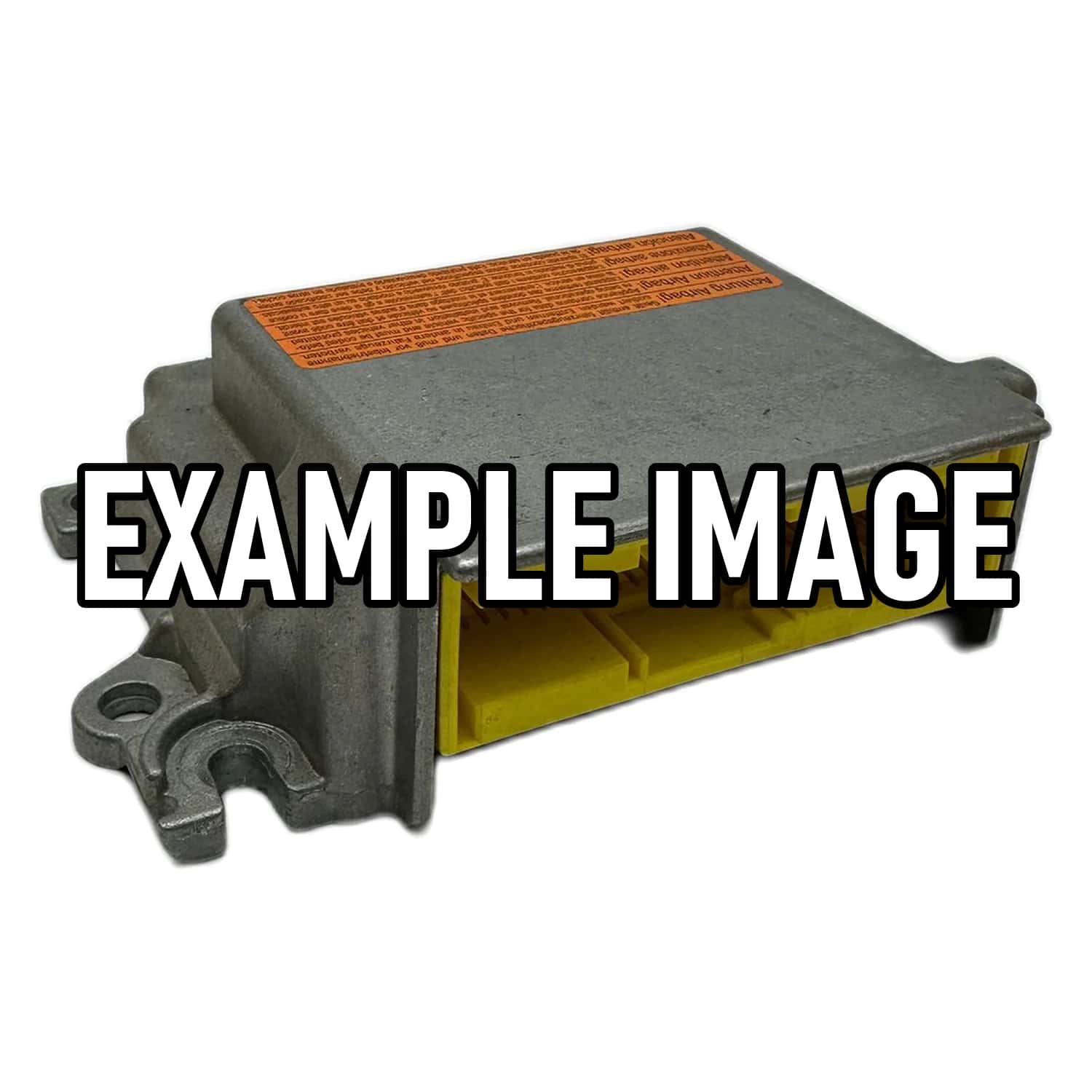
Land Rover Range Rover airbag control units can be uniquely identified by part number, year of manufacture, and vehicle identification number. Each generation uses specific control unit variants for optimal compatibility.
Precise identification of the airbag control unit is absolutely crucial for a successful repair and ensuring proper functionality after reinstallation. The required control unit part number is usually printed directly on the module itself and should always be checked against your vehicle's specific data to rule out errors.
In addition, the exact year of manufacture of the Land Rover Range Rover and the vehicle identification number (VIN) provide important information about the exact components installed. This is particularly important because within a model series, there are often different hardware and software variants of the control units, each requiring specific repair approaches. The correct control unit is the basis for the proper functioning of all airbags and sensors in the vehicle.
What airbag equipment does the Land Rover Range Rover have?
The Land Rover Range Rover's airbag equipment varies depending on the model year and trim level. While early models use basic airbag systems, newer generations feature enhanced safety packages with additional airbag modules.
Airbags gradually became standard in the Range Rover Classic and P38A, starting with simple driver and passenger airbags, as safety features became increasingly important throughout the 1990s. Starting with the third generation (L322), produced from 2002 to 2012, driver and passenger airbags were already standard equipment, often supplemented by side airbags to optimize occupant protection.
Newer models, such as the L405 (2012–2021) and the current L460 (since 2022), offer a comprehensive range of state-of-the-art airbag systems. These include not only front and side airbags, but also curtain airbags, knee airbags, and a network of sensors that form a dense and responsive protective mesh within the vehicle. This development reflects the Range Rover's aspiration as a luxury off-road vehicle, which must always meet the highest safety standards to serve its discerning target audience.
These complex systems require sophisticated airbag control units that precisely coordinate all components and ensure a rapid, impact-specific response. A professional repair of the airbag control unit is therefore a reliable and often cost-effective alternative to purchasing a new unit, especially after an accident, to restore the full functionality of this vital safety system.
Common fault codes in this category
Shipping & repair from Germany
Airbag24 repairs your component in Berlin — usually within 3–4 working days.
Standard shipping within Germany is free; we normally return your part by UPS.
You pay for and insure the inbound shipment to us. On explicit request we ship by express — the extra cost is borne by the customer.
If you withdraw from the contract, you bear the cost of returning the item.