
Nissan Quest airbag control unit repair(4)
4 products
What should I consider with Nissan Quest airbag control units?
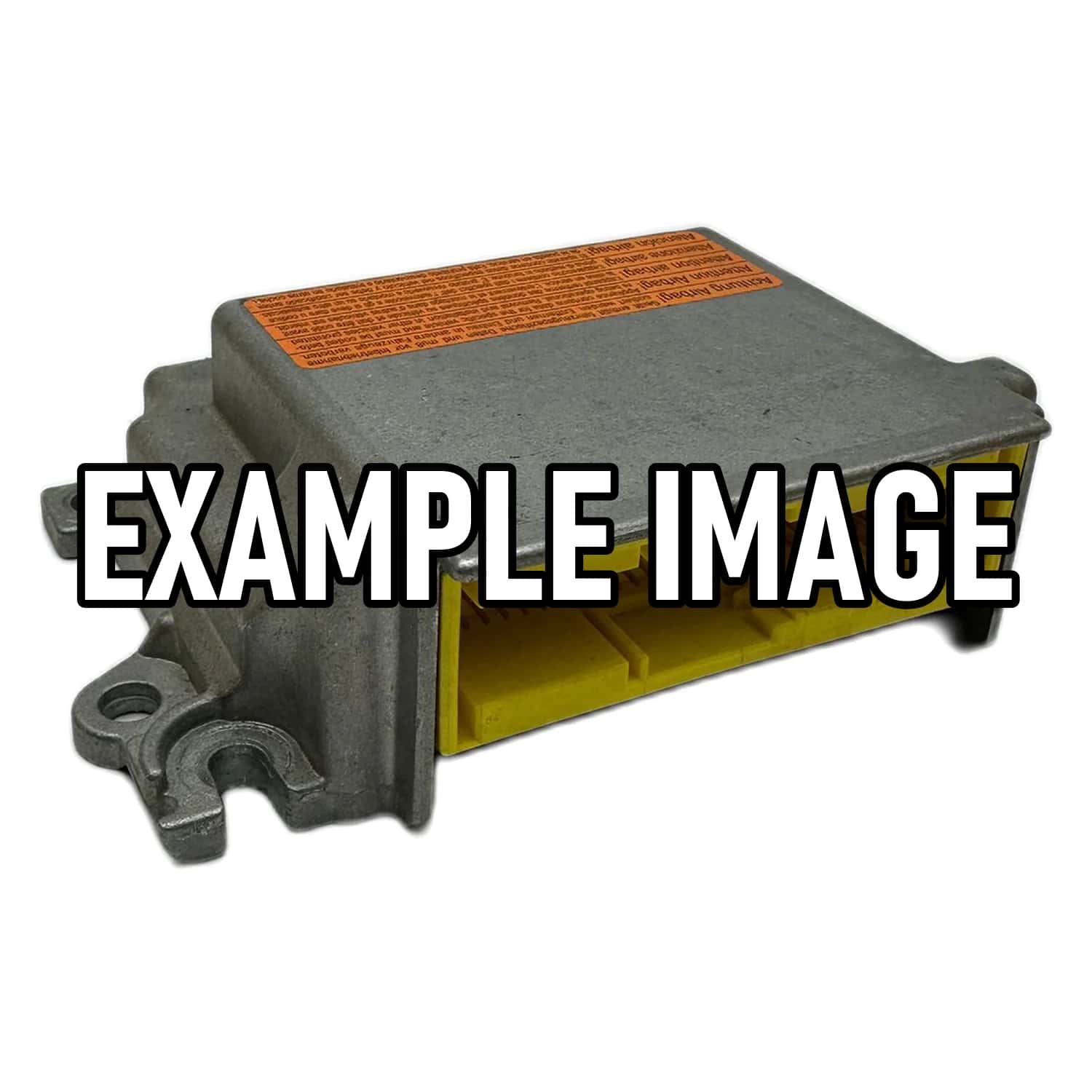
The airbag technology used in the Nissan Quest varies depending on the model year and trim level. A defective Nissan Quest airbag control unit requires professional repair to restore full functionality to the safety system. Airbag control units of all Nissan Quest generations are repaired with original functionality, which is of utmost importance for safety.
The Nissan Quest, primarily designed for the North American market, was produced over several generations. Each generation brought technological advancements, which were also reflected in the airbag systems and their control units.
In particular, the third-generation Nissan Quest models (V40) from 2003 to 2009, as well as their V41 and V42 variants, are often the focus of repairs. With each facelift and each new generation, the complexity of the airbag systems has increased to meet growing safety requirements.
A failure of the airbag control unit, often indicated by an illuminated airbag warning light in the dashboard, can have various causes, from internal errors to crash data stored after an accident. A professional repair is essential to ensure the proper functioning of all airbags.
Which Nissan Quest generations are there?
The Nissan Quest was produced in four main generations, each with its own airbag control units and an advanced safety system. The evolution of the safety system reflects technological advances from 1992 to approximately 2017.
The first generation of the Nissan Quest was produced from 1992 to 1998 and laid the foundation for the family minivan. It featured basic airbag systems typical of the era.
The second generation followed from 1999 to 2002 and already brought the first improvements in passive safety. Here, the airbag control units became more complex to support more sensors and the activation of additional airbags.
The third generation, known as the V40 series (approximately 2003–2009), featured significant advances in design and technology. Within this generation, the V41 and V42 variants can also be found, which often represent minor updates or facelifts and may pose specific requirements for airbag control unit repair.
The fourth and final generation of the Nissan Quest was produced from 2011 to 2017. These models feature the most advanced airbag systems with a variety of airbag modules and complex control units designed for comprehensive occupant protection.
How do I identify my Nissan Quest airbag control unit?
Nissan Quest airbag control units can be uniquely identified by the part number, the exact year of the vehicle, and often also by the vehicle identification number (VIN). Each generation, and sometimes even different trim levels, use specific control unit variants to ensure optimal compatibility and functionality.
The part number of the airbag control unit is the most important identifier and is located directly on the component's housing. To identify the control unit, it usually has to be removed from the vehicle, as it is often located under the center console, under a front seat, or in the footwell.
Correct identification is crucial for a successful repair, as even minor hardware or software discrepancies can lead to incompatibilities. Airbag control unit repair relies on restoring original functionality and programming specific parameters for your Nissan Quest model.
For the V40, V41, and V42 Nissan Quest series, there are specific control units tailored to the respective model years and equipment. Accurately specifying the model year and VIN also helps identify the correct control unit and perform the repair correctly, especially in the event of a unit defect.
What airbag equipment does the Nissan Quest have?
The airbag configuration of the Nissan Quest varies considerably depending on the model year and trim level. While early models typically use basic airbag systems with driver and passenger airbags, newer generations and higher trim levels feature enhanced safety packages with additional airbag modules for comprehensive occupant protection.
The Nissan Quest was always positioned as a family-friendly minivan, so passenger safety was a top priority. In early generations, driver and passenger airbags were standard equipment to provide basic crash protection.
With the third generation (V40, V41, V42) from 2003 onward, the safety systems were significantly expanded. Higher trim levels, such as the SL or Platinum, often included side airbags. These were often integrated into the seats and provided additional protection in side impacts.
In addition, optional side-impact airbags or curtain airbags for second- and third-row passengers were available, further increasing protection in side collisions. The central airbag control unit monitors and coordinates the activation of all these airbags in the event of an accident to ensure maximum safety. A necessary repair ensures that all systems function reliably in an emergency.
Common fault codes in this category
Shipping & repair from Germany
Airbag24 repairs your component in Berlin — usually within 3–4 working days.
Standard shipping within Germany is free; we normally return your part by UPS.
You pay for and insure the inbound shipment to us. On explicit request we ship by express — the extra cost is borne by the customer.
If you withdraw from the contract, you bear the cost of returning the item.