
Nissan airbag control unit repair(144)
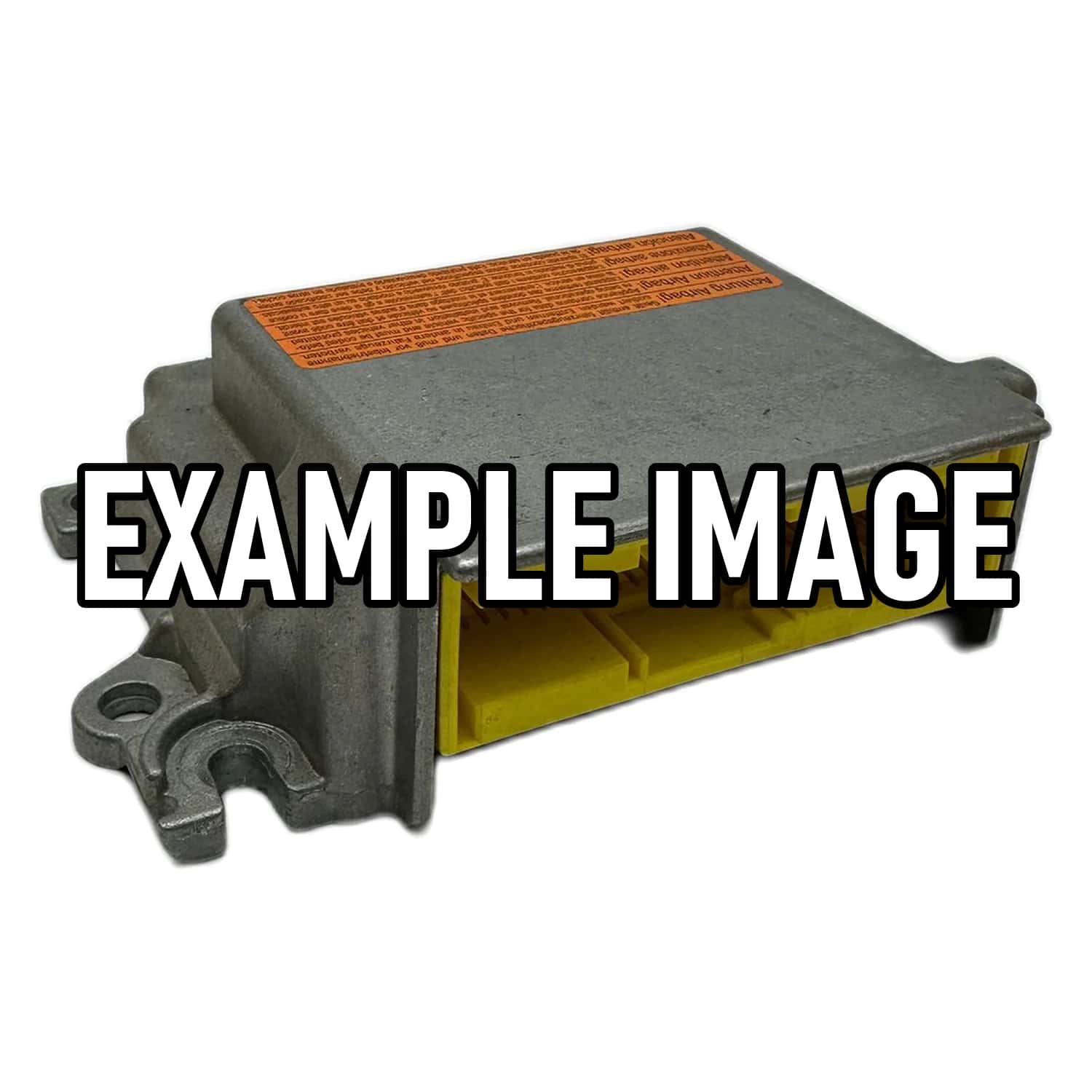
A faulty airbag control unit rarely needs replacing on a Nissan. Select the right unit, send it in and have it tested or repaired.
What should I consider with Nissan airbag control units?
The airbag technology used in Nissan vehicles varies considerably depending on the model and year. Professional airbag control unit repair ensures that functionality is restored to its original condition.
Nissan, with its long and diverse production history, has evolved from humble beginnings into a global automotive giant. This evolution is also reflected in its safety technology, particularly in the complexity and features of its airbag systems, which have continually evolved across various model generations.
The development of airbag systems at Nissan typically began with the introduction of driver and passenger airbags as standard equipment, followed by side and curtain airbags in safety-critical vehicle classes and newer models. In older or lower-level models, some airbags, such as side or knee airbags, could be optional. The airbag control unit, also known as the SRS control unit, is the heart of this safety system, managing all components, storing crash data, and recording any fault codes.
Which Nissan models are available?
Nissan has produced over 70 different models, with each model and series generation using different airbag control units. The development of the safety system reflects technological advances and the diverse requirements of each vehicle class.
Nissan's model range is extremely broad and serves virtually every market segment worldwide. This ranges from agile subcompacts like the Nissan Micra, March, and Note, to popular compact and mid-size vehicles like the Sentra, Altima, Maxima, Tiida, and Primera, to an impressive selection of SUVs and crossover models like the Qashqai, Rogue, X-Trail, Murano, Pathfinder, and Armada. Nissan also has a strong presence in the commercial vehicle sector with models like the Navara, Titan, NV200, and Caravan, as well as in the sports car segment with icons such as the 370Z, 350Z, 300ZX, Skyline, and the legendary GT-R. Not to be forgotten are the pioneers in the field of electric vehicles, such as the Nissan Leaf and the groundbreaking Ariya.
Each of these vehicle classes and their corresponding model series—from urban commuters to off-road adventurers and sports car enthusiasts—places specific demands on safety systems. This has led Nissan to develop and install a variety of airbag control units over the years, each optimally tailored to the respective vehicle architecture and safety features.
How do I identify my Nissan airbag control unit?
Nissan airbag control units can be uniquely identified by their specific part number, model year, and vehicle identification number (VIN). Each generation and model variant uses specific control unit variants for optimal compatibility and system integration.
To ensure precise diagnosis and repair of your Nissan airbag control unit, correct identification is essential. The crucial part number can usually be found directly on the control unit itself, which is usually located near the center tunnel or under the front seats. Additionally, the year of manufacture of your Nissan and the Vehicle Identification Number (VIN), which can be found on the vehicle registration document and often on the windshield or in the engine compartment, are important information for accurate identification.
Airbag control unit compatibility is of utmost importance. Different Nissan models and generations, such as a Nissan Micra K12 versus a Nissan Qashqai J11 or a Nissan Leaf ZE1, use specific control unit variants due to their different sensor systems, wiring harnesses, and software architectures. A professional service takes these subtle differences into account to ensure the full functionality of the safety system after repair.
What airbag equipment does Nissan have?
Nissan's airbag equipment varies depending on the year, trim level, and specific model. While early models used basic airbag systems, newer generations feature enhanced safety packages with a variety of additional airbag modules and intelligent sensors.
Historically, Nissan vehicles began with driver and passenger airbags as a basic safety standard. These core components are now found in virtually every Nissan, from the compact Nissan Note to the rugged Nissan Titan. They form the foundation of occupant protection in a frontal collision.
With advances in vehicle safety, newer and higher-end Nissan models, such as the Nissan X-Trail, Murano, and the Nissan Ariya, have significantly expanded their airbag equipment. These include side airbags that protect occupants in side collisions, as well as head airbags, often designed as curtain airbags that deploy along the front of the window to protect the head area. Some models and trim levels even include knee airbags for the driver or front passenger to provide additional layers of protection and minimize lower extremity injuries. The central airbag control unit coordinates the deployment of these various modules precisely and within milliseconds to ensure maximum safety.
A defective airbag control unit can impair the functionality of the entire safety system and is often the cause of an illuminated airbag warning light in the dashboard. In many cases, a repair is a significantly more cost-effective and environmentally friendly alternative to purchasing a new one. Typical repair services include deleting crash data after an accident and resetting the control unit to its factory settings, which allows for reinitialization. Before sending the control unit in for repair, it is advisable to read and print out the vehicle's error log to enable prompt diagnosis and problem resolution.
Common fault codes in this category
Shipping & repair from Germany
Airbag24 repairs your component in Berlin — usually within 3–4 working days.
Standard shipping within Germany is free; we normally return your part by UPS.
You pay for and insure the inbound shipment to us. On explicit request we ship by express — the extra cost is borne by the customer.
If you withdraw from the contract, you bear the cost of returning the item.