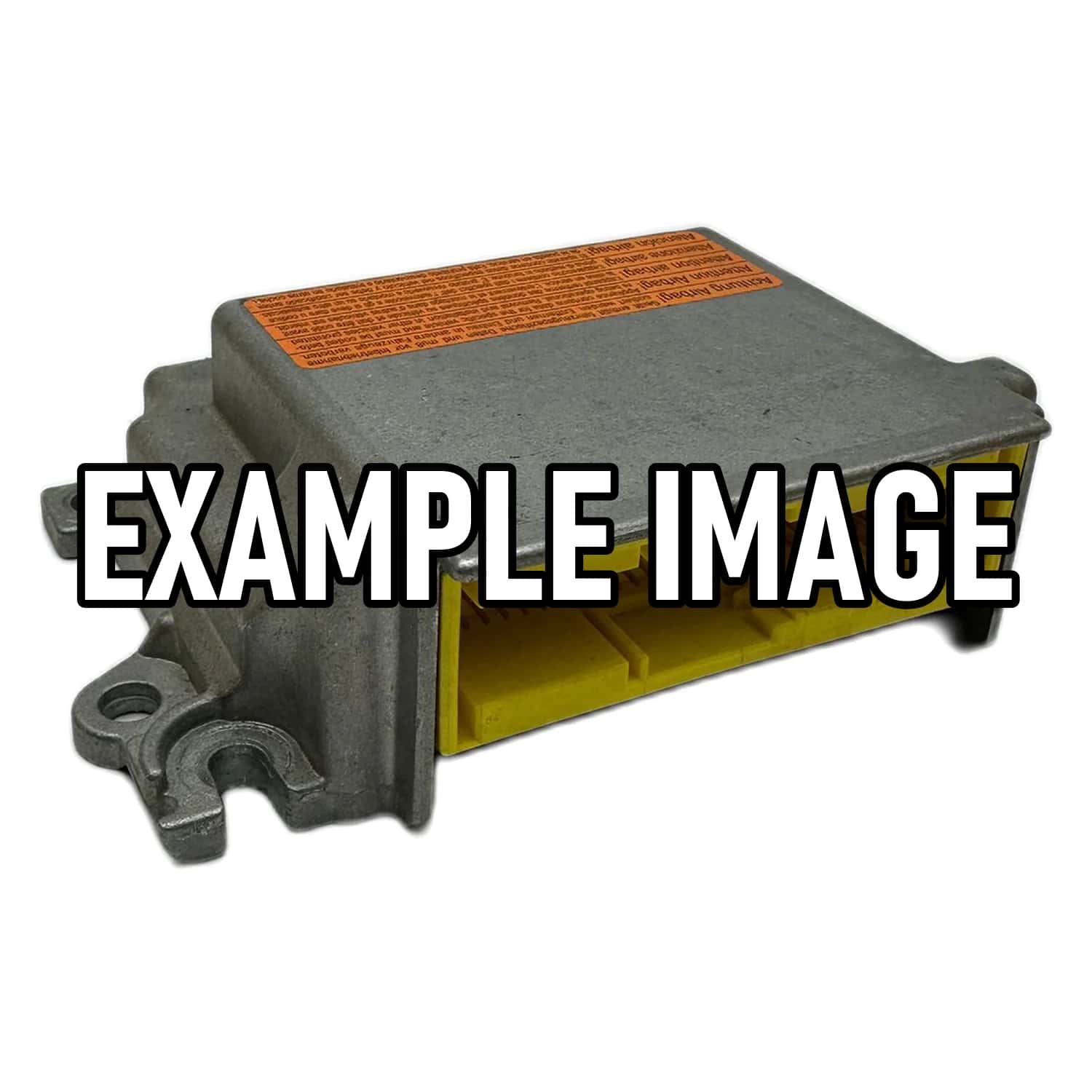
airbag control unit repair Opel Omega A
from€79.00
 Quality since 2002
The airbag technology used in the Opel Omega varied considerably depending on the model year. Airbag control units are central components of the passive safety system. For a professional repair with true-to-original functionality and a two-year warranty, comprehensive knowledge of the specific requirements of each generation is essential.
The Opel Omega was produced in two main generations: the Omega A from 1986 to 1993 and the Omega B from 1994 to 2003. Each series brought its own technological advances that directly impacted the airbag systems installed.
Over this time, the airbag equipment evolved from the optional driver airbag in early Omega A models to more comprehensive systems with driver, passenger, and sometimes side airbags in the Omega B. This evolution requires a deep understanding of the respective control units during repair.
The Opel Omega was produced in two main generations, each with different airbag control units and safety concepts. The development of the safety system reflects the technological advances from 1986 to 2003, a period in which automotive safety evolved rapidly.
The first generation, the Opel Omega A, was produced from 1986 to mid-1993. It replaced the Opel Rekord E and established itself as a comfortable representative of the upper mid-range. Airbags were initially limited, but they evolved over the course of its production run.
The Opel Omega B followed in spring 1994 and was produced until 2003. This model not only replaced the Omega A but also the then top-of-the-line Opel Senator. The Omega B received a facelift (B2) around 1999, which brought further technical and visual innovations, including modified safety systems.
These two generations represent different stages of development in airbag technology. The Opel Omega B models from 1994 to 2003 are particularly relevant for airbag control unit repairs, as they allow for specialized repair of faults, erasure of crash data, and reprogramming.
Opel Omega airbag control units can be uniquely identified by the original part number, the vehicle's year of manufacture, and the vehicle identification number (VIN). Each generation of the Opel Omega used specific control unit variants that were optimally tailored to the respective vehicle architecture and the installed safety system.
To identify the correct airbag control unit for your Opel Omega, you can usually find the part number directly on the housing of the control unit itself. This number is crucial for compatibility and a successful repair or replacement of the component.
The exact year of your Opel Omega and the generation (Omega A or Omega B) also play an important role. While the Omega A generally used more basic airbag systems, the Omega B features more complex control units that could also be responsible for side airbags or other advanced safety features.
This precise identification based on the manufacturer's part number and vehicle date is essential to ensure that the repaired or replaced control unit fits perfectly in your Opel Omega and that the airbag system functions fully.
The airbag equipment of the Opel Omega varied depending on the model year, trim level, and technological advances during the production periods of the two generations. While early models used basic airbag systems, newer generations featured enhanced safety packages with additional airbag modules and passive safety elements.
In the Opel Omega A (1986-1993), airbag technology was initially optional or only available in higher trim levels. The driver's airbag became more common in later Omega A models and increasingly became standard. General safety features improved steadily throughout the production run.
With the launch of the Opel Omega B (1994-2003), airbag equipment was significantly enhanced. Driver and passenger airbags were often standard or widely available. Depending on the model and equipment level, side airbags could also be added, especially in later models and after the facelift (Omega B2 from 1999).
In addition to airbags, the Opel Omega B's safety features included additional features such as the anti-lock braking system (ABS), which was increasingly offered as standard equipment. These advances reflected Opel's commitment to continuously improving the comfort and passive safety of its upper-mid-range vehicles.
Airbag24 repairs your component in Berlin — usually within 3–4 working days.
Standard shipping within Germany is free; we normally return your part by UPS.
You pay for and insure the inbound shipment to us. On explicit request we ship by express — the extra cost is borne by the customer.
If you withdraw from the contract, you bear the cost of returning the item.