airbag control unit repair Opel Vivaro C
from€79.00
 Quality since 2002
The airbag technology used in the Opel Vivaro varies depending on the model year. Professional repair services for airbag control units for all Opel Vivaro generations are available to ensure original functionality.
The Opel Vivaro, a key model in Opel's LCV strategy, was first presented at the Brussels Commercial Vehicle Show in 2001. Since then, it has established itself as a versatile van, panel van, and station wagon, selling over one million units. Its development spanned three main generations, each with specific technological adaptations.
With each generation of the Opel Vivaro, the passive safety system, especially airbag technology, has evolved. While early models already offered basic airbag features, newer Vivaro variants have been equipped with increasingly complex systems and additional airbag modules. This development reflects the constant advancement in vehicle safety to optimally protect occupants.
The Opel Vivaro has been produced in three main generations, each with different airbag control units. The development of the safety system reflects technological advances from 2001 to the present.
The first generation, the Opel Vivaro A (2001–approx. 2014), was developed in cooperation with Renault and was identical to the Renault Trafic II and Nissan Primastar. It used control units that were advanced for the time and controlled a solid basic airbag system.
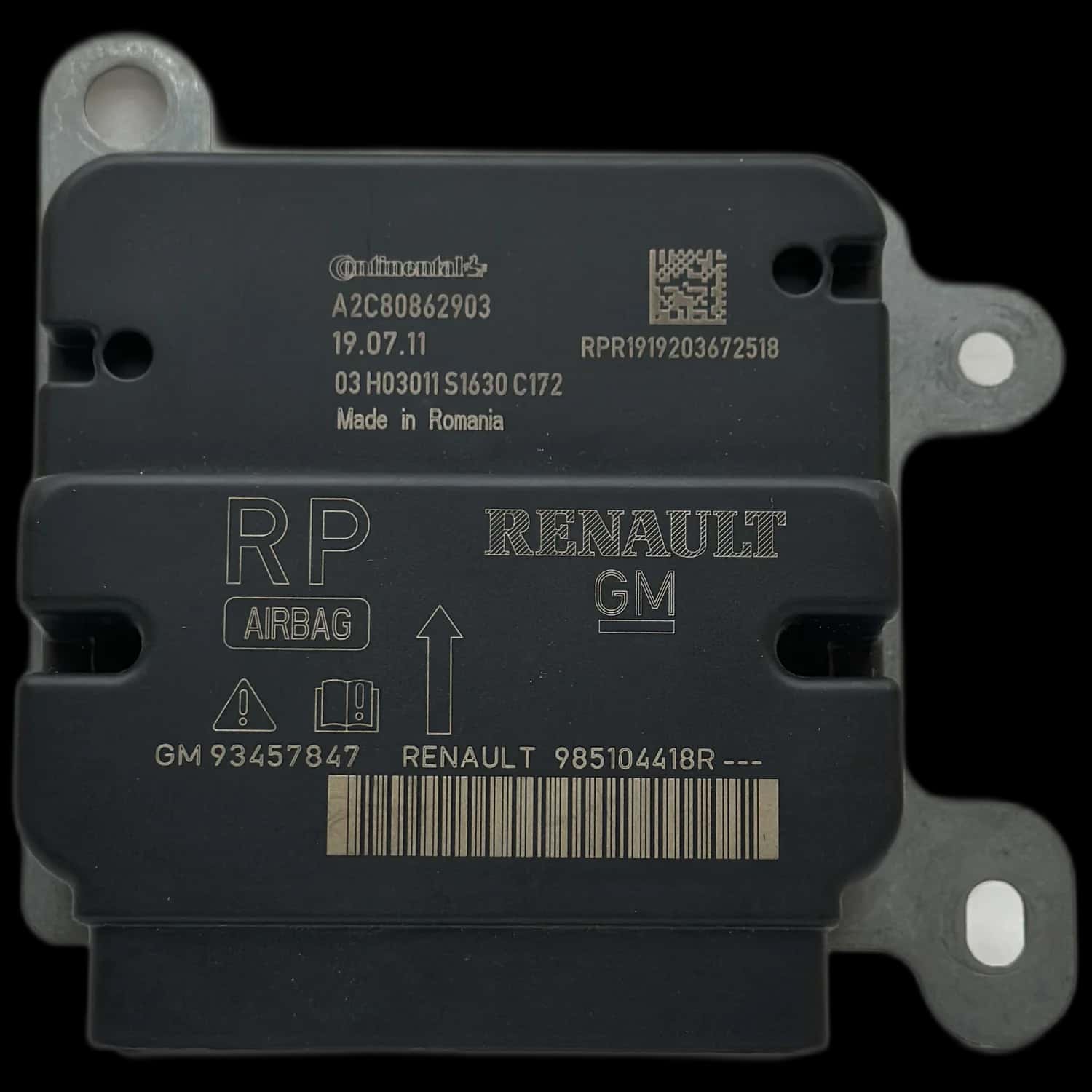
The second generation, the Opel Vivaro B (approx. 2014 – early 2019), continued the successful cooperation with Renault and was offered in various body styles, including panel vans, buses, and pickup trucks. The airbag control units in this series, often with specific part numbers such as 985106142R or 93457848 (Continental A2C80862803), are frequently affected by defects and are specifically offered for repair.
The third and current generation, the Opel Vivaro C (March 2019–present), marks a significant shift. Opel, now part of the PSA Group (now Stellantis), ended its cooperation with Renault, resulting in completely new vehicle platforms and correspondingly different airbag control units. These models offer enhanced safety features, and electric variants such as the Vivaro-e have been available since 2019.
Opel Vivaro airbag control units can be uniquely identified by their part number, year of manufacture, and vehicle identification number (VIN). Each generation uses specific control unit variants for optimal compatibility with the respective vehicle model.
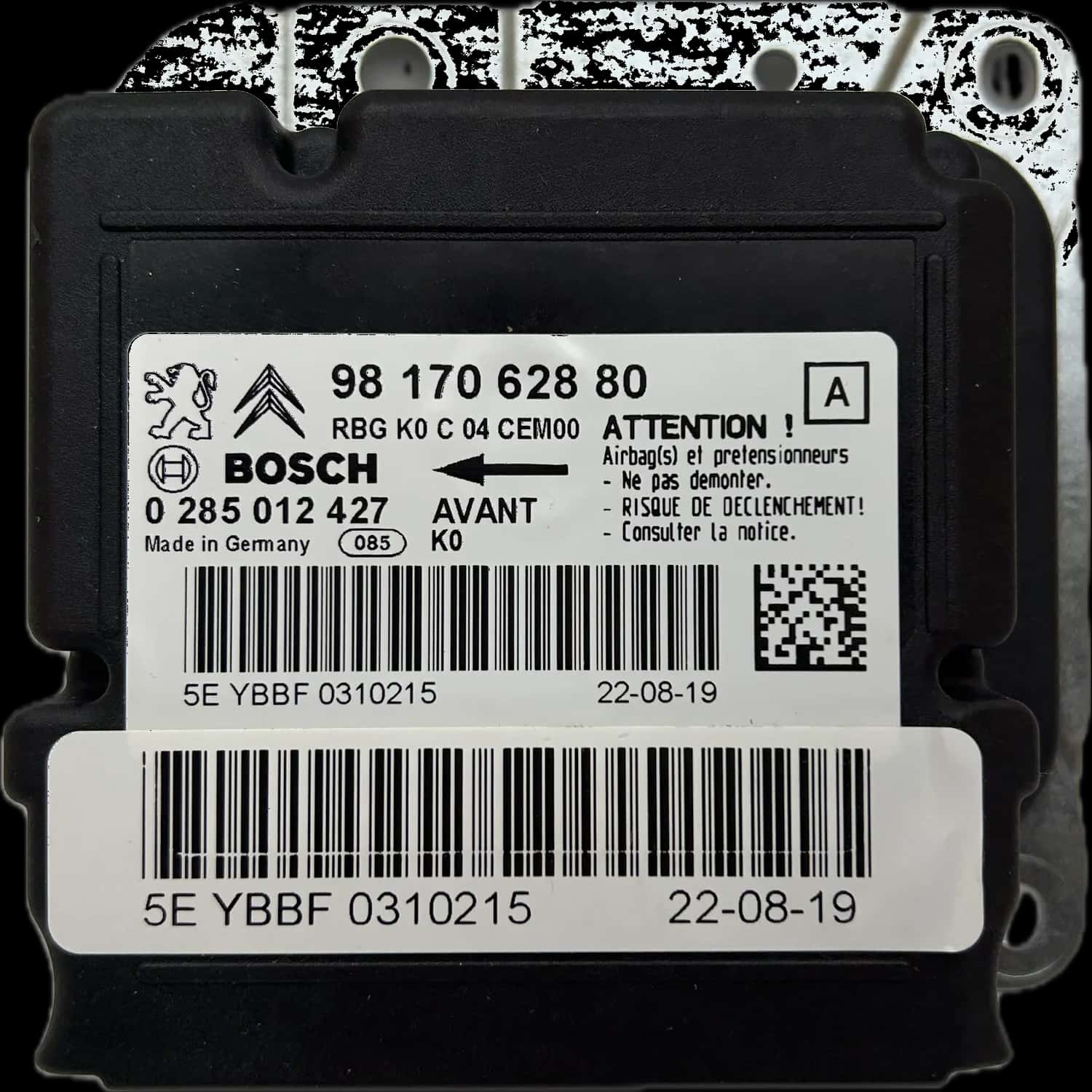
To identify the correct airbag control unit for repair or replacement, it is essential to provide the part number on the unit. This number, often along with the Vivaro's chassis number and the exact year of manufacture, helps to identify the correct control unit and software version. Especially for the Opel Vivaro B, specific part numbers such as 985106142R or 93457848 are important for precise identification and successful repair of defective units.
The airbag control unit is typically located in the center console or under one of the front seats, allowing for central positioning in the vehicle and optimal access to crash sensors. When removing it, it is advisable to disconnect the battery and follow the manufacturer's instructions to ensure safety and avoid false activation. Specialist shops can provide expert assistance in identifying and removing the defective control unit.
The airbag configuration of the Opel Vivaro varies depending on the model year and trim level. While early models use basic airbag systems, newer generations feature enhanced safety packages with additional airbag modules for comprehensive occupant protection.
All Opel Vivaro generations come standard with a driver's front airbag, which can save lives in a frontal collision. The passenger's front airbag is also standard in most models and can often be deactivated, which is particularly important when using child seats in the front passenger seat.
Depending on the trim level and model year, Opel Vivaro models can be equipped with additional side airbags for the driver and front passenger, which improve occupant protection, particularly in side collisions. These additional modules contribute significantly to passive safety.
The comprehensive passive safety package also includes belt force limiters and dual belt tensioners in the front seats, which optimally hold the occupants in their seats in the event of a collision and minimize the risk of injury. Seat belt warning systems further increase acceptance and thus safety. In the event of an airbag deployment, the hazard warning lights and door release are automatically activated to facilitate rescue measures and quickly extricate the occupants from the vehicle.
The passive safety system is complemented by active systems such as Electronic Stability Control (ESP), ABS with Cornering Brake Control, and traction control. These systems contribute significantly to defusing critical driving situations and preventing accidents from occurring in the first place, thus ensuring a high standard of safety for both passengers and cargo.
Airbag24 repairs your component in Berlin — usually within 3–4 working days.
Standard shipping within Germany is free; we normally return your part by UPS.
You pay for and insure the inbound shipment to us. On explicit request we ship by express — the extra cost is borne by the customer.
If you withdraw from the contract, you bear the cost of returning the item.