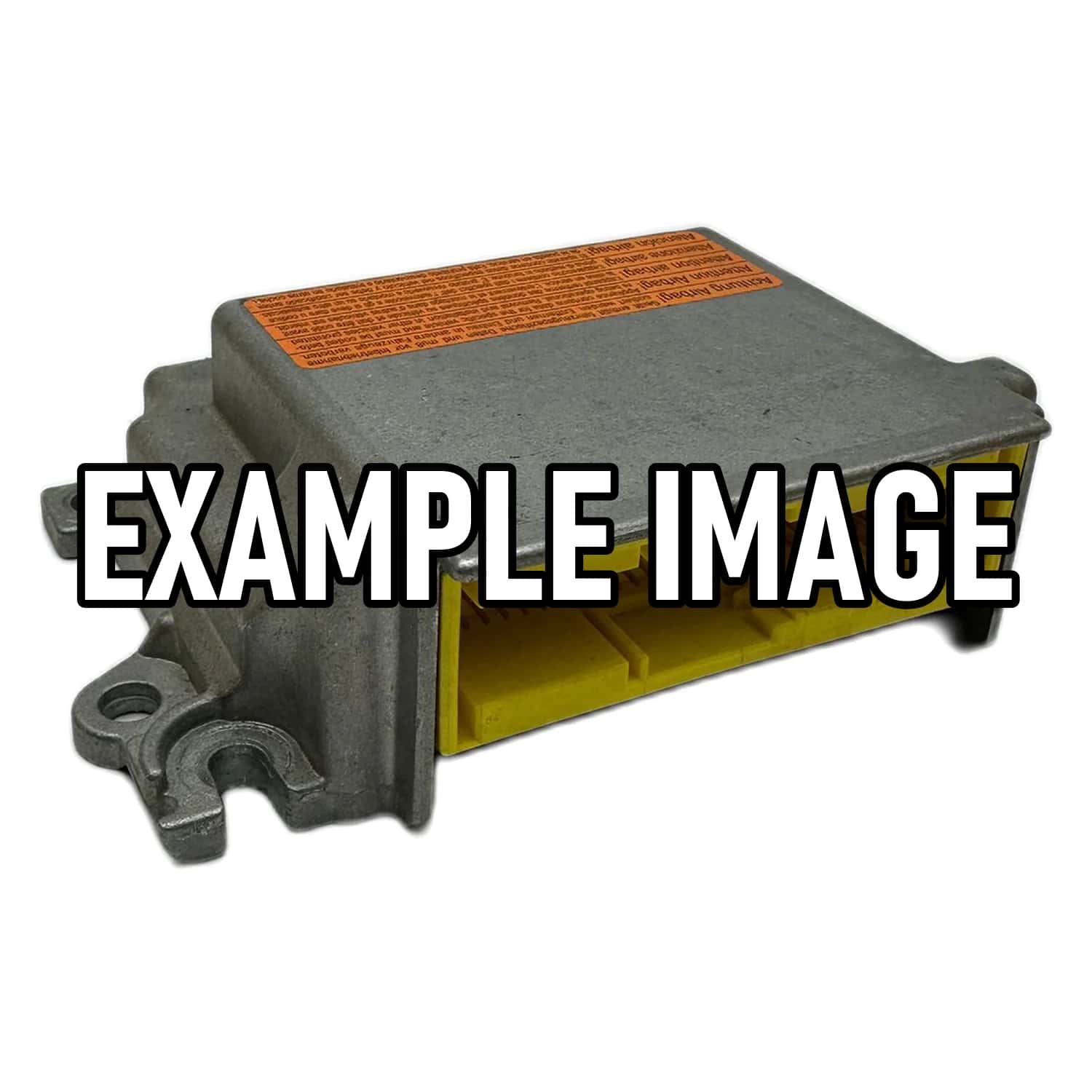
airbag control unit repair Peugeot 106 I
from€79.00
 Quality since 2002
The airbag technology used in the Peugeot 106 varies depending on the model year. We professionally repair control units for all Peugeot 106 generations with original functionality and a 2-year warranty.
The Peugeot 106, a popular B-segment subcompact, was produced from September 1991 to December 2003. During this period, the vehicle underwent various developments, which also affected the airbag control unit.
Initially, airbags were often optional in the Peugeot 106, but over time and with the introduction of Phase 2, they increasingly became standard or standard on higher trim levels. Due to their age, the electronic control units of these early vehicle generations are now prone to defects that require precise repair.
The Peugeot 106 was produced in two main generations, each using different airbag control units. The development of the safety system reflects technological advances from 1991 to 2003.
The first generation, known as the Peugeot 106 Phase 1 (S1), was built from September 1991 to April 1996. It laid the foundation for the success of the compact city car and featured the basic safety systems for that time.
In May 1996, a comprehensive facelift took place, ushering in the second generation, the Peugeot 106 Phase 2 (S2). Visually, this was reflected in rounded add-on parts such as the taillights and hood, while the dimensions remained unchanged.
Technically, the facelift also brought about a modernization of the internal systems, including the airbag system. Although some sources mention a third generation, this is generally considered a further facelift of Phase 2, which did not significantly affect the fundamental differences between the airbag control units of the two main phases.
Peugeot 106 airbag control units can be uniquely identified by part number, year of manufacture, and vehicle identification number. Each generation uses specific control unit variants for optimal compatibility.
To identify the correct airbag control unit for your Peugeot 106, the part number printed on the unit itself is crucial. This number is specific to the model year and trim level and ensures compatibility with the existing vehicle system.
Additionally, the exact year of manufacture of the vehicle and the vehicle identification number (VIN) can help identify the correct control unit. Since the airbag systems differ between Phase 1 and Phase 2 of the Peugeot 106, this precise identification is essential for a successful repair to ensure the proper functioning of the safety systems.
The airbag configuration of the Peugeot 106 varies depending on the model year and trim level. While early models use basic airbag systems, newer generations feature enhanced safety packages with additional airbag modules.
The Peugeot 106 was a typical small car at the time, equipped with the usual safety standards of the time. Most models came standard with a front airbag for the driver.
At some point, a passenger airbag was also available in higher trim levels or as an optional extra, particularly in the later Phase 2 models following the 1996 facelift. This reflected the growing focus on passive safety in small cars.
While the Peugeot 106 could be equipped with ABS, ESP (Electronic Stability Program) was not available for this model. The airbag control unit plays a central role in monitoring all airbag signals in the vehicle and ensures that a warning light illuminates in the dashboard in the event of a fault.
The Peugeot-specific diagnostic tool "Peugeot Planet 2000" is typically used to diagnose airbag system errors in the Peugeot 106. This allows for a detailed reading of the error codes, which are essential for a professional repair of the airbag control unit.
The further development of airbag systems during the production period of the Peugeot 106 shows how even compact and affordable vehicles were gradually equipped with improved safety features to increase the protection of the occupants.
Airbag24 repairs your component in Berlin — usually within 3–4 working days.
Standard shipping within Germany is free; we normally return your part by UPS.
You pay for and insure the inbound shipment to us. On explicit request we ship by express — the extra cost is borne by the customer.
If you withdraw from the contract, you bear the cost of returning the item.