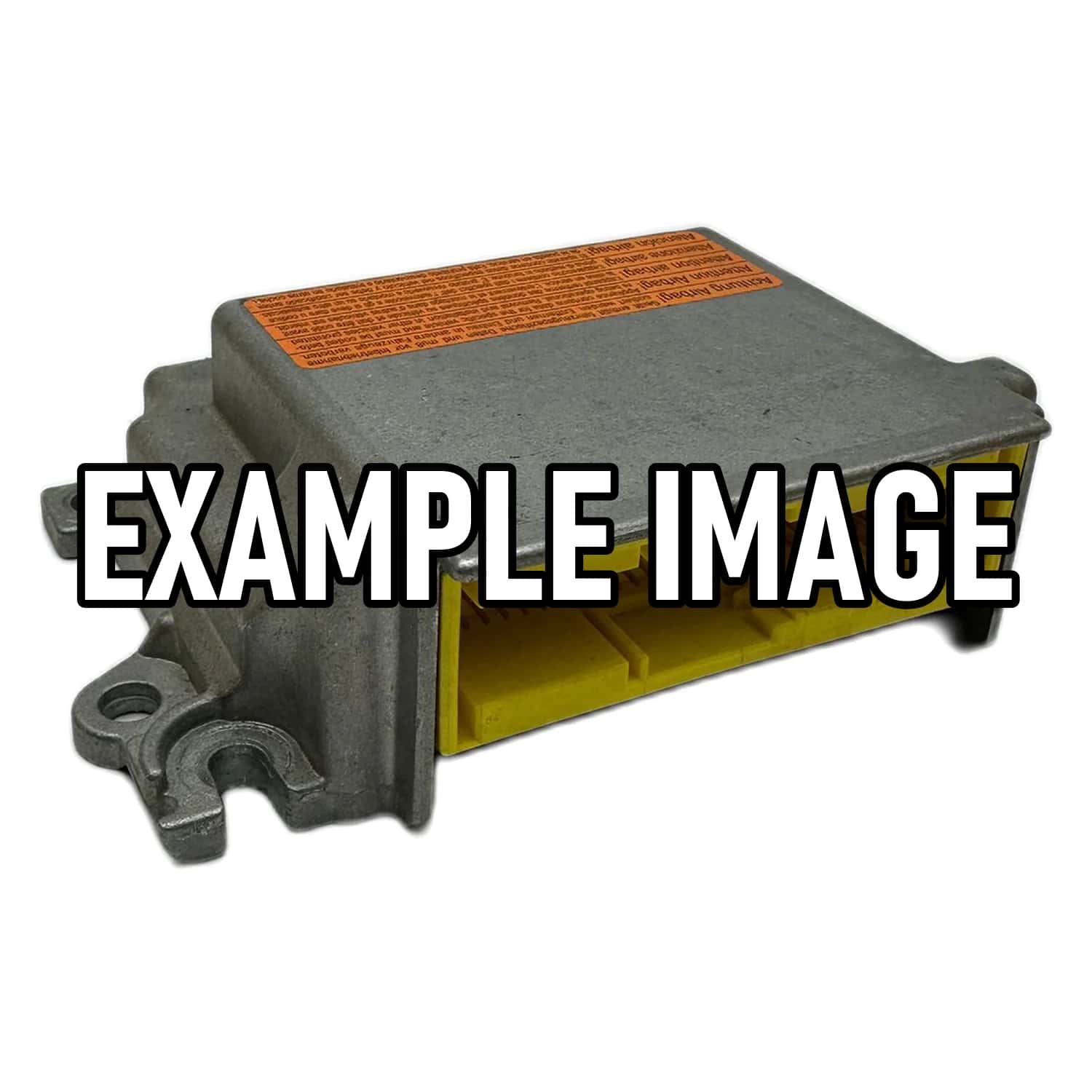
airbag control unit repair Peugeot 301 I
from€66.39
 Quality since 2002
The airbag technology used in the Peugeot 301 has been designed for robustness and reliable basic safety since the modern series was introduced in 2012. Airbag control units are central components of this safety system, and their proper functioning is crucial for occupant safety. A professional Peugeot 301 airbag control unit repair restores original functionality.
The Peugeot 301, in production since 2012, was specifically designed as an affordable and robust compact sedan for international emerging markets. This also influences the way the safety systems, including the airbags, are integrated: They are primarily focused on basic protection that functions reliably even under demanding driving conditions.
The airbag system development in the Peugeot 301 focused on providing standard safety features such as driver and passenger airbags. Add-ons such as side airbags are available depending on the market and trim level. The control units are designed to effectively manage this basic protection and respond quickly and precisely in the event of an impact.
If your Peugeot 301 airbag control unit is defective, a timely repair is essential to restore the safety system's full functionality. Modern diagnostic tools make it possible to precisely identify faults in the control unit and repair them specifically, rather than immediately requiring an expensive replacement.
The modern Peugeot 301, introduced from 2012 onwards, is based on a single main generation, which has been modernized over the years through minor model updates and facelifts. While there have been no completely new generations in the traditional sense, these updates can still result in different airbag control unit variants.
Production of the current Peugeot 301 began in 2012 and continues to this day. During this time, Peugeot has adapted the vehicle through minor design and technical revisions, but without launching a completely new model series. This ongoing development is also reflected in the safety system components.
The continuous model updates from 2012 onwards aimed to keep the Peugeot 301 competitive and meet the changing demands of its target markets. Although the vehicle's core architecture remained the same, revised electronics and adapted sensors could necessitate specific airbag control units for different model years within that single generation.
It's important to clearly distinguish the modern Peugeot 301 from the historic Peugeot 301, which was already produced in the 1930s. The current 301 (since 2012) is a separate development, designed specifically for international markets outside of Western Europe, and has a completely different technical foundation, particularly with regard to its safety systems.
For a precise Peugeot 301 airbag control unit repair, Peugeot 301 airbag control units can be clearly identified by the part number, the exact year of manufacture, and often also the vehicle identification number (VIN). Each variant within the model range uses specific control unit types designed for optimal compatibility and functionality.
The part number is the most important indicator for correctly identifying your airbag control unit. This number is usually printed directly on the control unit's housing or attached to a label. Reading it may require removing the control unit or at least making it accessible, which is often done under the center console or driver's seat.
In addition to the part number, the exact year of manufacture and trim level of your Peugeot 301 are important. Although the 301 is produced in one main generation, facelifts or country-specific trim levels may have resulted in different revisions of the airbag control unit. The VIN can also be helpful, as it provides detailed information about the specific vehicle and its installed components.
Correct identification is crucial to ensure that the repair or possible replacement is carried out with the exact control unit. This ensures full compatibility with the sensors and airbag modules installed in the vehicle and restores the original safety standards of your Peugeot 301.
The airbag configuration of the Peugeot 301 varies depending on the model year and the respective trim level, but is always designed to provide robust basic protection. The Peugeot 301 comes standard with driver and front passenger airbags, which serve as essential components of the passive safety system and help minimize injuries in the event of a collision.
As an affordable compact sedan primarily designed for emerging markets, the Peugeot 301 focuses on effective and reliable basic safety features. This typically includes the basic front airbags, which are deployed in the event of a frontal collision to protect the occupants.
Depending on the market and specific trim level, side airbags may also be standard or optional in the Peugeot 301. These provide additional protection in side collisions and are an important part of a more comprehensive passive safety package that goes beyond basic protection.
The Peugeot 301's airbag systems are designed to function reliably under a wide range of conditions. Although they lack the complexity and variety of assistance systems found in higher-priced vehicles, they meet the necessary safety standards for their vehicle class and target audience. A functioning airbag control unit is the core component, ensuring the correct deployment of all available airbags.
Airbag24 repairs your component in Berlin — usually within 3–4 working days.
Standard shipping within Germany is free; we normally return your part by UPS.
You pay for and insure the inbound shipment to us. On explicit request we ship by express — the extra cost is borne by the customer.
If you withdraw from the contract, you bear the cost of returning the item.