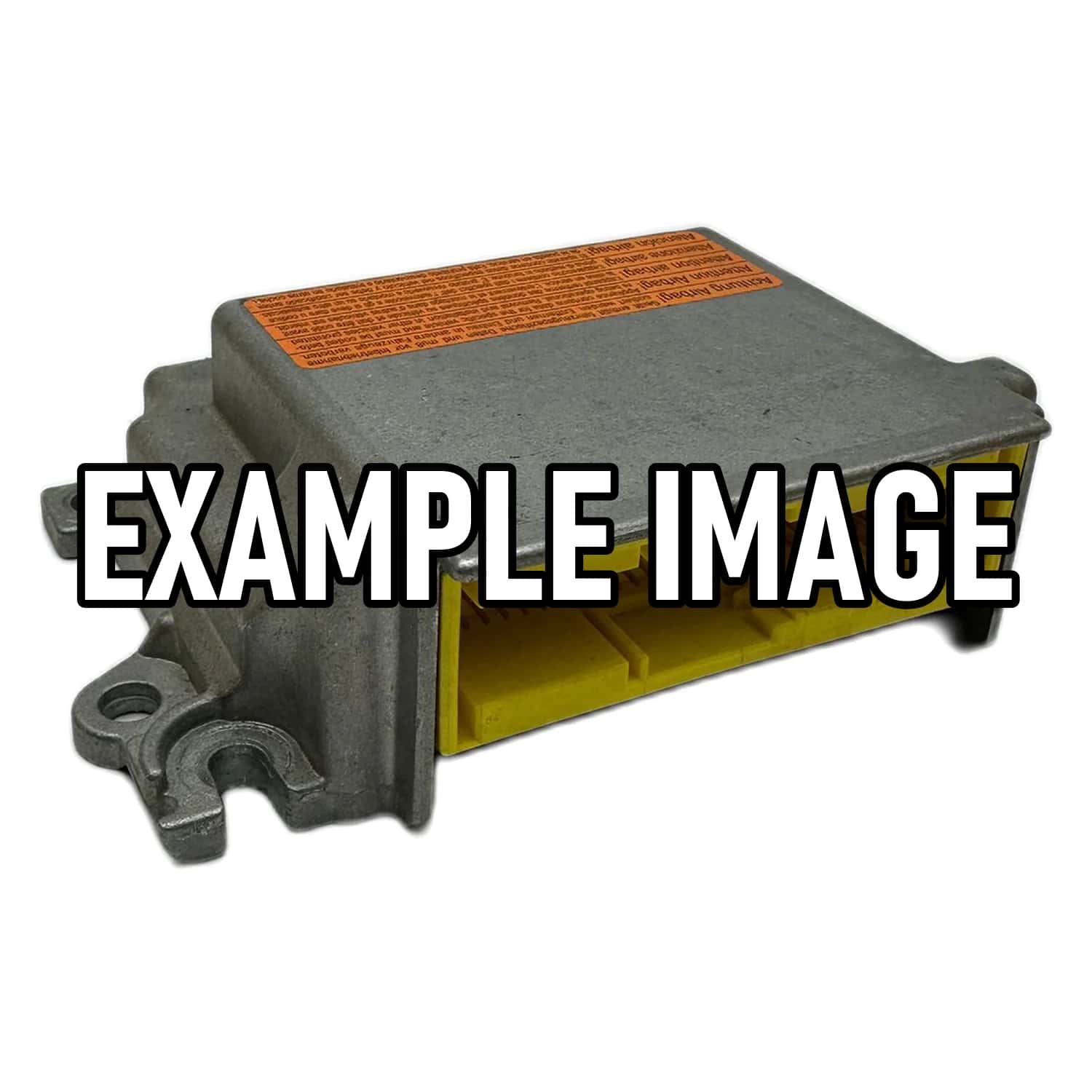
airbag control unit repair Peugeot 406 I
from€66.39
 Quality since 2002
The airbag technology used in the Peugeot 406 varies depending on the model year and equipment, which is of utmost importance when repairing the airbag control unit. Professional repair of defective control units is crucial to ensuring the original functionality and comprehensive safety of this mid-size car.
The Peugeot 406, produced from 1995 to 2005, was a popular family car that emphasized comfort and safety and was available in sedan, station wagon, and coupe body styles. Over the course of its production run, the model went through various development phases that directly impacted the installed safety systems, including the central airbag control unit. Each control unit is specifically tailored to the sensors and airbags of the respective model year.
The airbag control unit is the heart of the passive safety system in the Peugeot 406. It not only monitors the driver and front passenger airbags—which have always been standard—but also controls other critical components such as seatbelt pretensioners and emergency braking. A defective airbag control unit can significantly impair the function of these vital systems, making immediate repair essential to restore full operational safety.
The Peugeot 406 was essentially produced in two main phases, each with major facelifts that also affected the airbag control units. The evolution of the safety system reflects technological advances and increased safety standards from 1995 to 2005.
The first phase of the Peugeot 406 ran from 1995 until the major facelift in late 1998/early 1999 (often referred to as Phase 1 and Phase 2). This update for the sedan and station wagon brought not only visual updates but also a comprehensive overhaul of the vehicle's electronics, necessitating new control unit variants. The coupé version, designed by Pininfarina and offered from 1997, received its own, second phase around 2003 with an updated front end and interior, which also required adjustments to the installed safety systems and their control units.
For Peugeot 406 airbag control unit repair, precise knowledge of these phases and the respective model year is crucial to applying the correct replacement or repair procedure. This continuous development within the generations of the Peugeot 406 means that an airbag control unit from an early model year may not be readily compatible with a later-generation vehicle. The differences can range from the hardware to the software responsible for correctly detecting impact events and deploying the airbags. A specialized repair takes these specific requirements into account.
Peugeot 406 airbag control units can be most reliably identified by the part number printed on the housing, the exact year of manufacture, and the vehicle identification number (VIN). Each vehicle generation and trim level used specific control unit variants, designed for optimal compatibility with the rest of the vehicle's system.
The part number of the airbag control unit is the most important indicator of its specification. It contains information about the model year, vehicle equipment, and the specific software version. These control units are often located centrally in the vehicle, for example, under the center console or under one of the front seats, protected from external influences. Before considering a repair, it is essential to carefully note and verify this number.
Even minor deviations in the part number or a different model year of the vehicle can result in a control unit being incompatible or unable to correctly control all safety functions. A defective airbag control unit therefore requires precise identification to ensure that the performed Peugeot 406 airbag control unit repair permanently and safely resolves the problem and restores the functionality of the entire airbag system. A professional diagnosis is essential here.
The Peugeot 406's airbag equipment was already very advanced for a mid-size car of its time and varied depending on the model year and trim level. While standard driver and passenger airbags were always included, newer generations offered enhanced safety packages with additional airbag modules for more comprehensive protection.
From the start of production in 1995, the Peugeot 406 was equipped with standard front airbags for the driver and front passenger, which represented a high safety standard at the time and positioned it as a "large family car." This basic equipment was continuously expanded over the years to meet increasing safety requirements. Many models also featured side airbags, which offered better protection in side impacts and contributed to the 406's classification as a vehicle with comprehensive safety features. The Peugeot 406 airbag control unit is the central interface that precisely triggers all of these airbag modules in an emergency.
In addition, the airbag control unit in the Peugeot 406 was also responsible for activating other safety features that made the vehicle attractive to families and comfort-conscious drivers. These included initially optional, later standard systems such as the anti-lock braking system (ABS), electronic brake-force distribution (EBD), and emergency braking assistance (EBA). The seatbelt pretensioners, which provide additional safety for the occupants in the event of a collision and deploy within milliseconds, are also controlled by the airbag control unit. Error messages such as the illuminated airbag warning light often indicate a defective airbag control unit, the repair of which is essential to restore the full functionality of these critical safety systems.
Airbag24 repairs your component in Berlin — usually within 3–4 working days.
Standard shipping within Germany is free; we normally return your part by UPS.
You pay for and insure the inbound shipment to us. On explicit request we ship by express — the extra cost is borne by the customer.
If you withdraw from the contract, you bear the cost of returning the item.