
Peugeot Boxer airbag control unit repair(3)
What should be considered with Peugeot Boxer airbag control units?
The airbag technology used in the Peugeot Boxer varies depending on the model year. Control units for all Peugeot Boxer generations are professionally repaired with original functionality and a 2-year warranty.
The Peugeot Boxer has been an indispensable commercial vehicle since its launch in 1994, continuously evolving through four main generations. Each of these generations—Boxer I (1994-2006), Boxer II (2006-c. 2014), Boxer III (since 2014), and the latest Boxer IV / e-Boxer (since c. 2020)—brought not only visual and engine innovations, but also significant advances in passive safety and thus airbag systems.
The development of the airbag systems in the Peugeot Boxer reflects the general trend in the automotive industry. While early models like the Peugeot Boxer I were often equipped with only a driver's airbag, the systems have become increasingly comprehensive over the years. Modern generations of the Peugeot Boxer feature a far more complex network of sensors and various airbag modules, providing greater protection for occupants and thus significantly increasing the complexity of the airbag control units when they fail and require repair.
Which Peugeot Boxer generations are there?
The Peugeot Boxer has been produced in four generations, each with different airbag control units. The evolution of the safety system reflects technological advances from 1994 to the present day.
The first generation, the Peugeot Boxer I, was built from 1994 to 2006 and received a comprehensive facelift in 2002, which also influenced the basis of the airbag control units. It laid the foundation for the model's success as a versatile large-capacity van.
The second generation, the Peugeot Boxer II, was launched in 2006 and was slightly updated around 2011. There were already advances in the number of airbags and the electronics relevant for airbag control unit repair.
The Peugeot Boxer III has been in production since 2014, taking a major step toward more modern interior design, connectivity, and improved driver aids. The airbag systems in this model are already significantly more complex and require specialized repair if the control unit is defective.
The latest fourth generation, the Peugeot Boxer IV, which has also included a fully electric version known as the e-Boxer since around 2020, offers the most comprehensive safety packages. These models integrate state-of-the-art sensor technology and a variety of airbags, making precise knowledge of the respective model year and equipment essential for a successful airbag control unit repair.
How do I identify my Peugeot Boxer airbag control unit?
Peugeot Boxer airbag control units can be uniquely identified by part number, year of manufacture, and vehicle identification number (VIN). Each generation uses specific control unit variants for optimal compatibility and successful repair.
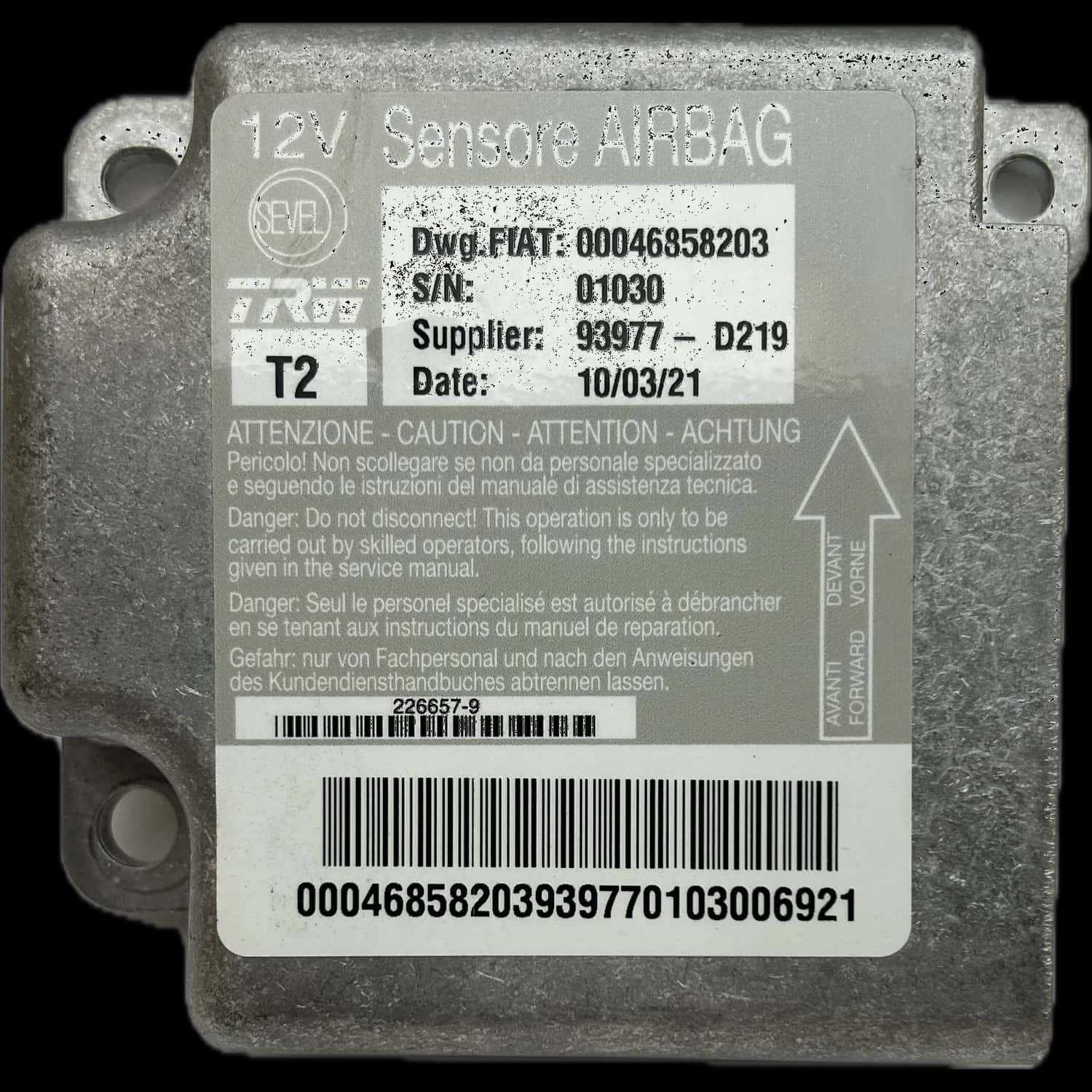
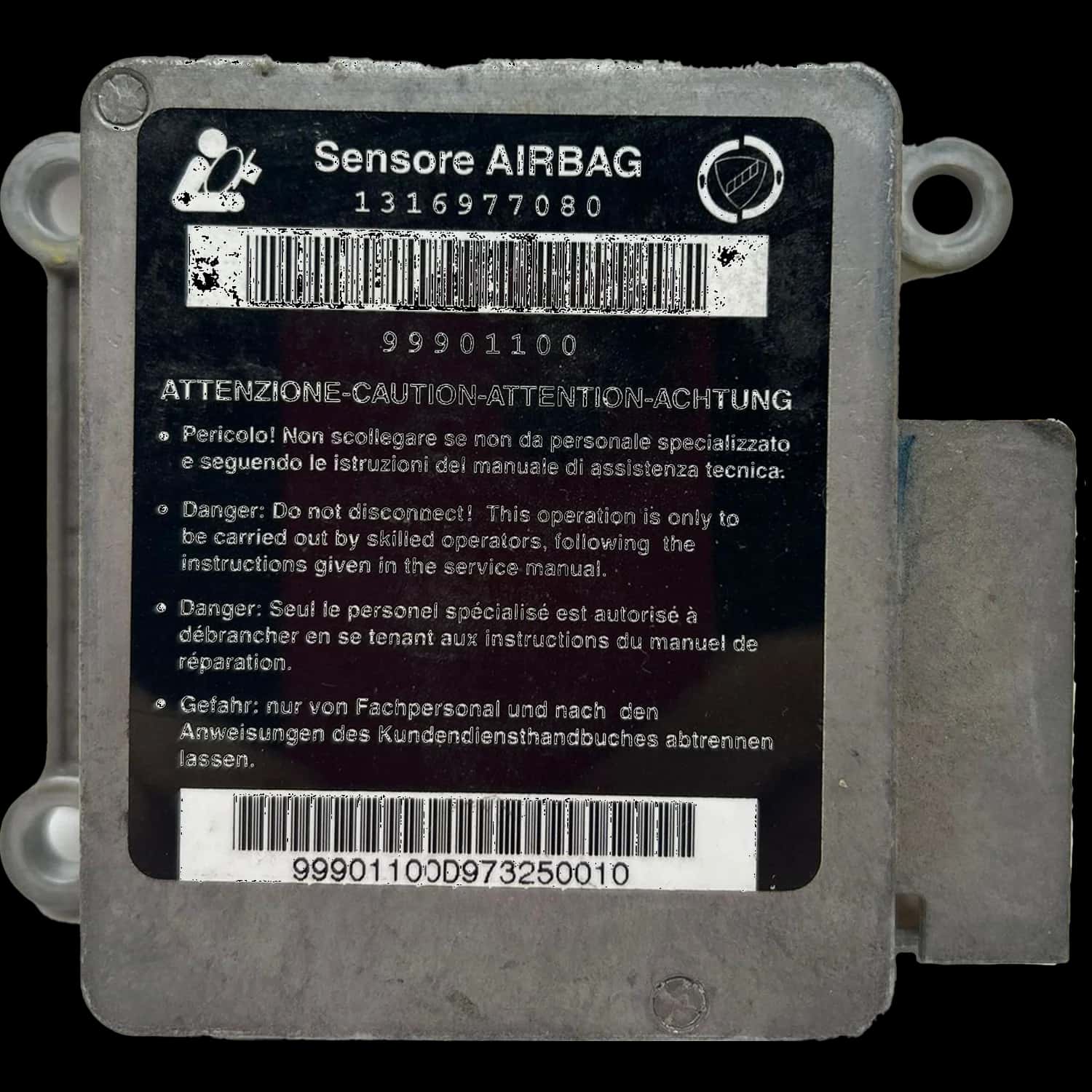
To perform a correct airbag control unit repair, it is crucial to know the exact model of the control unit installed. The airbag control unit part number is the most important piece of information and is usually located directly on the component's housing. This number provides information about the manufacturer, type, and specific software version of the control unit.
Additionally, the vehicle's year of manufacture and the vehicle identification number (VIN) are important reference points. The VIN allows us to identify the exact equipment and thus the correct airbag system for the specific Peugeot Boxer model, which is particularly crucial when repairing a defective control unit.
It should be noted that even within a generation or after a facelift, different control units may have been installed, depending on the equipment line and the safety features installed (e.g., with or without side airbags). Therefore, precise identification before any repair is essential to ensure original functionality.
What airbag equipment does the Peugeot Boxer have?
The airbag configuration of the Peugeot Boxer varies depending on the model year and trim level. While early models use basic airbag systems, newer generations feature enhanced safety packages with additional airbag modules, which also affects the complexity of airbag control unit repair.
The Peugeot Boxer I (1994–2006) came with a driver's airbag as standard. A passenger airbag was often available as an option, while side airbags were usually not standard equipment in this generation. The focus here was on essential driver protection.
With the introduction of the Peugeot Boxer II (2006–approx. 2014), airbags largely became standard. Driver and passenger airbags were standard in most models, and side airbags were available in select trim levels. The 2011 update also brought additional safety features such as daytime running lights and hill start assist.
The third generation, the Peugeot Boxer III (since 2014), usually offers a more comprehensive airbag package. Driver, passenger, and often side airbags are standard, and depending on the equipment, curtain airbags or other supplementary systems may also be available. These models are more focused on comfort and an enhanced level of safety.
The latest generation, the Peugeot Boxer IV / e-Boxer (since approximately 2020), features a full range of airbags, typically including driver, passenger, and side airbags. Furthermore, these models often integrate the latest driver assistance systems, which communicate with the airbag system and thus provide the highest level of passive safety. Repairing the airbag control unit in these modern vehicles therefore requires in-depth expertise in complex system architectures.
Common fault codes in this category
B0100 - Airbag control unit internal fault (control unit defective)B0102 - Airbag control unit malfunction (control unit defective)No communication - Control unit defectiveB0100-49 - Airbag control unit internal electronic fault (control unit defective)B0101 (control unit defective)B0118B1000 (control unit defective)B1001 - Airbag control unit internal fault (control unit defective)
Shipping & repair from Germany
Airbag24 repairs your component in Berlin — usually within 3–4 working days.
Standard shipping within Germany is free; we normally return your part by UPS.
You pay for and insure the inbound shipment to us. On explicit request we ship by express — the extra cost is borne by the customer.
If you withdraw from the contract, you bear the cost of returning the item.