

Porsche 911 airbag control unit repair(6)
6 products


What should be considered with Porsche 911 airbag control units?
The airbag technology used in the Porsche 911 varies significantly depending on the year and model generation. Airbag control units are highly complex and safety-critical components; professional repair requires specialist knowledge and specialized diagnostic equipment to ensure proper function and thus the safety of the occupants.
The iconic Porsche 911 model line has undergone remarkable evolution since its launch, from the original air-cooled engines of the 964 and 993 series to the modern, water-cooled units of the 996 series. This technological evolution also had a direct impact on the installed airbag systems and their associated control units.
Each new 911 generation integrated more advanced safety technologies, resulting in specific airbag control units precisely tailored to the respective vehicle architecture and the number of airbags installed. Especially after an accident, so-called crash data can be stored in the control unit, causing an error message and preventing the system from functioning normally. A professional airbag control unit repair on a Porsche 911 is essential in such cases to restore the system to full functionality and avoid the costly purchase of a new one.
Which Porsche 911 generations are there?
The Porsche 911 has been produced in numerous distinct generations, each with its own, specifically adapted airbag control units. The continuous development of these safety systems reflects the enormous technological advances from the late 1980s to the present day.
The modern era of the Porsche 911 began with the 964 series, which was produced from 1989 to 1994 and already featured the first airbag systems. This was followed by the 993 (1994-1998), which is considered the last air-cooled 911 and was also equipped with advanced safety features.
A turning point was marked by the 996 (1997-2006), the first water-cooled 911 to be delivered with more comprehensive airbag systems. Building on this, the 997 (2004-2011) and the 991 (2011-2019) were launched, both of which appeared in two generations with facelifts and continuously improved passive safety systems.
The current generation, the 992 (since 2019), represents the latest state-of-the-art technology with state-of-the-art airbag management and complementary assistance systems. Each of these generations requires a thorough understanding of its specific electronics and software for airbag control unit repair to ensure compatibility and functionality.
How do I identify my Porsche 911 airbag control unit?
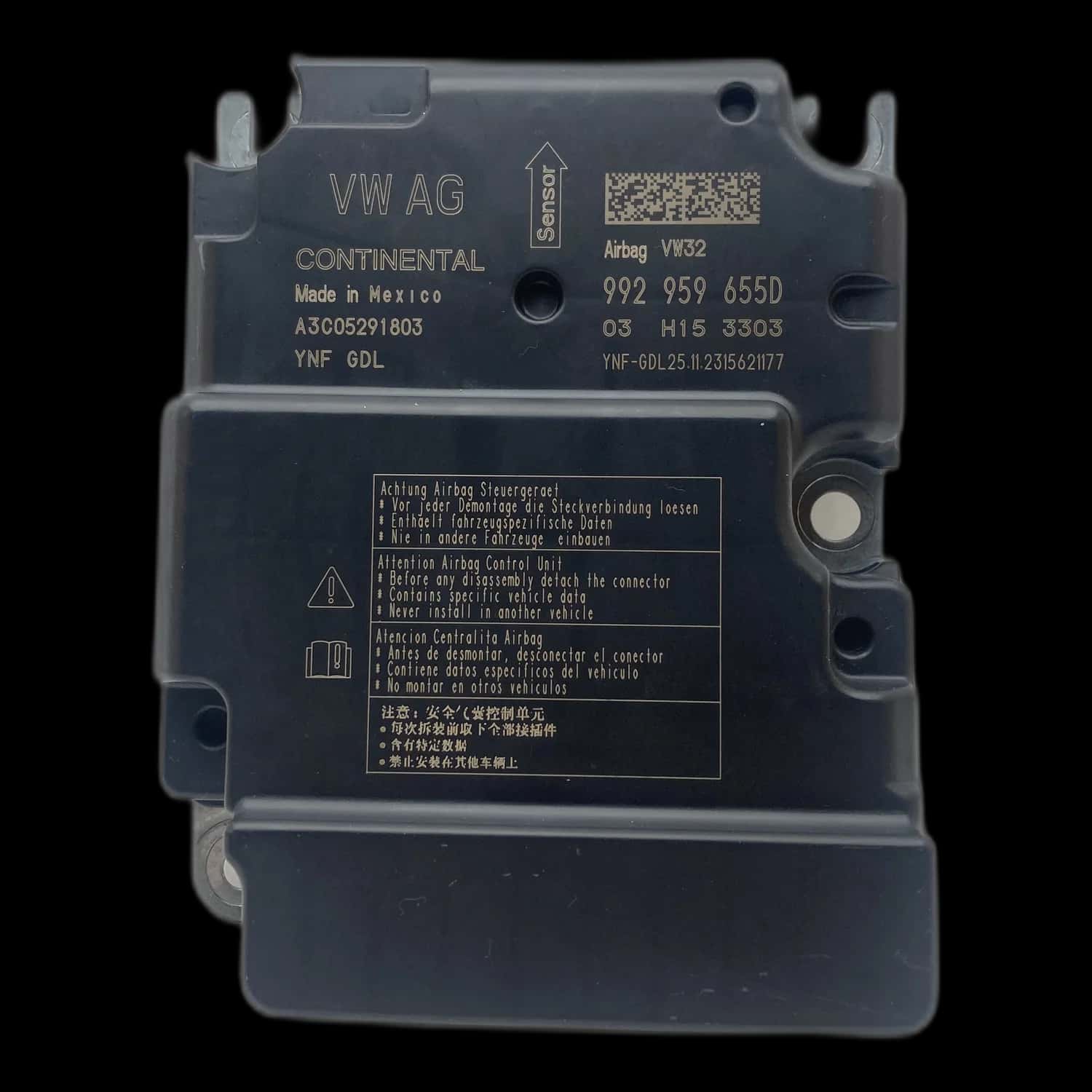
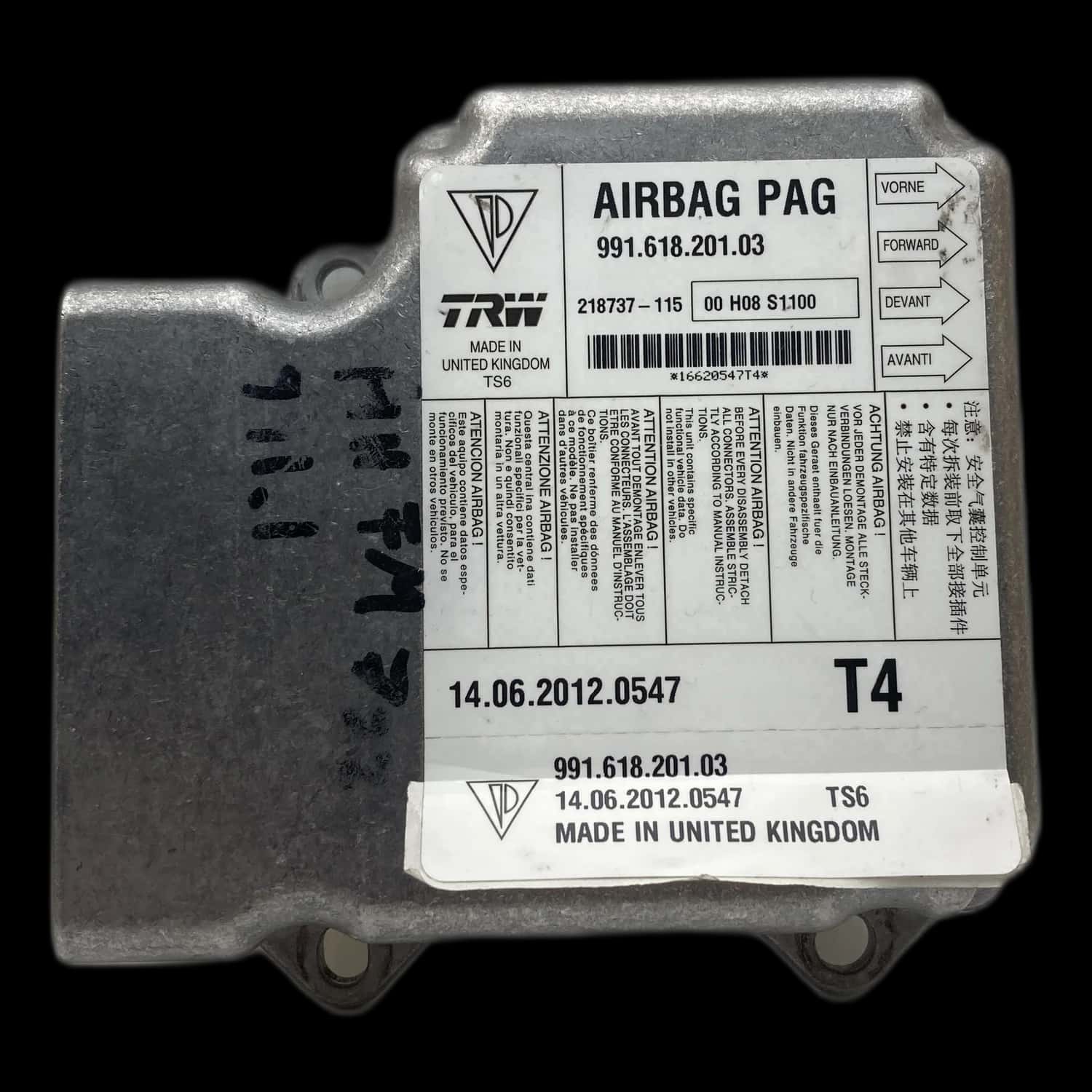
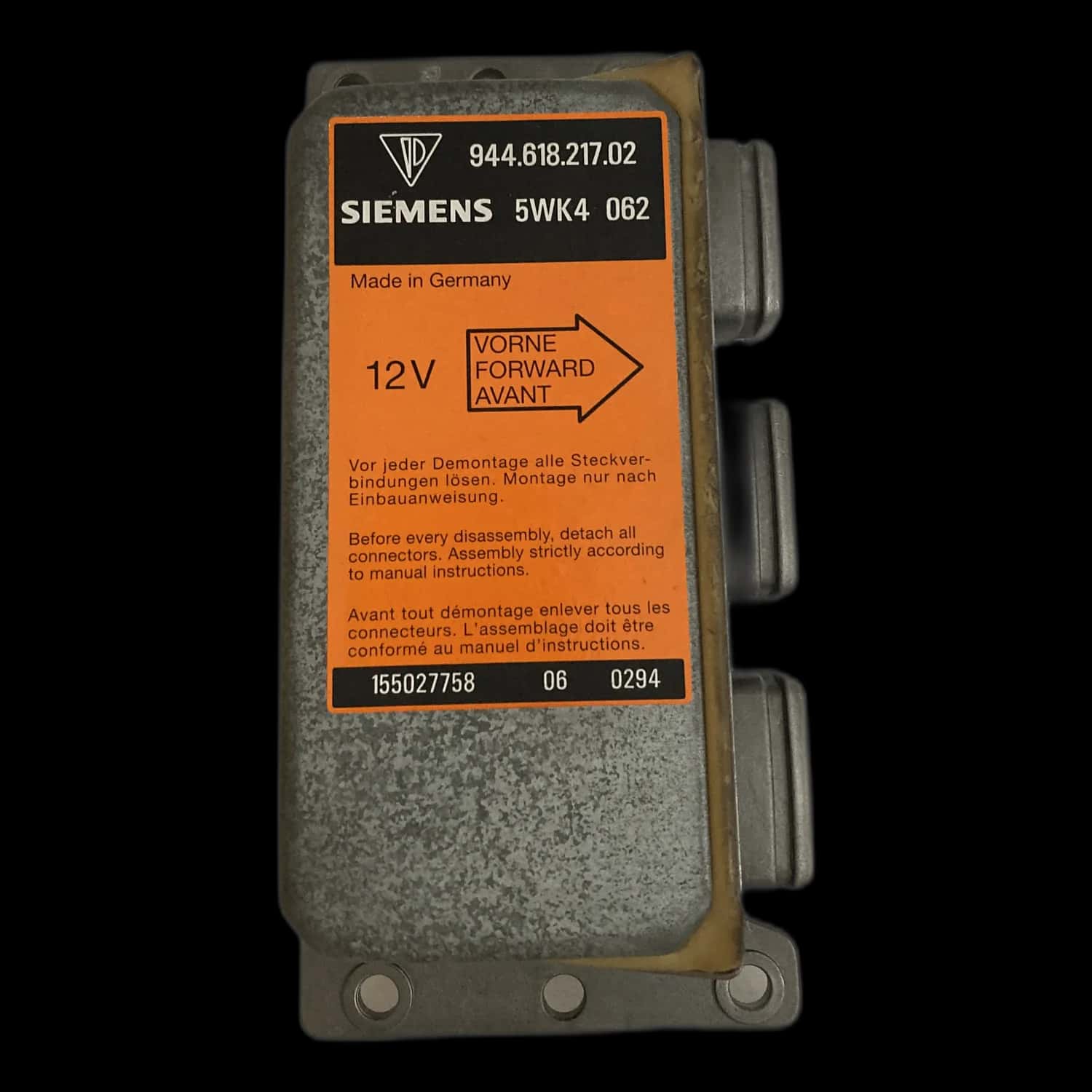
Porsche 911 airbag control units can be precisely identified by their unique part number, the specific model year of the vehicle, and often also by the vehicle identification number (VIN). Specific control unit variants are used for each generation of the 911, precisely tailored to the respective vehicle configuration and the installed airbag components.
The part number is the most important identifier for the airbag control unit and is usually printed directly on the component's housing or affixed as a sticker. Finding this number often requires removing the control unit, as it is usually located under the center tunnel, under the driver's seat, or in the footwell.
The year of manufacture of the Porsche 911 is also crucial, as even within a model series, hardware and software updates were often made, resulting in different control unit versions. The Vehicle Identification Number (VIN) offers the most precise method of identification, as it provides detailed information about the factory equipment and specifications of the individual vehicle.
Correct identification is absolutely essential for any airbag control unit repair on a Porsche 911. This is the only way to ensure that the repaired or replaced control unit harmonizes perfectly with your sports car's complex safety system and guarantees its flawless function when needed.
What airbag equipment does the Porsche 911 have?
The airbag equipment of the Porsche 911 has evolved considerably over the years and varies significantly depending on the model year and specific trim level. This development reflects the progress in passive vehicle safety, from basic systems to comprehensive, intelligent protection concepts.
In early series models such as the Porsche 911 (964) and 911 (993), airbags increasingly became standard equipment in the late 1980s and 1990s. For example, starting in 1990, driver and passenger airbags were standard on all Porsche models for the US market, including the 911, whereas previously they were often optional and offered only the most basic protection.
With the introduction of the Porsche 911 (996) in 1997, airbags became widely established as standard equipment in all markets, including front airbags for the driver and front passenger. Later generations, such as the 996, 997, and 991, significantly expanded the system. These included the Porsche Side Impact Protection System (POSIP), which included side airbags for thorax protection and head airbags for head protection, thus providing significantly more comprehensive occupant protection.
The current Porsche 911 (992) generation comes standard with a comprehensive airbag system that includes front, side, knee, and curtain airbags, complemented by modern assistance systems such as lane change assist and adaptive safety technologies. This increasing complexity of airbag systems makes a specialized airbag control unit repair on a Porsche 911 essential after a defect or accident to restore the vehicle's full functionality and safety.
Shipping & repair from Germany
Airbag24 repairs your component in Berlin — usually within 3–4 working days.
Standard shipping within Germany is free; we normally return your part by UPS.
You pay for and insure the inbound shipment to us. On explicit request we ship by express — the extra cost is borne by the customer.
If you withdraw from the contract, you bear the cost of returning the item.