
Porsche Cayman airbag control unit repair(3)

What should be considered with Porsche Cayman airbag control units?
The airbag technology used in the Porsche Cayman varies depending on the model year. A professional repair with original functionality is essential for the safety of your vehicle.
The Porsche Cayman, an iconic mid-engine sports car, has been produced over several generations : from the original 987 to the 981 to the current 718. Each series brought with it specific technical developments that also influenced the passive safety systems.
This is especially true for the airbag control units. They have evolved along with the technological advancements of the vehicle to ensure maximum occupant safety and meet modern requirements for driver assistance systems.
Which Porsche Cayman generations are there?
The Porsche Cayman has been produced in three main generations , each using different airbag control units. The development of the safety system reflects technological advances from 2005 to the present.
The first generation , the Porsche Cayman 987, was produced from 2005 to 2013 and included the facelifted 987.1 (2005-2008) and 987.2 (2009-2013). These models laid the foundation for the Cayman's success as a standalone coupé, technically based on the Boxster.
The successor, the Porsche Cayman 981, was marketed from approximately 2012 to 2016, also with slight revisions. It offered a refinement of the concept with improved chassis and engine technology, which also brought with it adjustments to the safety systems.
The current Porsche 718 Cayman has been in production since 2016 and represents a significant step forward, including the introduction of four-cylinder turbo engines. This generation integrates state-of-the-art safety and assistance systems specifically tailored to the vehicle's performance.
Each of these generations requires specific airbag control units that are precisely tailored to the respective vehicle architecture and installed airbag modules. A defective control unit often requires a specific repair for the respective series.
How do I identify my Porsche Cayman airbag control unit?
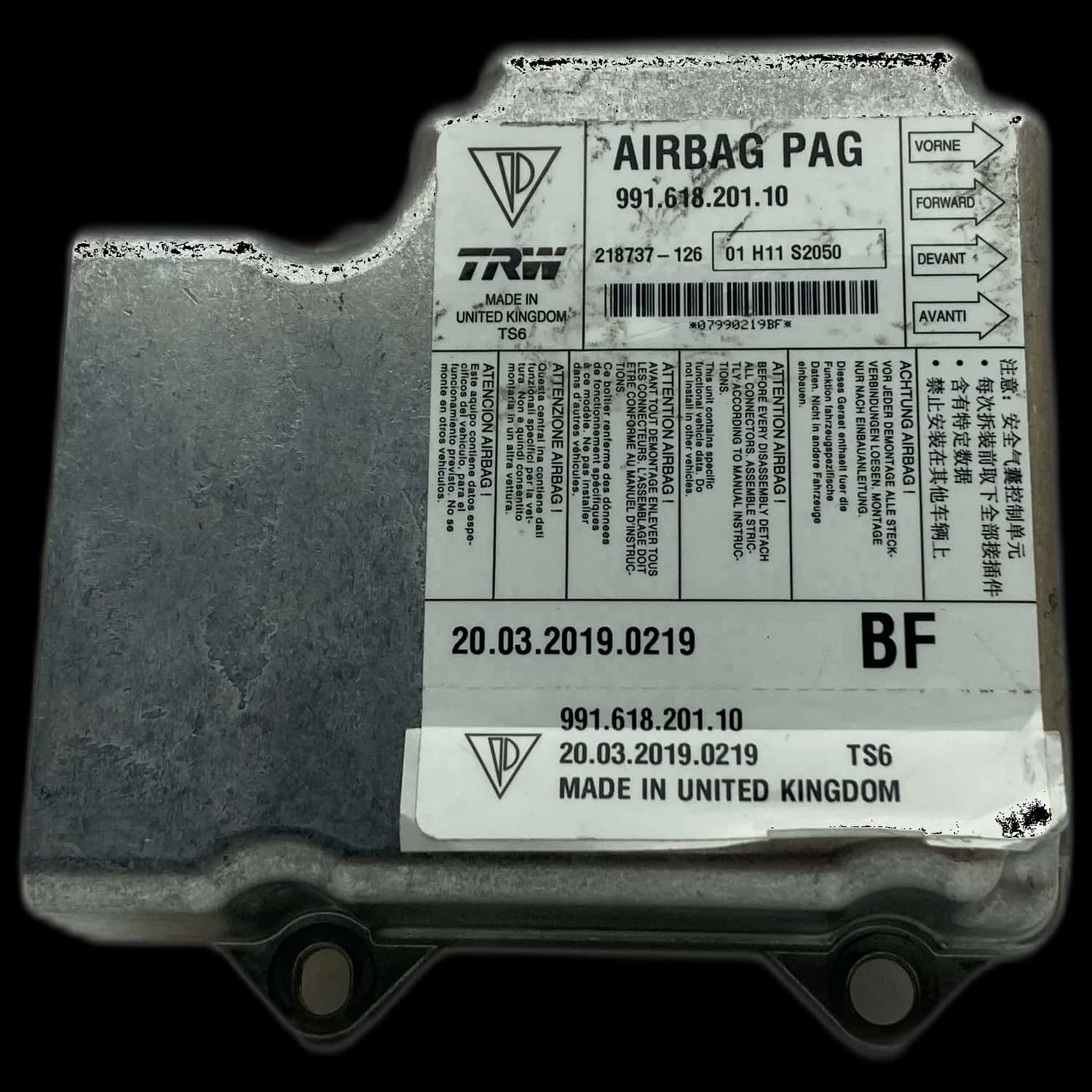
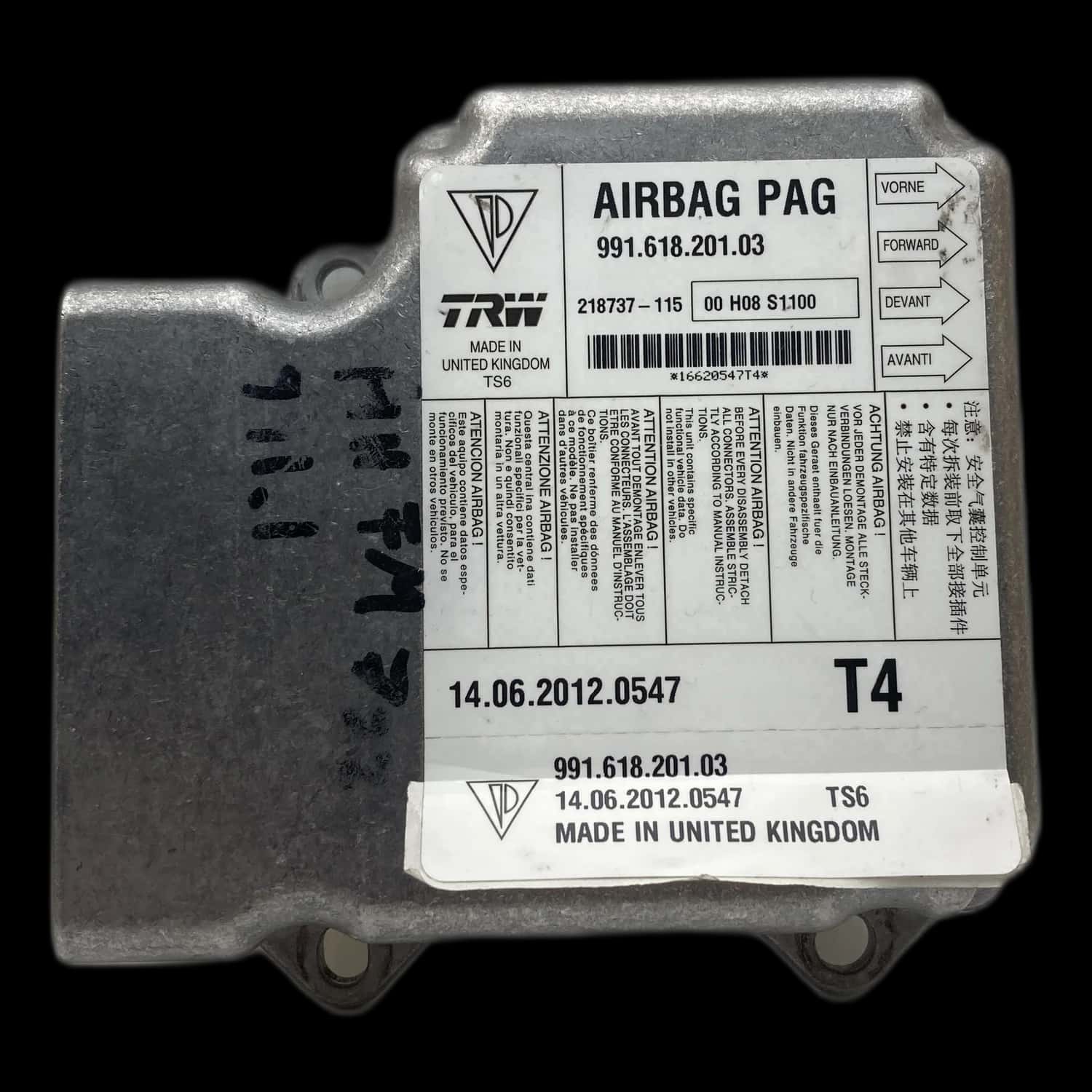
Porsche Cayman airbag control units can be uniquely identified by part number, year of manufacture , and vehicle identification number (VIN). Each generation uses specific control unit variants for optimal compatibility.
The control unit's part number is the most important indicator of its exact specification. It is located directly on the module's housing and indicates compatibility with your vehicle model and year .
In addition, the exact year of manufacture of your Porsche Cayman and the vehicle identification number (VIN) provide important information about the installed components and their specific versions. This information is crucial for ensuring the right replacement or repair solution for your airbag control unit.
In the event of a defective airbag control unit, accurate identification is essential before repairs can begin to avoid malfunctions and further problems in the vehicle's sensitive safety system.
What airbag equipment does the Porsche Cayman have?
The airbag configuration of the Porsche Cayman varies depending on the model year and trim level. While early models use basic airbag systems, newer generations feature enhanced safety packages with additional airbag modules.
The Porsche Cayman 987 (2005-2013) was already equipped as standard with a comprehensive airbag system, which usually included front airbags for the driver and front passenger as well as side airbags to ensure occupant protection.
In the Porsche Cayman 981 (approx. 2012-2016), these systems were further refined and seamlessly integrated into the optimized vehicle architecture. The basic airbag configuration remained at a high level and met the safety standards of the time.
The current Porsche 718 Cayman (from 2016) features the latest safety technologies. In addition to traditional airbag systems, they often also include advanced sensors, knee airbags, and integration with active driver assistance systems that intelligently control the airbag system, thus further enhancing occupant safety.
A defective airbag control unit can impair the function of these vital systems, which is why a quick and professional repair or replacement of the module in the case of a defective part is essential to restore the full functionality of the passive safety system.
Common fault codes in this category
Shipping & repair from Germany
Airbag24 repairs your component in Berlin — usually within 3–4 working days.
Standard shipping within Germany is free; we normally return your part by UPS.
You pay for and insure the inbound shipment to us. On explicit request we ship by express — the extra cost is borne by the customer.
If you withdraw from the contract, you bear the cost of returning the item.