
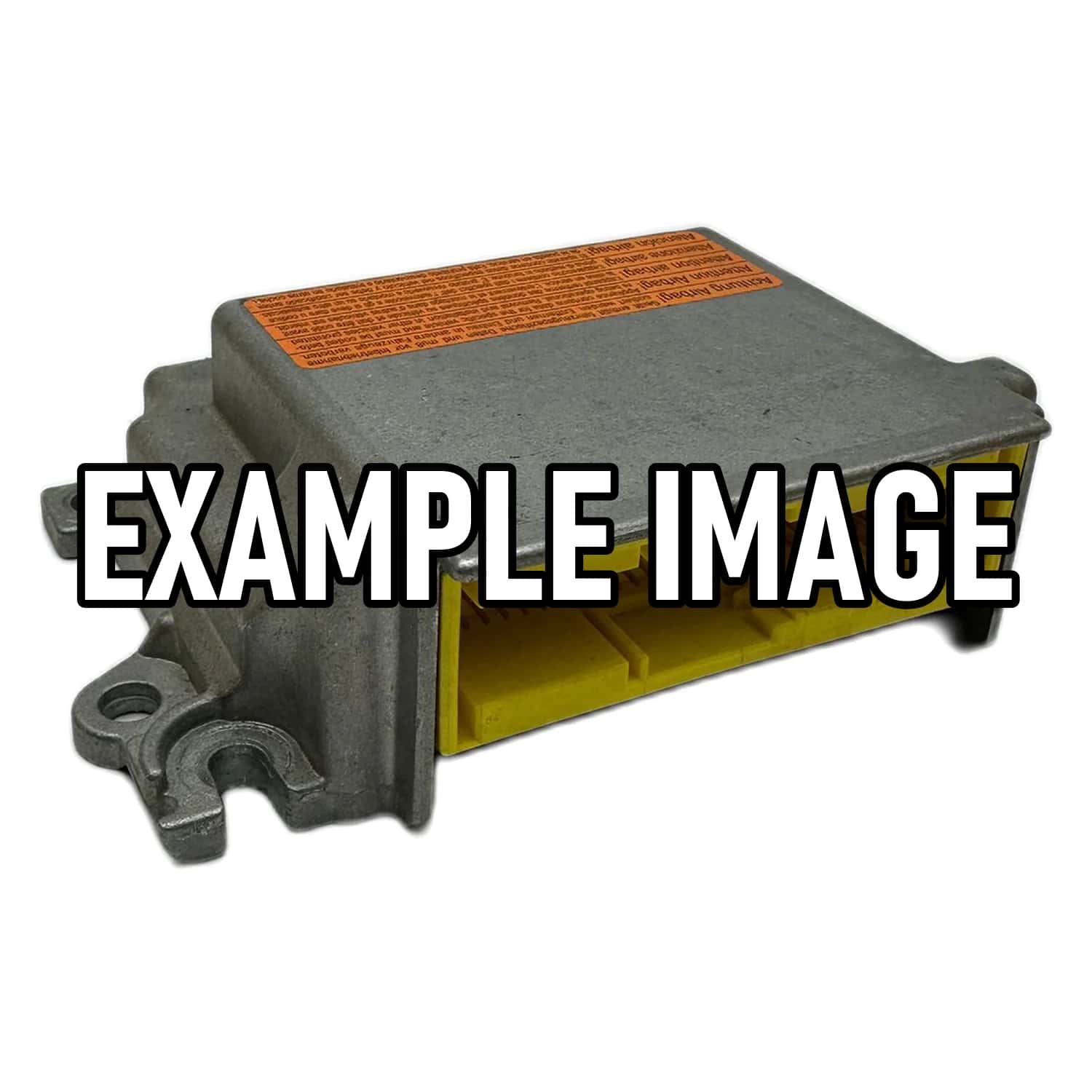

Renault Laguna airbag control unit repair(3)
What should I pay attention to with Renault Laguna airbag control units?
The airbag technology used in the Renault Laguna varies depending on the model year. Specialized repair teams professionally troubleshoot control units for all Renault Laguna generations while maintaining true-to-original functionality.
The Renault Laguna was produced in three generations over 22 years from 1994 to 2015, and was later replaced by the Renault Talisman. During this long production period, the safety level and complexity of the airbag systems also continued to evolve.
Each generation brought technological advances that directly impacted airbag control units. From basic systems to adaptive airbags and dual crash sensors, which make the control unit correspondingly more complex.
A professional repair of defective Renault Laguna airbag control units is essential to ensure the safety system's full functionality. Common problems such as persistent warning lights or crash data that cannot be erased can be resolved this way, rather than having to purchase an expensive new part.
Which Renault Laguna generations are there?
The Renault Laguna was produced in three generations, each using different airbag control units. The development of the safety system reflects technological advances from 1994 to 2015.
The Renault Laguna I was introduced from 1994 to 2001 as a mid-size hatchback and later as a station wagon. It laid the foundation for airbags and integrated the first basic control units.
The second generation, the Renault Laguna II (2001–2007), was a milestone in safety, as it was the first model to receive a five-star rating in the Euro NCAP crash test. This required more sophisticated airbag control systems and correspondingly adapted airbag control units.
The Renault Laguna III (2007–2015) received a facelift in 2010, featuring improved looks and technology. This generation featured particularly advanced airbag systems that enabled more precise and faster deployment and thus required more complex control units.
How do I identify my Renault Laguna airbag control unit?
Renault Laguna airbag control units can be uniquely identified by part number, year of manufacture, and vehicle identification number (VIN). Each generation uses specific control unit variants for optimal compatibility and functionality.
Correctly identifying the airbag control unit is crucial for a successful repair or replacement. The part number, often found on the control unit's housing, is the most important clue for finding the exact model and specifically fixing a defect.
Common errors in the Renault Laguna's control unit, such as communication problems, coding errors, or permanently stored crash data after an accident, require a specific diagnosis. Reading the error log provides information about the defect and the need for professional repair.
Experts can fix such problems with special software, erase the crash data, and reprogram the control unit's software. This saves money compared to purchasing a new one and restores the vehicle's safety.
What airbag equipment does Renault Laguna have?
The airbag configuration of the Renault Laguna varies depending on the model year and trim level. While early models use basic airbag systems, newer generations feature enhanced safety packages with additional airbag modules and more complex control units.
All Renault Laguna generations come standard with front airbags for the driver and front passenger, as well as seatbelt pretensioners. Side airbags, which provide additional protection in the event of a side impact, were also an integral part of passive safety and were controlled via the airbag control unit.
The Renault Laguna III, in particular, featured state-of-the-art airbag technology. It featured adaptive front airbags that adjust deployment and inflation pressure to the driver's body shape and the severity of the impact to provide optimal occupant protection.
In addition, the Laguna III utilized third-generation twin thorax/pelvis airbags with different deployment pressures and dual sensors in the doors for side impacts. These significantly reduced deployment time in side impacts, requiring precise control by the airbag control unit.
The Renault Laguna's airbag control unit continuously monitors all safety system functions, from fault detection and warning lights to storing relevant crash data. A defect in this central component can impair the entire system's functionality. A prompt repair of the defective control unit is therefore essential for the vehicle's operational safety and the proper functioning of the airbags.
Shipping & repair from Germany
Airbag24 repairs your component in Berlin — usually within 3–4 working days.
Standard shipping within Germany is free; we normally return your part by UPS.
You pay for and insure the inbound shipment to us. On explicit request we ship by express — the extra cost is borne by the customer.
If you withdraw from the contract, you bear the cost of returning the item.