
Renault Latitude airbag control unit repair(1)
1 product
What should I pay attention to with Renault Latitude airbag control units?
The airbag technology used in the Renault Latitude is designed to the highest safety standards and forms the core of occupant protection. Professional repairs ensure the true functionality of these control units and contribute significantly to the long-term operational reliability that is essential for a vehicle of this class.
The Renault Latitude, a prestigious luxury sedan launched in late 2010, focused on comprehensive safety features from the outset. Based on the Korean Samsung SM5 platform, production of the Latitude continued until around 2014 or 2015 and focused on a single, yet technologically advanced, generation. During this period, the focus was on reliability and comfort, with the airbag control unit serving as the central control unit for all passive safety systems.
The airbag system in the Renault Latitude was designed to provide optimal protection in the event of a collision. The control unit is the crucial component, evaluating sensor data and coordinating the precise deployment of the airbags. A defective airbag control unit can have far-reaching consequences, from permanently illuminated warning lights in the cockpit to impaired deployment readiness in an emergency. A professional repair is therefore of utmost importance not only for driving ability, but above all for safety, in order to restore the system's full functionality.
Which Renault Latitude generations are there?
The Renault Latitude was produced exclusively in a single generation. Nevertheless, the technical development and features of the safety system during its production period from late 2010 to around 2015 reflect continuous progress, particularly with regard to ensuring active and passive safety.
The launch of the Renault Latitude marked a significant step for Renault in the luxury segment. As a model available in only one generation, based on the proven Samsung SM5 platform and manufactured in South Korea, it offered a consistent product philosophy. Although there was no official generational change, subtle adjustments to the hardware and software were made over the years, which could also affect components such as the airbag control unit.
These nuances are crucial when selecting the right replacement part or professionally repairing a defective airbag control unit to ensure compatibility and proper function. The focus of the Renault Latitude was on stability, comfort, and a prestigious appearance. This focus necessitated consistent further development of the standard safety equipment to meet the demands of the often commercial or comfort-oriented target group.
How do I identify my Renault Latitude airbag control unit?
Renault Latitude airbag control units can be precisely identified by their specific part number, the exact year of the vehicle, and the vehicle identification number (VIN). Accurate identification is essential for compatibility and a successful repair of the defective control unit, as slight variations and revision levels can exist even within a single generation.
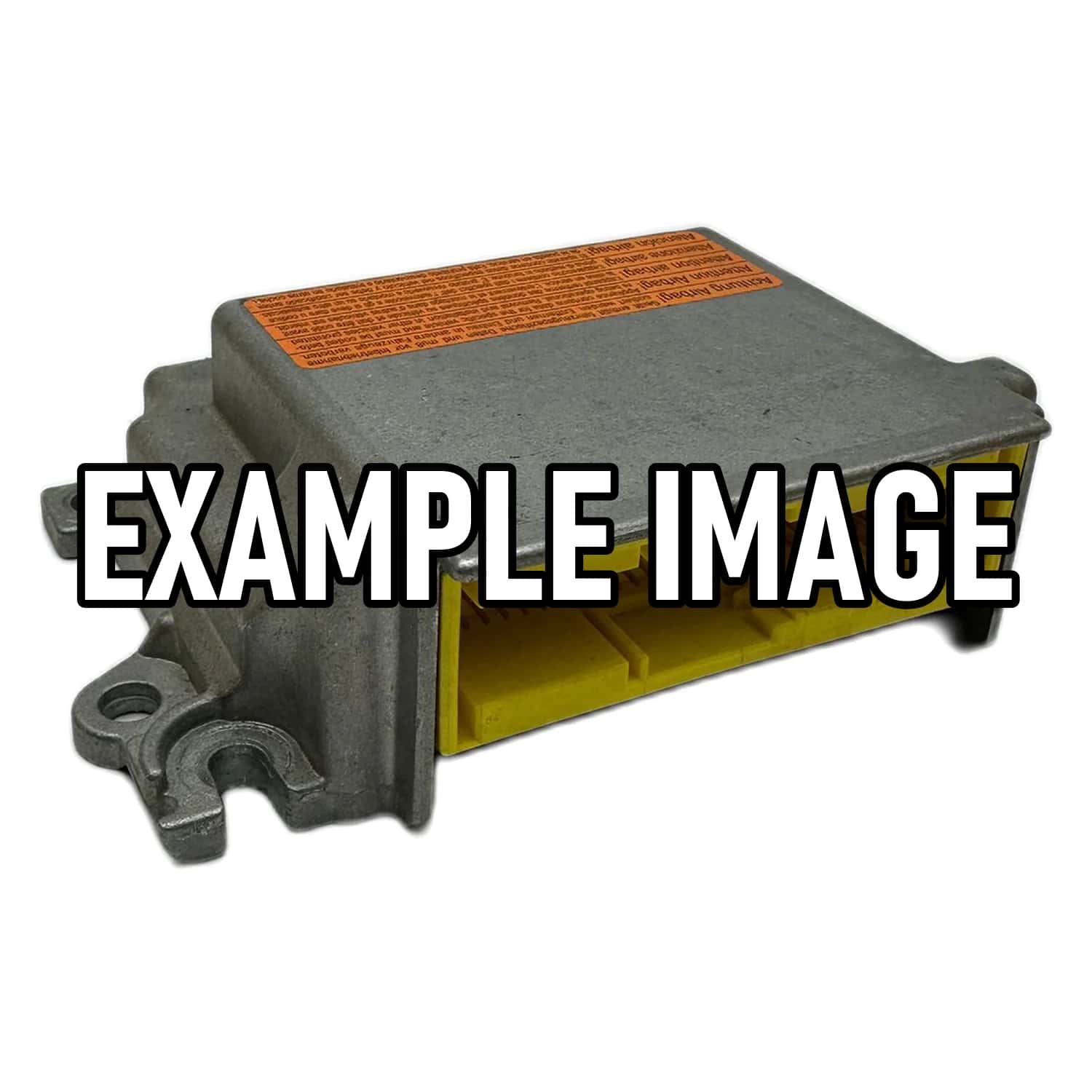
Correctly identifying the airbag control unit is a critical step before any repair on the Renault Latitude airbag control unit. Although the Latitude only encompassed a single generation, the control units' hardware and software versions may vary due to production periods, trim levels, or supplier changes. The part number, usually located directly on the control unit housing, is the primary indicator.
Additionally, information such as the year of the vehicle and the complete VIN are important for determining the exact specification of the installed system. The complexity of the airbag system requires an exact match between the control unit and the vehicle. An incorrect component can lead to malfunctions, incompatible systems, or, in the worst case, the failure of the safety system. Therefore, it is essential to carefully check these identification features in the event of a defective airbag control unit. Only then can a targeted and safe repair be carried out that restores the full functionality of the passive safety system in the Renault Latitude and permanently extinguishes the warning lights.
What airbag equipment does Renault Latitude have?
From the outset, the Renault Latitude's airbag equipment was very comprehensive and designed to provide a high level of safety, in keeping with its positioning as a luxury sedan. It included a variety of airbag modules and other active safety systems as standard, maximizing occupant protection.
Even in its basic configuration, the Renault Latitude offered an impressive array of safety features. These naturally included front airbags for the driver and front passenger, which protect the head and chest area in a frontal collision. Additionally, side airbags for the driver and front passenger, as well as often full-length head airbags (curtain airbags) to protect front and rear passengers, were fitted as standard.
This comprehensive equipment underscores Renault's commitment to passive safety and comfort, which was of great importance to the target group, often commercial users and leasing customers. In addition to passive restraint systems, the Renault Latitude featured a range of active safety systems that helped prevent or mitigate accidents. These included ABS (anti-lock braking system), ESP (electronic stability program), emergency braking assistance (EBA), and a tire pressure monitoring system.
The highest trim level, the "Initiale," included luxurious features such as leather seats and an integrated navigation system, as well as a full suite of airbags and safety electronics. A faulty airbag control unit can impair the function of all these interconnected safety systems, which is why prompt repair of the Renault Latitude airbag control unit is crucial to fully ensure the vehicle's original safety.
Common fault codes in this category
Shipping & repair from Germany
Airbag24 repairs your component in Berlin — usually within 3–4 working days.
Standard shipping within Germany is free; we normally return your part by UPS.
You pay for and insure the inbound shipment to us. On explicit request we ship by express — the extra cost is borne by the customer.
If you withdraw from the contract, you bear the cost of returning the item.