

Renault Master airbag control unit repair(4)
4 products
What should I pay attention to with Renault Master airbag control units?
The airbag technology used in the Renault Master varies considerably depending on the model year and generation. Airbag control units in all Renault Master generations should be professionally repaired to ensure original functionality and the highest safety standards. The Renault Master has a long and eventful history as a commercial vehicle, which began in the 1980s. Over four generations, from the Master I to the current Master IV, the model has continuously evolved and been adapted to the needs of commercial users. With each model series, the airbag system in the Renault Master has also been continuously improved and adapted to the increased safety requirements. While early models offered basic safety systems, newer generations integrate highly complex airbag control units that are networked with a multitude of sensors and driver assistance systems. The correct functioning of the airbag control unit is crucial for occupant safety. A defective control unit can cause the airbag light to illuminate, airbags not to deploy in an emergency, or stored crash data to block the system. Professional repair by trained personnel using specialized diagnostic equipment is therefore essential.Which Renault Master generations are there?
The Renault Master has been produced in four main generations, each using different airbag control units, reflecting the respective technological advances from the 1980s to the present day. The Renault Master I defined the first era of the van, from the 1980s until around 1997. Its airbag systems were, in keeping with the state of the art at the time, rather simple and often optional or available only to the driver. The Renault Master II, produced from around 1997 to 2010, introduced more modern designs and improved safety systems. Driver and passenger airbags became standard, and the control units became increasingly complex to integrate more sensors and functions. Since around 2010, the Renault Master III has been the defining model, receiving continuous updates and facelifts. This generation features more comprehensive airbag equipment and more advanced control units, often with a multitude of sensors for precise deployment and communication with other vehicle systems. The current Renault Master IV, also known as the "New Master," has been on the market since approximately 2023/2024. It is based on a new multi-energy platform and integrates the latest safety technologies as well as state-of-the-art airbag control units, which are essential for the complex driver assistance systems.How do I identify my Renault Master airbag control unit?
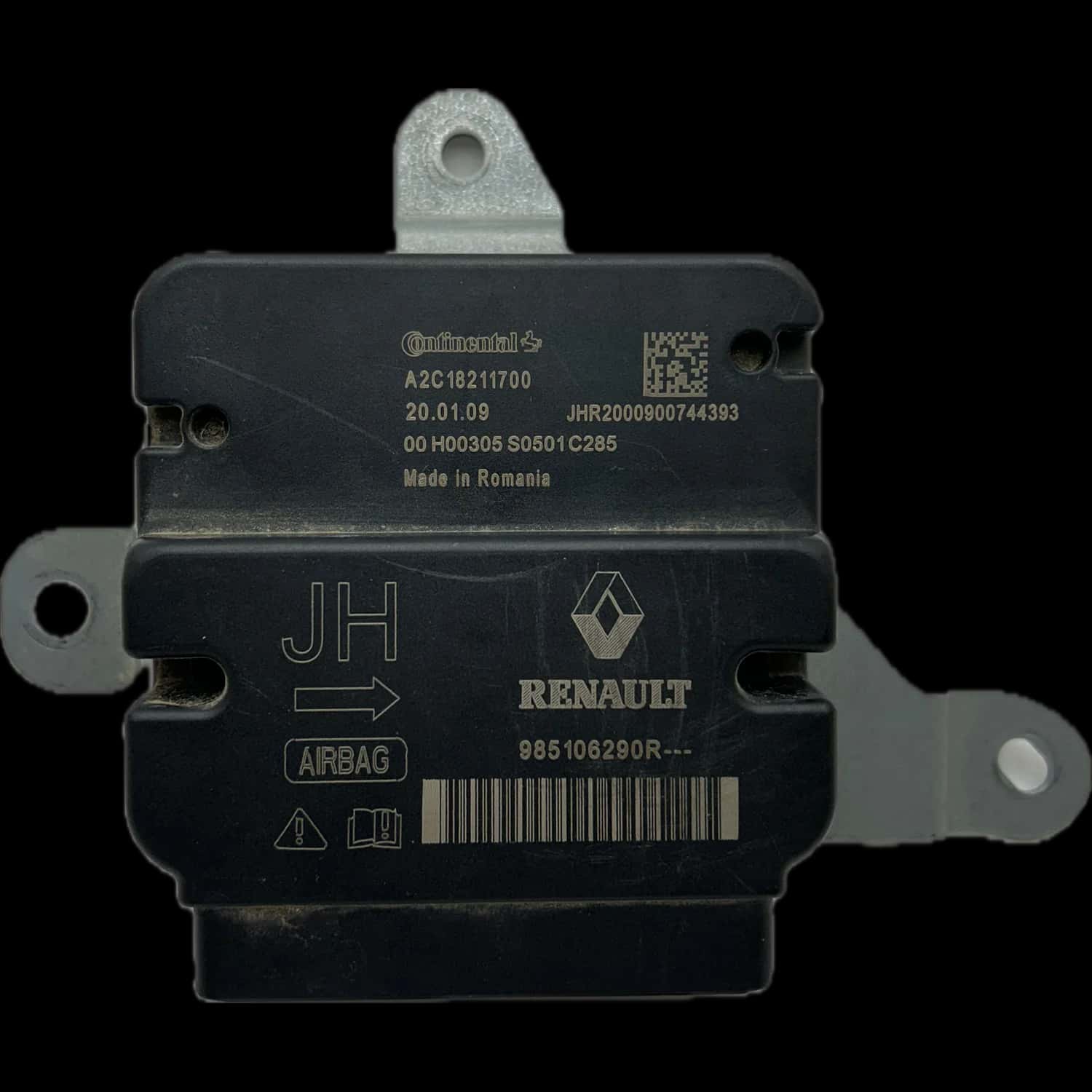
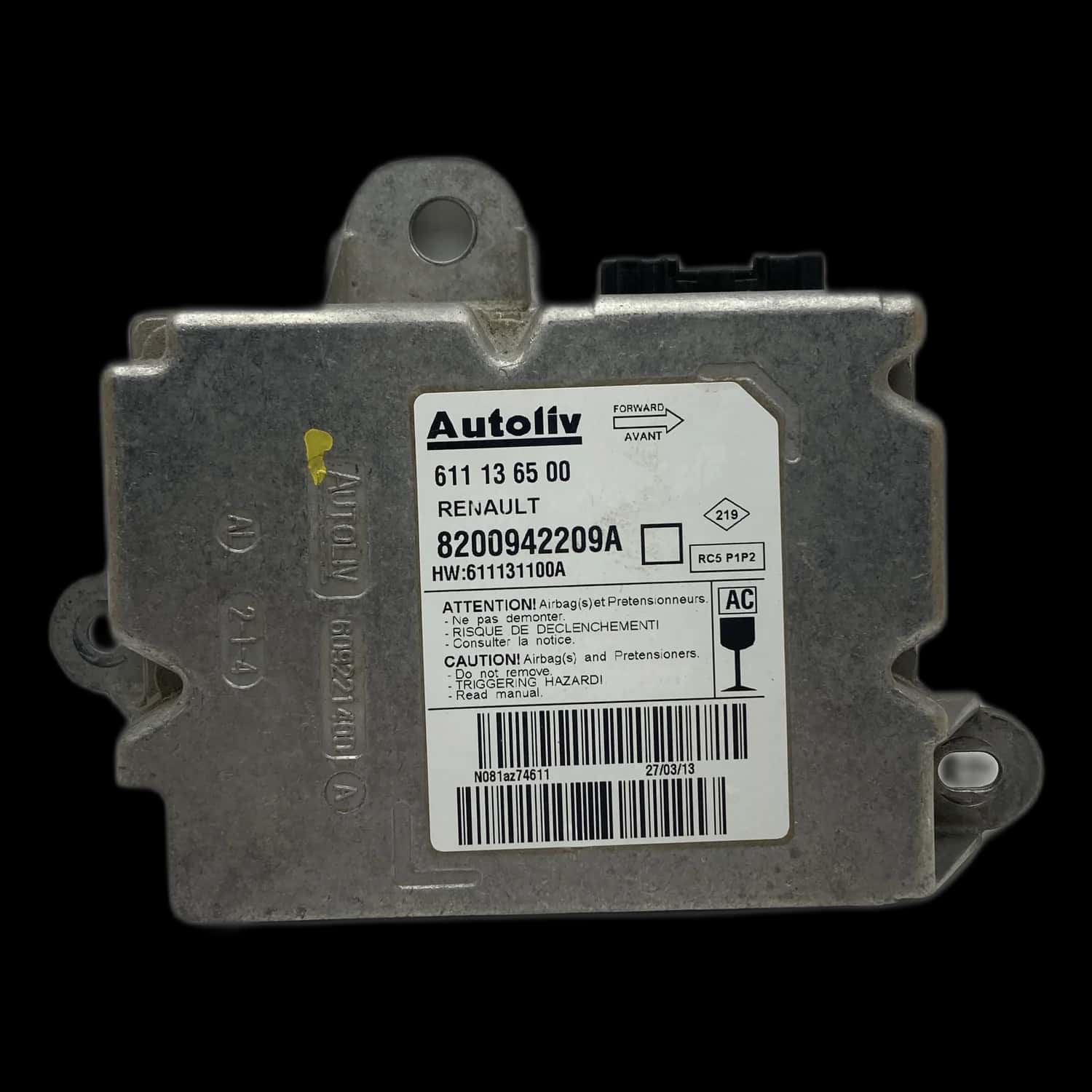
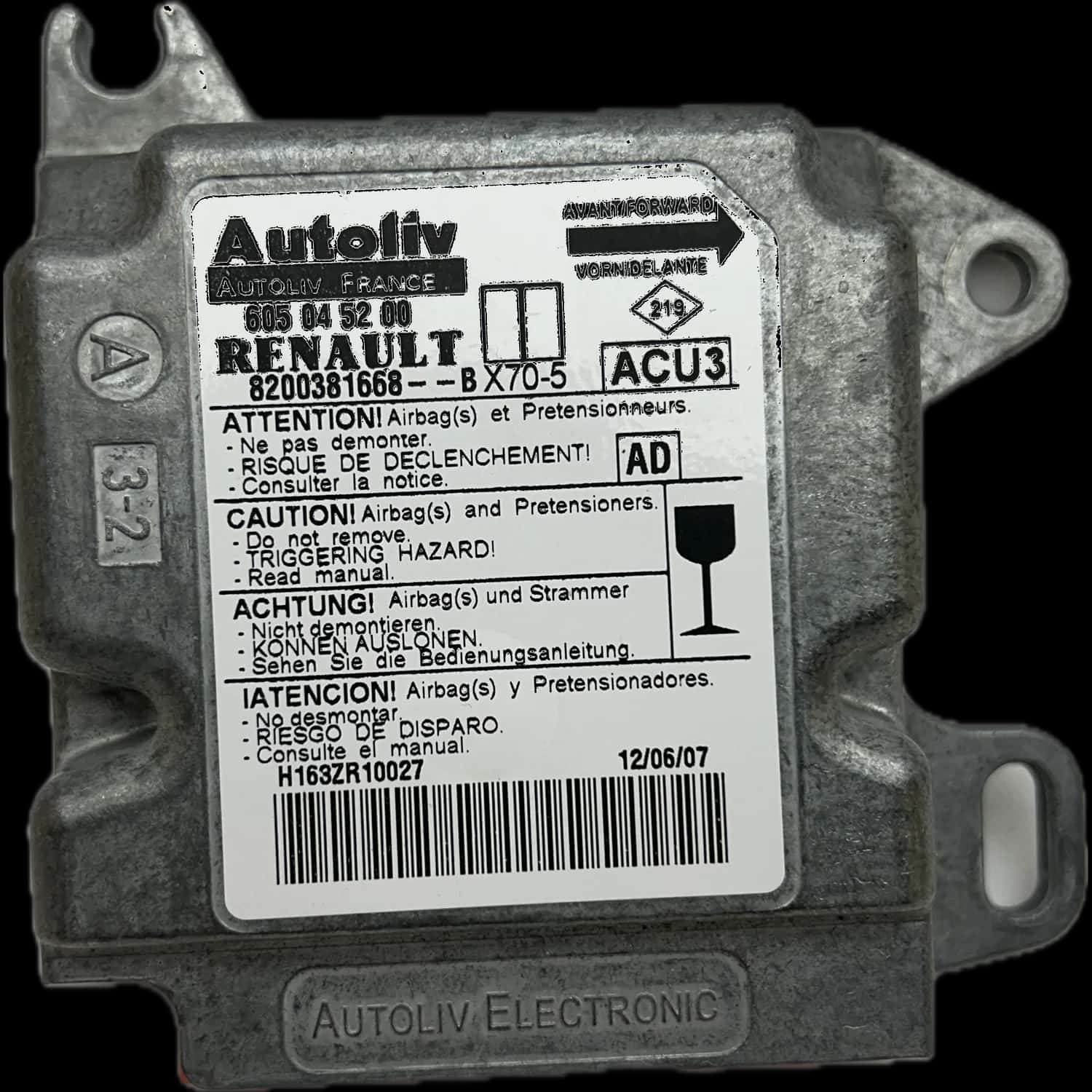
Renault Master airbag control units can be uniquely identified by their part number, model year, and vehicle identification number (VIN). Each generation and even certain trim levels use specific control unit variants for optimal compatibility and safety. The part number of the airbag control unit is crucial for correct identification and repair. It is usually located on a sticker directly on the control unit, often in the center console area, under the driver's seat, or in the footwell. The exact location can vary depending on the vehicle. Various original spare part numbers (OE numbers) are in circulation for the Renault Master, which are tailored to the respective model year and trim level. Examples include common numbers such as 605045100 or 8200381666a for older models, as well as 8201448823 and 985107767R for the Master III. Precise identification of the control unit is of utmost importance, as this is the only way to perform a precise diagnosis and error-free repair. This ensures that the repaired control unit meets manufacturer standards and restores the full functionality of the safety-relevant airbag system.What airbag equipment does the Renault Master have?
The airbag equipment of the Renault Master varies considerably depending on the model year and the selected equipment line. While early models typically used basic airbag systems, newer generations feature enhanced safety packages with additional airbag modules and intelligent deployment systems. Generally, the Renault Master is equipped with airbags as standard, as these, along with ABS, are among the most important passive safety systems. Driver airbags are standard on all generations, often supplemented by passenger airbags, which ensure basic safety for the previous occupants. With the transition from Master I to Master II and III, the systems became more complex and the number of installed airbags increased. Side airbags, head airbags, or belt tensioners, which are often standard in newer passenger car models, were optional in the van segment of the Master, depending on the model year and equipment line, or were part of special packages, particularly for higher-end variants or people carriers. The current Master IV offers a comprehensive range of driver assistance systems and safety features. The airbag control unit is closely linked to systems such as emergency braking and lane departure warning systems to provide optimal occupant protection. The exact number and type of airbags can vary greatly depending on the selected equipment and body type (e.g., panel van, flatbed, bus). As a full-size van for commercial use (truck class N1), the Renault Master places great emphasis on the safety of its occupants, who often travel long distances. The robust construction, combined with the advanced airbag systems, contributes significantly to the safety of tradespeople, logistics employees, and other commercial users.Shipping & repair from Germany
Airbag24 repairs your component in Berlin — usually within 3–4 working days.
Standard shipping within Germany is free; we normally return your part by UPS.
You pay for and insure the inbound shipment to us. On explicit request we ship by express — the extra cost is borne by the customer.
If you withdraw from the contract, you bear the cost of returning the item.