
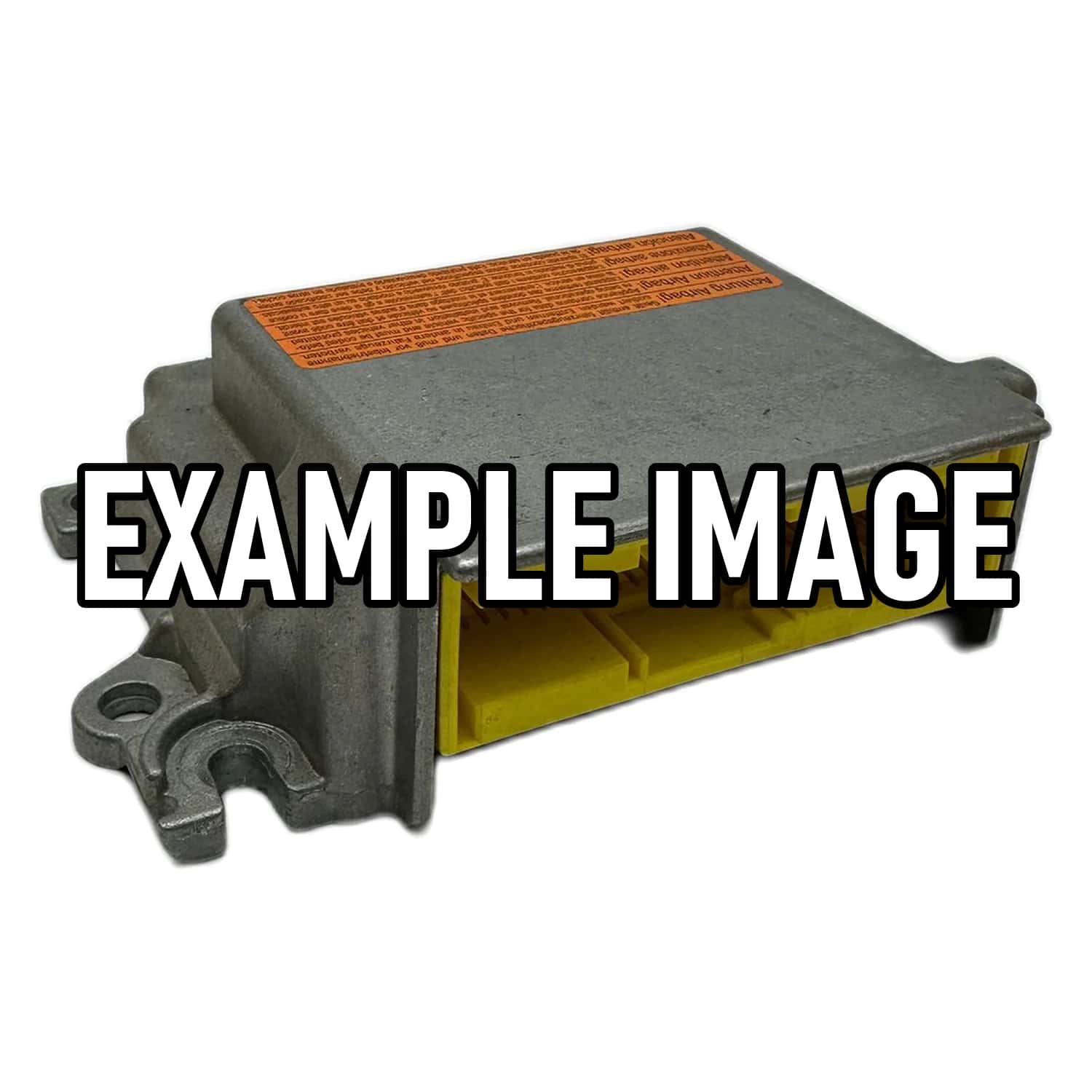

Renault Maxity airbag control unit repair(1)
1 product
What should I pay attention to with Renault Maxity airbag control units?
The airbag technology used in the Renault Maxity covers the entire production period from 2007 to 2019. Airbag24 professionally repairs control units with original functionality and a 2-year warranty, regardless of the year of manufacture.
The Renault Maxity is a light commercial vehicle (LCV) specifically designed for commercial use in urban environments. Production ran from 2007 to 2019, based on the Nissan Cabstar and manufactured in Spain. Throughout this long period, airbag systems were an essential component of passive safety.
Although the Renault Maxity hasn't gone through any traditionally distinct generations, technical improvements have been implemented over the years, particularly in the areas of engines and bodywork. This continuous development may also have involved internal revisions to electronic components, including the airbag control unit, to optimize performance and reliability.
Which Renault Maxity generations are there?
The Renault Maxity was produced from 2007 to 2019. There were no formal, clearly defined "generations" in the usual sense, but the model was continuously optimized over the course of its production run, which can also be seen in the installed electronic components and thus potentially the airbag control units. The development of the safety system reflects the technological progress from 2007 to 2019.
Unlike many passenger car models, which appear in clearly defined generations, the Renault Maxity, as a commercial vehicle, has undergone a more continuous model update. The most significant update occurred around 2012, when a more aerodynamic bumper was introduced in conjunction with the introduction of Euro 5 engines. Such adjustments may also involve changes to internal control systems, such as the airbag control unit.
Although there have been no official generations, it is important to consider the exact year of the vehicle when repairing the airbag control unit. This ensures that any revision-related differences in the control unit's hardware or software can be correctly accounted for. Consistent production over a decade indicates a robust basic design that has been refined in detail.
How do I identify my Renault Maxity airbag control unit?
Renault Maxity airbag control units can be uniquely identified by the part number, year of manufacture, and vehicle identification number. This information is crucial for determining the exact control unit variant for professional repair and ensuring optimal compatibility.
The most reliable way to identify your Renault Maxity airbag control unit is to read the part number directly on the unit. This is usually found on a sticker or embossed into the housing. Since the Maxity was produced for a long time without major generational changes, the exact part number is essential to distinguish between potentially internally revised versions.
In addition to the part number, the specific year of manufacture of your Renault Maxity and the full vehicle identification number (VIN) are important details. This information allows repair services to accurately correlate the vehicle's history and associated specifications of the airbag control unit. This ensures that the repair is tailored precisely to your vehicle's requirements.
What airbag equipment does Renault Maxity have?
The Renault Maxity comes standard with driver and front passenger airbags. This standard equipment underscores the company's focus on passenger safety in commercial applications and remained consistent throughout its production period from 2007 to 2019.
As a light commercial vehicle for urban delivery, the Renault Maxity places great emphasis on the safety of its occupants. Therefore, both a driver airbag and a passenger airbag were fitted as standard throughout its production period from 2007 to 2019. This basic airbag configuration provided basic protection in the event of a collision.
In addition to the airbags, the Renault Maxity, depending on the trim level, featured other safety-related systems such as ABS (anti-lock braking system) and EBD (electronic brake-force distribution). Unlike modern passenger cars, which often include a multitude of additional airbag modules (e.g., side airbags, head airbags), the Maxity focused on the essential protective features for the driver and front passengers, which were considered sufficient for its intended use as a commercial vehicle.
Common fault codes in this category
Shipping & repair from Germany
Airbag24 repairs your component in Berlin — usually within 3–4 working days.
Standard shipping within Germany is free; we normally return your part by UPS.
You pay for and insure the inbound shipment to us. On explicit request we ship by express — the extra cost is borne by the customer.
If you withdraw from the contract, you bear the cost of returning the item.