
Rover airbag control unit repair(27)
Many Rovers are classics today. You will find matching airbag control units in this overview – send yours in for testing or repair.
What should I consider with Rover airbag control units?
The airbag technology used in Rover vehicles varies considerably depending on the model and year. Airbag24 professionally repairs control units for all Rover model generations with original functionality and a 2-year warranty to restore your vehicle's safety.
Rover's production history spans several decades, from simple safety systems in early models to more complex airbag configurations in newer vehicles. This evolution reflects the constant advances in automotive safety technology, which are also reflected in the design of airbag control units.
Rover's airbag system development typically began in the mid-1990s, with driver and passenger airbags becoming standard equipment in many models, such as the Rover 200 from the 1996 model year onward. Prior to that, airbags were often optional or unavailable, particularly in smaller models such as the original Mini or the Metro.
Over time, the systems became more complex, and optional side and curtain airbags were added to higher-end models like the Rover 75, Range Rover, and Discovery. This evolution requires a deep understanding of the specific control units of each generation for precise and safe repair of defective units.
Which Rover models are there?
Rover has produced a total of 15 different models, with each model and series generation using different airbag control units. The development of the safety system reflects technological advances and adaptation to the respective vehicle classes.
Our repair services cover a wide range of Rover vehicles, including models like the compact Rover Mini and Rover Metro, which are ideally designed for urban use.
We repair control units for the popular small and compact cars Rover 100, Rover 200, Rover 25, Rover 400 and Rover 45, which served as versatile everyday vehicles for families and commuters.
We also offer professional repairs for the upper mid-range and luxury segment, represented by the Rover 600, Rover 75, and Rover 800. These models were known for their comfort and extensive features.
Our service also includes the repair of airbag control units for Rover's rugged SUVs and off-road vehicles: the Rover Streetwise, Rover CityRover, Rover Freelander, Rover Discovery, Rover Range Rover, and the iconic Rover Defender. Each of these models has specific airbag control requirements.
How do I identify my Rover airbag control unit?
Rover airbag control units can be uniquely identified by part number, year of manufacture, and vehicle identification number (VIN). Each generation and model variant uses specific control unit variants for optimal compatibility and system functionality.
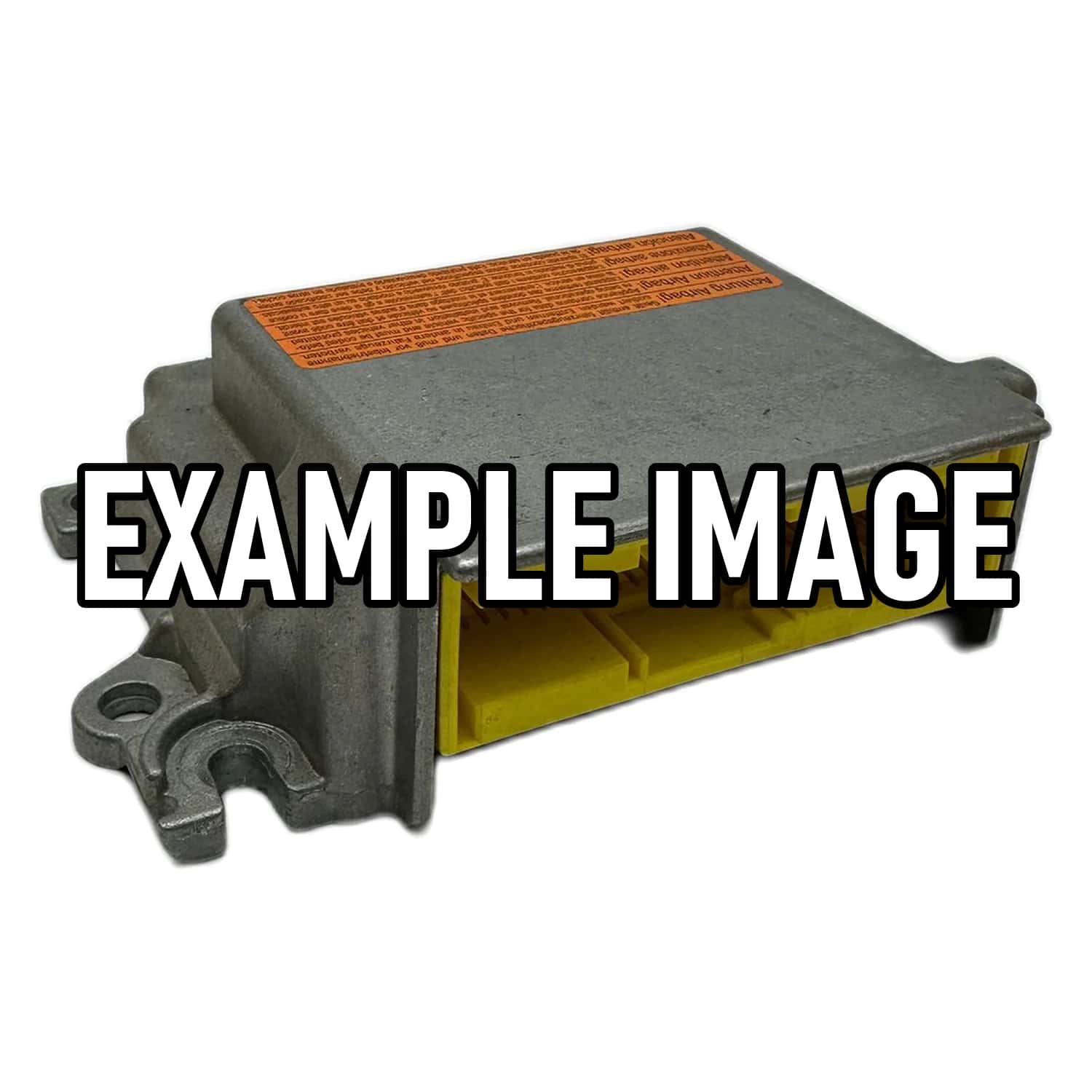
Correctly identifying the airbag control unit is crucial for a successful and safe repair. The control unit's part number can usually be found directly on the component's housing, which is usually located near the center console or under the driver's seat.
The year of manufacture of your Rover vehicle provides information about the airbag system generation used and thus about possible control unit variants. The vehicle identification number (VIN) on your registration certificate provides additional precise information about the equipment fitted to your specific vehicle.
These details are essential to ensure the repair is tailored precisely to your defective device and future compatibility with the other components of the security system. If you're unsure, we'll be happy to assist you with identification.
What airbag equipment does Rover have?
Rover's airbag equipment varies considerably depending on the model year and trim level. While early models use basic airbag systems, newer generations feature enhanced safety packages with additional airbag modules for more comprehensive protection.
In the early years of production, especially in small cars like the Rover Mini, Metro, Rover 100, and Rover 25, often only a driver's airbag was fitted as standard, or airbags were initially not available at all and had to be ordered as an option. Safety was the focus of urban mobility.
With the introduction of models like the Rover 200 and 400 from the mid-1990s onward, driver and passenger airbags generally became standard equipment. This marked an important step in improving passive safety for a wider audience.
Higher-end models such as the Rover 600, 75, and 800, as well as the SUV models Range Rover, Discovery, and Freelander, often featured more complex airbag systems. These could include additional side airbags and curtain airbags, which, depending on the trim level and model year, were also designed as multi-stage systems.
The airbag control unit plays a central role in all of these configurations. It continuously monitors the sensors, stores important crash data, and is responsible for deploying the appropriate airbags precisely and in the correct sequence in the event of an accident. A defective control unit impairs the entire functionality of this vital system, often recognizable by an illuminated warning light or error messages in the cockpit.
Shipping & repair from Germany
Airbag24 repairs your component in Berlin — usually within 3–4 working days.
Standard shipping within Germany is free; we normally return your part by UPS.
You pay for and insure the inbound shipment to us. On explicit request we ship by express — the extra cost is borne by the customer.
If you withdraw from the contract, you bear the cost of returning the item.