
Rover Defender airbag control unit repair(4)
4 products
What should I consider with Rover Defender airbag control units?
The airbag technology used in the Rover Defender varies considerably depending on the model year and model series. To ensure the safe and reliable operation of the passive safety system, it is crucial to understand the specific requirements and characteristics of each Defender model and to take them into account during repair.
The classic Rover Defender, an iconic off-road vehicle, was produced in its original form from 1990 to 2016, with a significant facelift between 2007 and 2016. These vehicles feature airbag systems that represented the state of the art at the time. The introduction of the new L663 generation from 2020—which includes the current Defender 90, 110, and 130 models—marks a technological leap, also reflected in the modern and more complex airbag control units.
Over the decades, airbag technology in the Rover Defender has evolved steadily. While early models often only had driver airbags or basic front airbag systems, newer generations integrate sophisticated safety systems with multiple airbag modules, intelligent sensors, and networked assistance systems. This development requires a deep understanding of the respective systems when repairing defective airbag control units.
Which Rover Defender generations are there?
The Rover Defender was produced in two main generations, each defined by its production date and technological features. Each of these generations uses specific airbag control units tailored to the respective vehicle architecture and safety standards.
The first major generation of the Defender, often referred to as the "classic Defender," ran from 1990 to 2007. This was then followed by a comprehensive facelift, which rolled off the production line from 2007 to 2016 and featured technical and visual revisions. The second, completely redesigned generation (model L663) was introduced in 2020 and includes the currently familiar Defender 90, Defender 110, and Defender 130 variants.
Each of these series has different airbag system configurations, depending on the model year and equipment. The technological advances in airbag control units reflect the vehicle's evolution from a robust commercial vehicle to a modern, comfortable, and highly safe off-road vehicle.
How do I identify my Rover Defender airbag control unit?
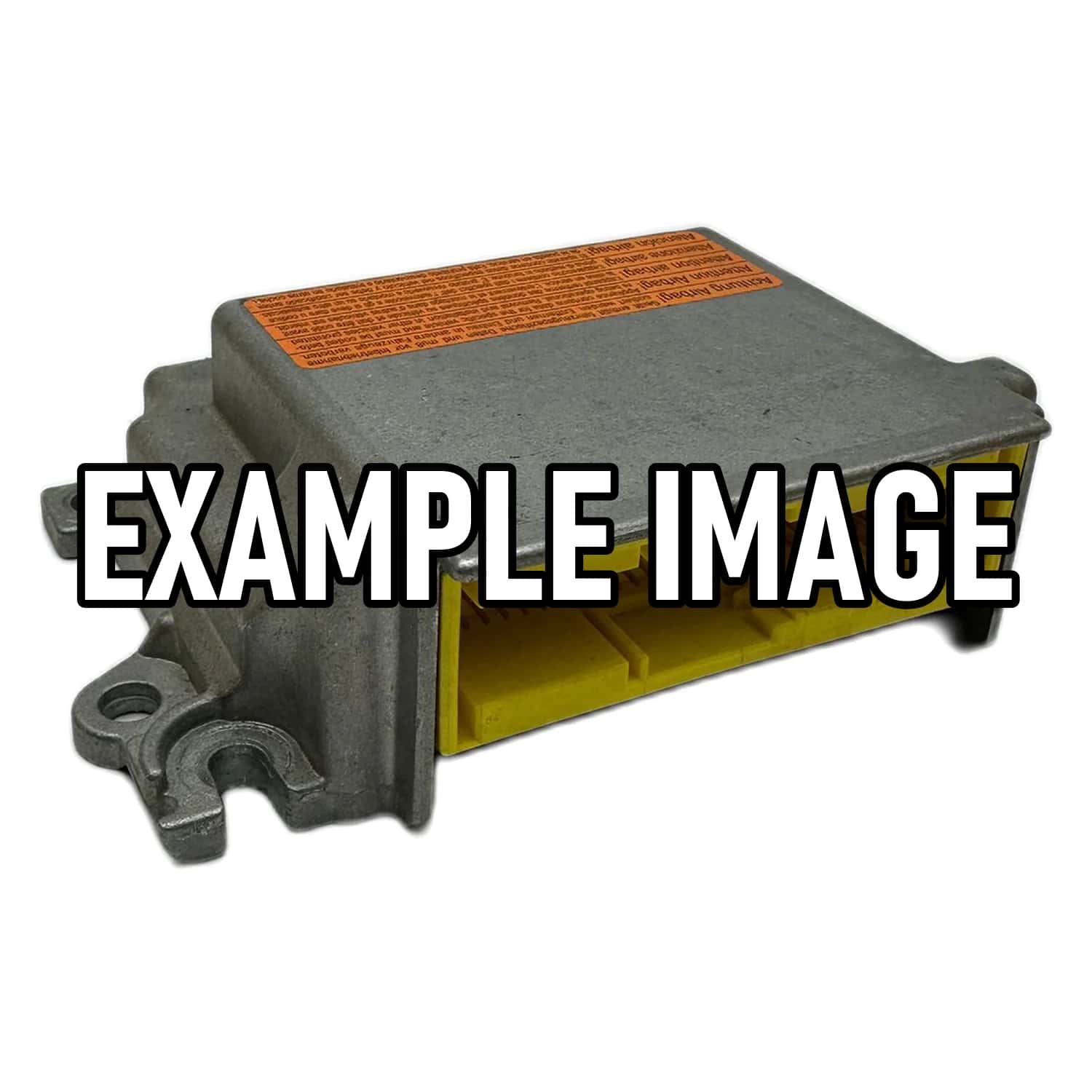
The unique identification of your Rover Defender airbag control unit is crucial for correct diagnosis and repair. Identification is primarily achieved through the part number, the exact year of manufacture of the vehicle, and the vehicle identification number (VIN). Each generation, and often even specific trim levels, use customized control unit variants for optimal compatibility and system integration.
The part number, usually located on a label directly on the airbag control unit's housing, is the most important reference point. It provides information about the exact type and specifications of the unit. The year of manufacture is also relevant, as control unit revisions can occur even within a single generation.
When repairing or replacing a part, it is essential that the replacement part or repaired unit exactly meets the technical requirements of the original control unit to ensure the proper functioning of the entire passive safety system of your Rover Defender – be it a 90, 110 or 130.
What airbag equipment does the Rover Defender have?
The Rover Defender's airbag equipment has evolved significantly over its production history and varies considerably depending on the model year and specific trim level. While early models featured rather basic airbag systems, newer generations feature state-of-the-art and comprehensive safety packages with a variety of airbag modules and supporting sensors.
The modern L663-generation Defender models, produced since 2020 and including the Defender 90, 110, and 130 variants, come standard with front airbags for the driver and front passenger. These systems are often equipped with a passenger presence sensor that intelligently controls the deployment of the passenger airbag.
Depending on the equipment, side airbags, head airbags (curtain airbags), and possibly other specific airbags such as knee airbags may also be available. These are monitored and coordinated by a complex network of crash sensors and the central airbag control unit to ensure the best possible occupant protection in the event of an impact. Modern driver assistance systems such as emergency braking and lane departure warning are also integrated into this safety architecture and contribute to the comprehensive protection of this robust off-road vehicle.
Shipping & repair from Germany
Airbag24 repairs your component in Berlin — usually within 3–4 working days.
Standard shipping within Germany is free; we normally return your part by UPS.
You pay for and insure the inbound shipment to us. On explicit request we ship by express — the extra cost is borne by the customer.
If you withdraw from the contract, you bear the cost of returning the item.