
Rover Discovery airbag control unit repair(2)
2 products
What should I look out for with Rover Discovery airbag control units?
The airbag technology used in the Rover Discovery varies considerably depending on the model year. A defective airbag control unit must be professionally repaired to restore the safety system's full functionality. A professional repair ensures true-to-original functionality.
The Rover Discovery is a versatile SUV model from Land Rover, produced since the late 1980s. The requirements for airbag control unit repair are particularly specific to the Rover Discovery Series I and Series II models, which receive special attention in our shop. These early generations present particular challenges due to their different airbag systems and designs.
During the course of the Discovery's model development, the airbag systems also underwent significant advancements. While the Series I (1989-1998) mostly only featured optional driver airbags, the system was significantly expanded in the Series II (1998-2004). This also meant that the complexity of the airbag control units to be repaired increased with each generation, requiring specific expertise to repair a defect.
Which Rover Discovery generations are there?
The Rover Discovery has been produced in several generations, each using different airbag control units. The evolution of the safety system reflects technological advances from 1989 to the present day, particularly in the older Series I and II models of relevance to us.
The Rover Discovery Series I was produced from 1989 to 1998. As a mid-size SUV, it bridged the gap between a rugged off-roader and a family SUV. A major facelift in 1994 modernized the body and interior, among other things. In this series, airbags were generally not standard, but available as options, especially for driver airbags. The airbag control units in these models are therefore simpler in design.
The Rover Discovery Series II was produced from 1998 to 2004. It continued to target customers seeking a robust 4x4 vehicle with good on- and off-road capabilities, ideal as a family car with up to seven seats. The airbag system was significantly expanded and safer in the Series II. In addition to driver and passenger airbags, side airbags and head airbags (curtain airbags) became increasingly available as standard or as upgrades, requiring more complex airbag control units.
Although the Discovery continues to be produced in further, modern generations—the fifth generation is currently available (from approximately 2017)—our focus is on the control units of earlier models, which are often affected by defects. Modern Discovery models are equipped with a comprehensive airbag system as standard, the repair of which requires a different, specific set of skills.
How do I identify my Rover Discovery airbag control unit?
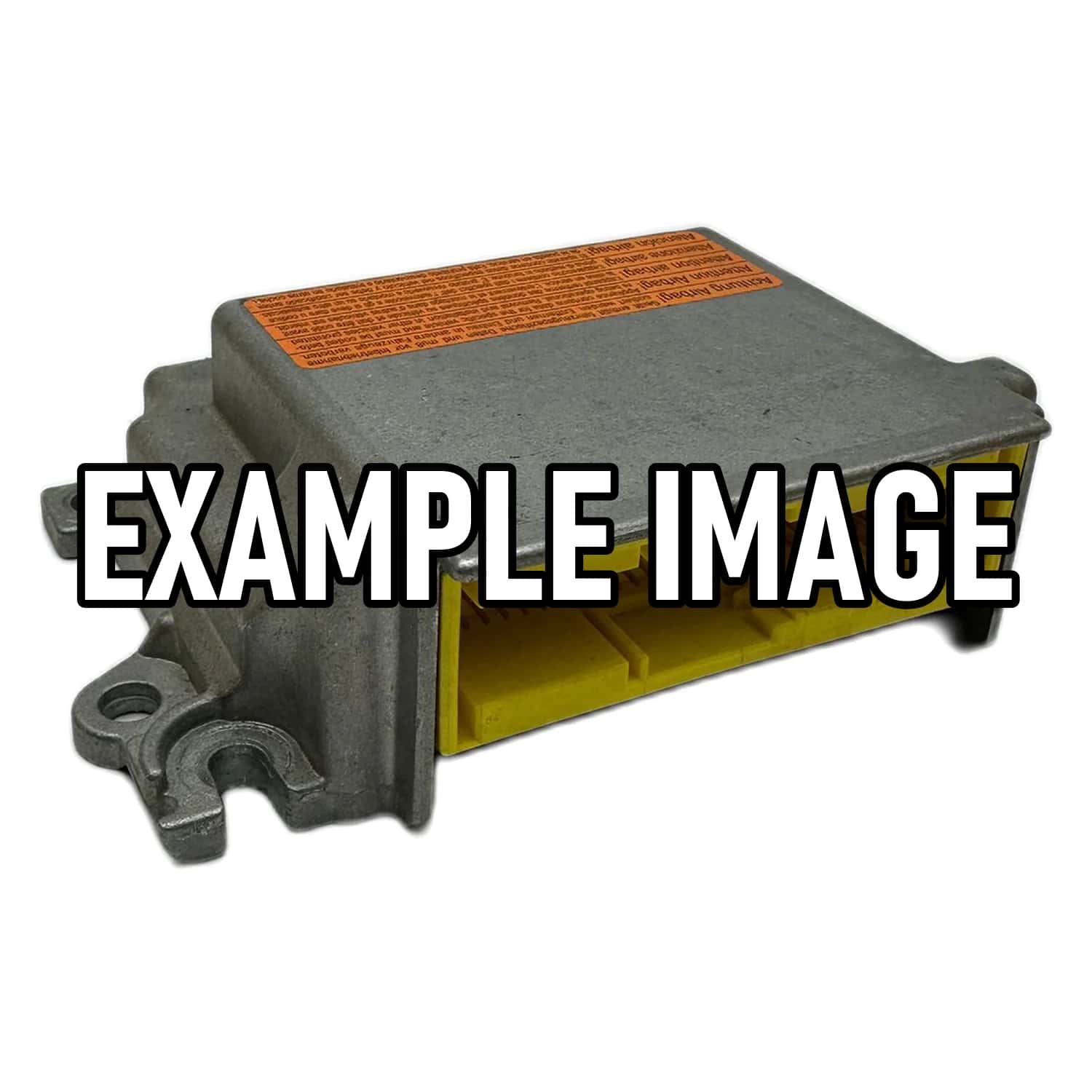
Rover Discovery airbag control units can be uniquely identified by part number, year of manufacture, and vehicle identification number (VIN). Each generation uses specific control unit variants for optimal compatibility and to ensure safe repair.
Accurate identification is crucial for the successful repair of a faulty airbag control unit on your Rover Discovery. The part number of the unit itself is the primary indicator and should be read directly on the control unit. Different number ranges exist for the Rover Discovery Series I and Series II, reflecting the respective equipment and system complexity, and are essential for repairing the airbag control unit.
The year of manufacture of your Rover Discovery also helps narrow down the correct generation of the airbag control unit (e.g., before 1998 for Series I, after 1998 for Series II). In addition, the Vehicle Identification Number (VIN) allows for precise identification of the specific vehicle and its original equipment. This is crucial to ensure the correct compatibility of the repaired airbag control unit.
What airbag equipment does the Rover Discovery have?
The Rover Discovery's airbag configuration varies considerably depending on the model year and trim level. While early models use basic airbag systems, newer generations feature enhanced safety packages with additional airbag modules, all coordinated by the airbag control unit.
In the Rover Discovery Series I (1989-1998), airbags were usually not standard. They were often available as an option and usually included only a driver's airbag. Later models could integrate additional, but still basic, safety systems. The airbag control unit for these models is correspondingly simpler in design to control this basic equipment.
In the Rover Discovery Series II (1998-2004), the airbag system was significantly enhanced and designed for greater safety. In addition to driver and passenger airbags, side airbags and curtain airbags became increasingly standard or optional, depending on the trim level. The airbag control unit of this generation therefore had to handle more complex triggering mechanisms and coordinate a larger number of sensors and airbags, making repairs more challenging.
The airbag control unit is a safety-critical component that coordinates the deployment of the various airbags in the event of a collision. Therefore, any necessary repairs must always be carried out by qualified personnel to ensure the proper functioning of this life-saving system in the Rover Discovery.
Shipping & repair from Germany
Airbag24 repairs your component in Berlin — usually within 3–4 working days.
Standard shipping within Germany is free; we normally return your part by UPS.
You pay for and insure the inbound shipment to us. On explicit request we ship by express — the extra cost is borne by the customer.
If you withdraw from the contract, you bear the cost of returning the item.