
Seat Arosa airbag control unit repair(1)
1 product
What should be considered with Seat Arosa airbag control units?
The airbag technology used in the Seat Arosa varies depending on the model year and trim level. To ensure a safe and functional restoration, it is crucial to consider the specific characteristics of each generation when repairing the airbag control unit. A professional service ensures that the repaired control unit operates true to the original and meets the highest safety standards.
The Seat Arosa, produced from 1997 to 2004, is a small car whose airbag system was always designed with safety in mind. The airbag control unit is a central component that continuously monitors the airbag system's functionality and coordinates airbag deployment in the event of a collision.
The development of the airbag systems in the Seat Arosa reflects the advances in vehicle safety during those years. While earlier models were often equipped with a single driver airbag, later models offered more advanced systems with passenger and side airbags, all managed by the central control unit.
Which Seat Arosa generations are there?
The Seat Arosa was produced in one model series (Type 6H) with a significant facelift midway through its production run. Overall, the Seat Arosa encompasses two phases, each featuring different airbag control units and equipment variants. The development of the safety system reflects the technological progress from 1997 to 2004.
The first phase, the pre-facelift model, was produced from 1997 to 2000. These vehicles marked the introduction of the Arosa as a compact city car with basic safety features, including the mandatory airbag control unit for the driver's airbag.
In 2000, a facelift was carried out, which lasted until the end of production in 2004. These models received not only visual revisions, but also updates to the equipment and installed systems, which could also affect the compatibility of the airbag control units.
Despite the further developments, the Seat Arosa shares the platform (VW Group A00) with the almost identical VW Lupo. This can be helpful when repairing defective airbag control units, as there are technical similarities that can be used for professional repairs.
How do I identify my Seat Arosa airbag control unit?
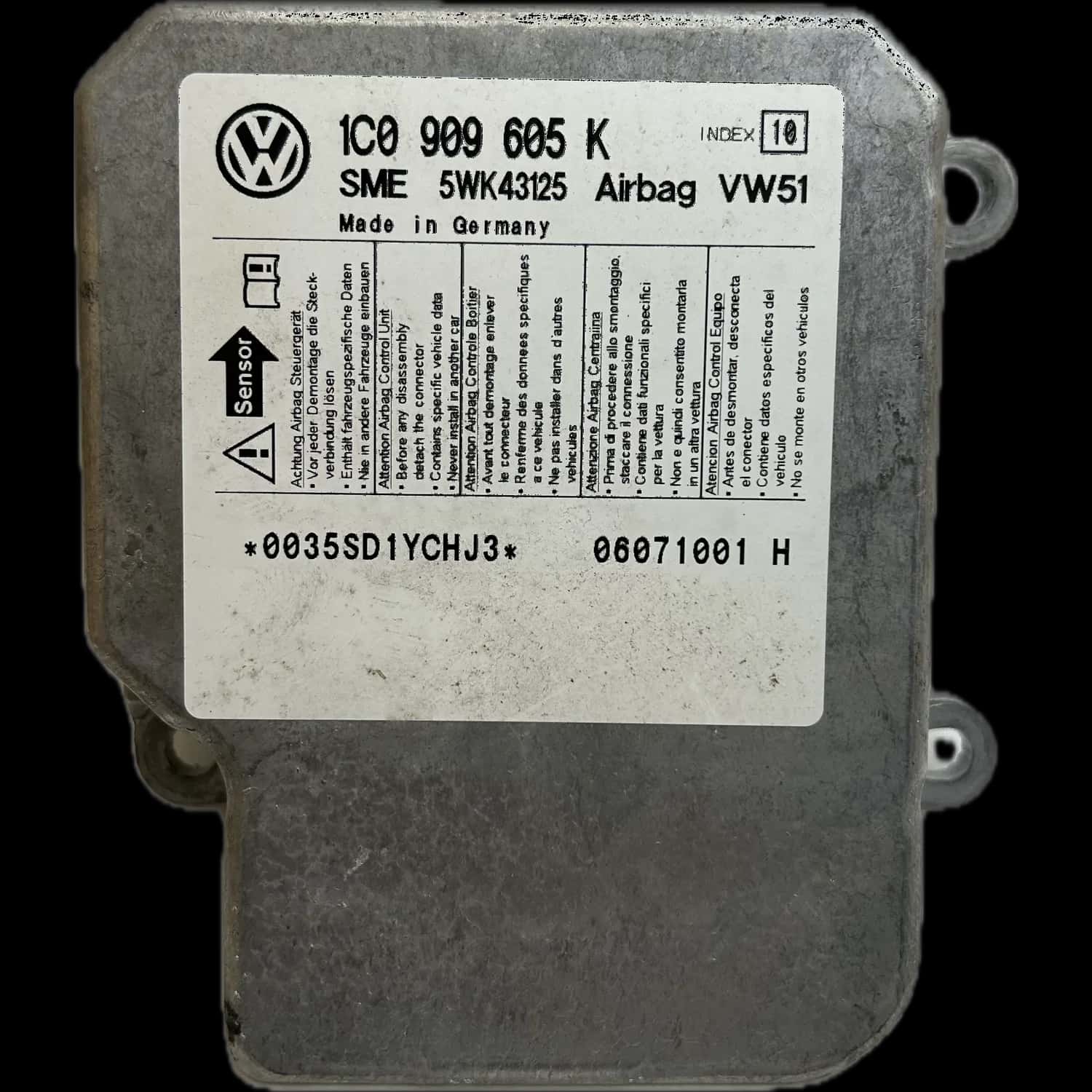
Seat Arosa airbag control units can be uniquely identified by their specific part number, year of manufacture, and vehicle identification number (VIN). This information is crucial for ensuring the correct repair or replacement of a faulty control unit and ensuring compatibility with existing airbag modules.
The part number is usually located on the housing of the airbag control unit itself. It is the most important indicator of the exact version of the component, since even within the same generation, slight variations in the components can exist.
The vehicle's year of manufacture and the vehicle identification number are also useful clues for identifying the correct control unit. They provide information about the exact production phase and thus the airbag technology likely installed in the Seat Arosa.
Correct identification is essential, as an incorrect airbag control unit can cause malfunctions or compromise the vehicle's safety in the event of an accident. Repairing a defective unit therefore requires precise knowledge of the specific Arosa variant.
What airbag equipment does the Seat Arosa have?
The Seat Arosa's airbag configuration varies considerably depending on the model year and trim level. While early models and basic trim levels primarily relied on the driver's side airbag, newer or higher-end generations feature enhanced safety packages with additional airbag modules.
In the base versions of the Seat Arosa, especially in the models from the early years of production, only a driver's side airbag was installed as standard. This provided basic protection in frontal impacts and was an important step towards improving passive safety in small cars.
With facelift models from 2000 onwards and in higher trim levels such as "Sport," additional airbags were often offered as options or as standard. These included the passenger airbag and side airbags, which significantly improved occupant protection in side collisions.
Regardless of the number of airbags installed, the airbag control unit is always a central component of the safety system in the Seat Arosa. It is responsible for monitoring all airbags and their sensors and deploying them precisely when necessary. Repairing a defective airbag control unit is therefore essential for the full functionality of the entire safety system.
Shipping & repair from Germany
Airbag24 repairs your component in Berlin — usually within 3–4 working days.
Standard shipping within Germany is free; we normally return your part by UPS.
You pay for and insure the inbound shipment to us. On explicit request we ship by express — the extra cost is borne by the customer.
If you withdraw from the contract, you bear the cost of returning the item.