What should I pay attention to with Seat Malaga airbag control units?
The airbag technology used in the Seat Malaga varied depending on the model year and equipment, with airbags rarely or not even being fitted as standard in this model from the 1985-1991 production period. However, if your vehicle has such a control unit, its professional repair is essential for safety. The Seat Malaga Mk1 was produced from 1985 to 1991 and was designed as a practical, affordable compact sedan. During this era, airbag technology was still in its infancy and primarily found in higher-end vehicles as an expensive optional extra. As a budget model, the Malaga therefore had few to no airbags fitted ex works. Modern airbag control units, which are standard today, were not widely introduced until the late 1990s. Therefore, "Seat Malaga airbag control unit repair" is a niche topic that may refer to very rare equipment or aftermarket systems. Nevertheless, a defective airbag control unit, if present, is a serious safety problem that requires professional repair. Which Seat Malaga generations are there?
The Seat Malaga was produced as a single generation, the Mk1, from 1985 to 1991. The development of the installed systems, including potential safety systems, reflects the technological advances of this specific period. The Seat Malaga Mk1 was the only series of this model and did not undergo any major facelifts during its production run. However, a technical revision took place in 1987 with the introduction of fuel-injected engines, which became known as "Malaga Injection." This demonstrated Seat's commitment to keeping the vehicle technically up to date. As the successor to the Seat 131 and Seat Ronda, the Malaga was aimed at price-conscious family and everyday drivers. Its competitors were also simple small and compact cars from manufacturers such as Hyundai, Lada, and Škoda. For a "Seat Malaga airbag control unit repair," it is therefore important to note that all relevant information refers to this single generation. How do I identify my Seat Malaga airbag control unit?
If your Seat Malaga is equipped with an airbag control unit, it can be clearly identified primarily by the specific part number, the vehicle's year of manufacture, and, if applicable, the chassis number (VIN). This is crucial for a correct Seat Malaga airbag control unit repair, even given the rarity of such components in this model. The exact location of an airbag control unit in a Seat Malaga depends on the specific equipment or possible retrofit. These units are usually located in the center console, under the front seats, or in the footwell. Identification often requires removing the trim panels and noting the part number printed on the unit. Since the Seat Malaga Mk1 only encompassed one generation, variations in airbag control units, if any, would have been extremely small. Nevertheless, accurate identification is crucial to ensure correct compatibility and functionality in the event of a repair and to perform a precise Seat Malaga airbag control unit repair. What airbag equipment does the Seat Malaga have?
The airbag equipment of the Seat Malaga Mk1, typical for its production period from 1985 to 1991 and its vehicle class (lower mid-size), was extremely sparse or non-existent. Standard airbags as we know them today were not yet established in this vehicle segment at that time. During the production period of the Seat Malaga, airbags were by no means standard in small and compact class vehicles. Official information detailing specific airbag options for the Seat Malaga Mk1 is not available, which suggests that they existed only as an extremely rare or unoffered option, if at all. Airbags were primarily introduced in the luxury and upper-class segment and only found their way into less expensive models much later. Thus, it is very unlikely that your Seat Malaga is equipped with an airbag system from the factory. A "Seat Malaga airbag control unit repair" would therefore usually involve scenarios where very early or experimental equipment may have been installed, or where it was a subsequent, non-standard installation. A thorough inspection of the specific vehicle is essential for any repair.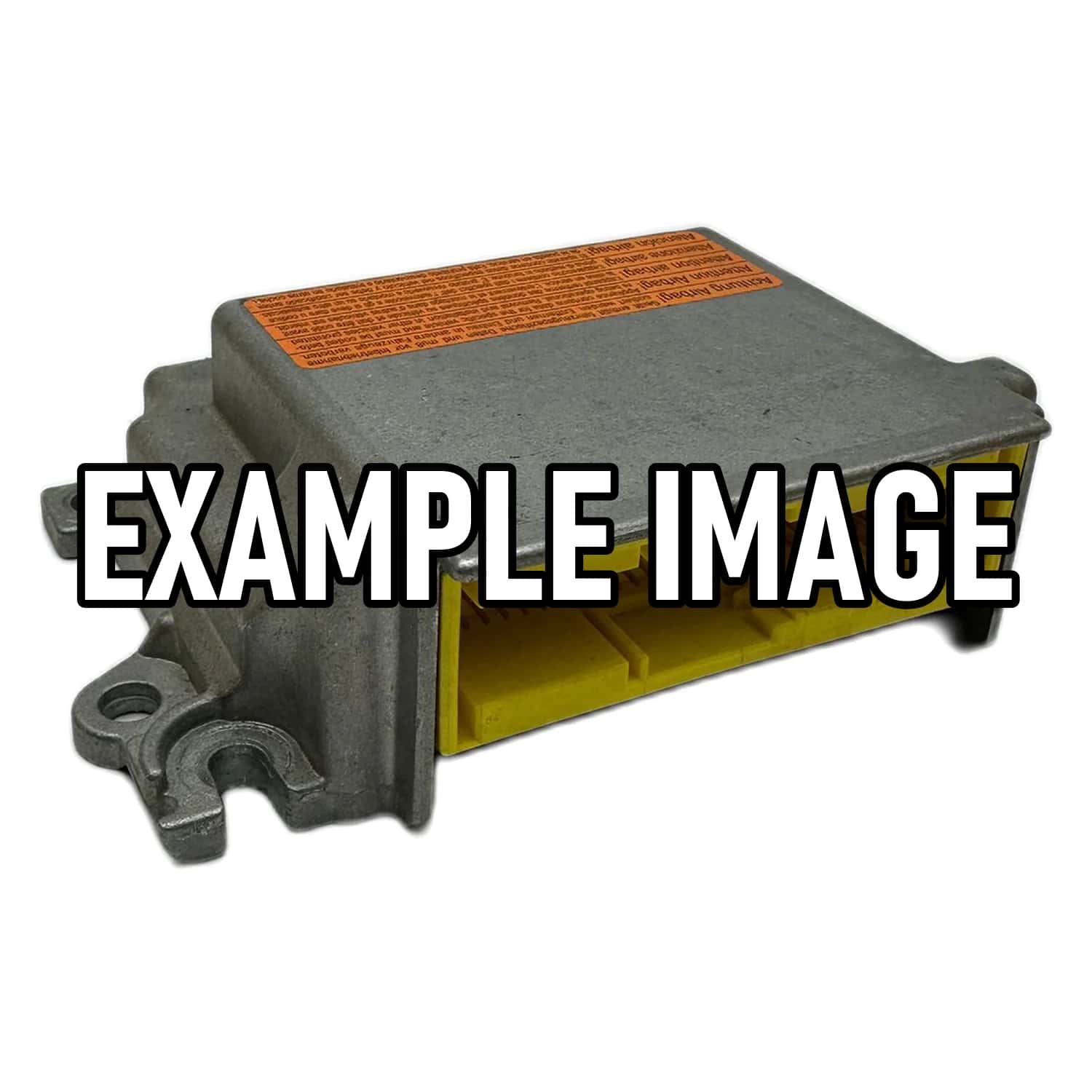
 Quality since 2002