
Suzuki Aerio airbag control unit repair(4)
4 products
What should I pay attention to with Suzuki Aerio airbag control units?
The airbag technology used in the Suzuki Aerio varies depending on the model year and market region. For a professional Suzuki Aerio airbag control unit repair, it is crucial to consider the specific characteristics of the respective model in order to restore original functionality.
The Suzuki Aerio, also known internationally as the Suzuki Liana, was produced worldwide from 2001 to 2007, with production continuing in some regions such as China and Pakistan until 2019 and 2014, respectively. This long production period and the diverse markets led to an evolution of the airbag systems installed.
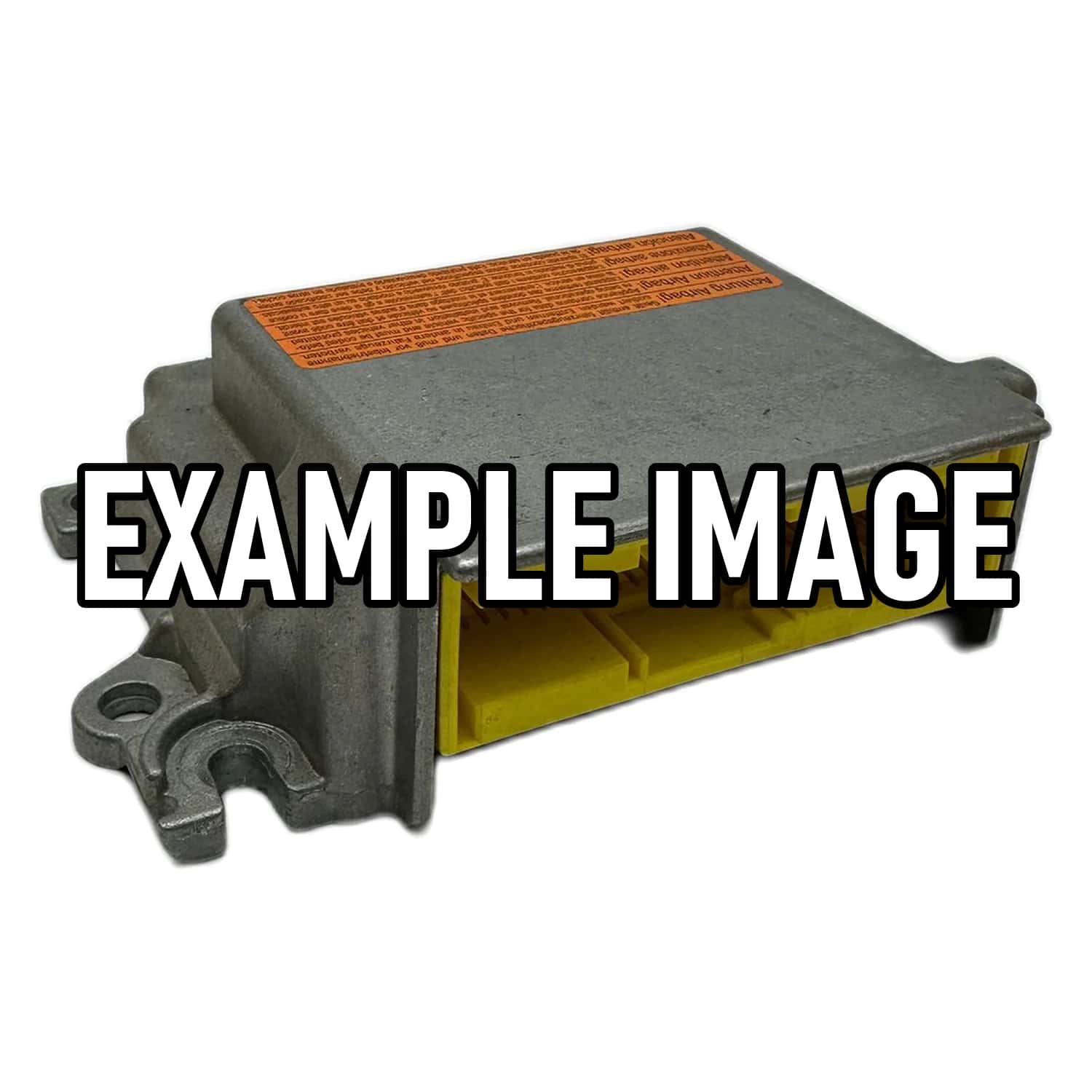
The airbag control unit, also known as the SRS module, is a central component of the passive safety system. After an accident, it often stores crash data and error codes that can prevent the system from functioning properly. A professional Suzuki Aerio airbag control unit repair can erase this data and reset the module, providing a cost-effective and environmentally friendly alternative to purchasing a new one.
The evolution of the Suzuki Aerio has included updates and facelifts, such as the one in 2005, which also brought adjustments to the airbag equipment and thus to the installed control units. Therefore, it is important to consider the exact model history and the specific requirements of the vehicle when carrying out repairs.
Which Suzuki Aerio generations are there?
The Suzuki Aerio was primarily produced in one main generation from 2001 to 2007, with various model-year updates and facelifts during this period. This development reflects the advances in the compact car's safety systems.
The Suzuki Aerio was introduced in 2001 as the successor to the Suzuki Baleno/Esteem models. Although there was no second generation in the traditional sense, the vehicles were continually improved. The most extensive update came in the 2005 model year, which brought both visual and technical innovations.
Within this single generation, there were several body styles, including the 5-door hatchback (often marketed as the Liana), the 4-door sedan, and the wagon. Each of these styles, as well as the specific trim levels and model years (e.g., Suzuki-Aerio-RA21S, Suzuki-Aerio-RB21S for specific models), may have slightly different airbag control unit requirements.
Starting in 2007, the Aerio Wagon variant was replaced by the Suzuki SX4, which later also replaced the Aerio Sedan. This marked the end of the Aerio era in many markets, while airbag technology was further developed in the successor models.
How do I identify my Suzuki Aerio airbag control unit?
Suzuki Aerio airbag control units can be clearly identified by their part number, which is usually printed directly on the module housing. The vehicle's year of manufacture and the vehicle identification number (VIN) are also important for correct identification and compatibility testing.
To find the right airbag control unit for your Suzuki Aerio model or to perform a repair, the exact part number is essential. This number ensures that the replacement or repaired module optimally integrates with the vehicle electronics and the specific airbag components of your Aerio.
It is generally recommended to send in the original Suzuki Aerio airbag control unit for repair. This ensures that the specific programming and coding required for your vehicle is retained. Re-coding the VIN or complex adjustments are not necessary when resetting the original module, simplifying the process and saving costs.
What airbag equipment does Suzuki Aerio have?
The Suzuki Aerio's airbag equipment evolved throughout its production run. While early models were typically equipped with front airbags, later models featured advanced safety systems, including side airbags and additional sensors.
In the early years of production of the Suzuki Aerio, front airbags for the driver and front passenger were standard. The availability of side airbags varied widely; in early models, such as the 2002 model, they were often not even available as an option. However, this changed with model updates.
Starting around 2005, front side airbags became standard on many Suzuki Aerio trim levels. A notable feature of the passenger airbags was weight-sensitive deactivation, which deactivated the airbag when the seat was occupied by less than a certain weight load (approximately 65 pounds). This was intended to ensure the safety of children and smaller people.
In addition to the airbags, the anti-lock braking system (ABS) has also been further developed over time. Initially, ABS was often only available as an option, but in later model years of the Suzuki Aerio, starting around 2006, it became standard equipment to increase active driving safety and optimize interaction with the passive safety systems.
Common fault codes in this category
Shipping & repair from Germany
Airbag24 repairs your component in Berlin — usually within 3–4 working days.
Standard shipping within Germany is free; we normally return your part by UPS.
You pay for and insure the inbound shipment to us. On explicit request we ship by express — the extra cost is borne by the customer.
If you withdraw from the contract, you bear the cost of returning the item.