
Suzuki Alto K10 airbag control unit repair(1)
1 product
What should I pay attention to with Suzuki Alto K10 airbag control units?
The airbag technology used in the Suzuki Alto K10 varies considerably depending on the model year and market region. Airbag24 professionally repairs control units for all Suzuki Alto K10 generations with original functionality and a 2-year warranty.
The Suzuki Alto K10 was first introduced in India in 2010 and has been a staple in the subcompact car segment ever since. Its production has spanned several generations, with the latest, third generation debuting in August 2022 on the modern Suzuki Heartect platform.
The development of the airbag system in the Alto K10 reflects advances in vehicle safety. While earlier models often had only minimal or optional airbags, later models, especially the latest generation, have been significantly upgraded to meet current safety standards.
This means that specific airbag control units are used for each generation and equipment line, which are tailored to the respective number and type of airbags installed as well as other safety sensors.
Which Suzuki Alto K10 generations are there?
The Suzuki Alto K10 has been produced in at least three main generations, each using different airbag control units. The development of the safety system reflects technological advances from 2010 to the present.
The first generation of the Suzuki Alto K10 was introduced in 2010 and aimed to continue the success of the original Alto. This model underwent several minor updates and facelifts throughout its production run.
A second iteration, often considered a facelift or a standalone generation, brought further innovations, particularly in the areas of efficiency and connectivity. However, these models often retained a simpler airbag configuration.
The current, third generation, launched in August 2022, represents a comprehensive redesign. Based on the lightweight and stable Heartect platform, it features a completely new design, improved features, and a new K10C engine, which also forms the basis for advanced safety systems.
How do I identify my Suzuki Alto K10 airbag control unit?
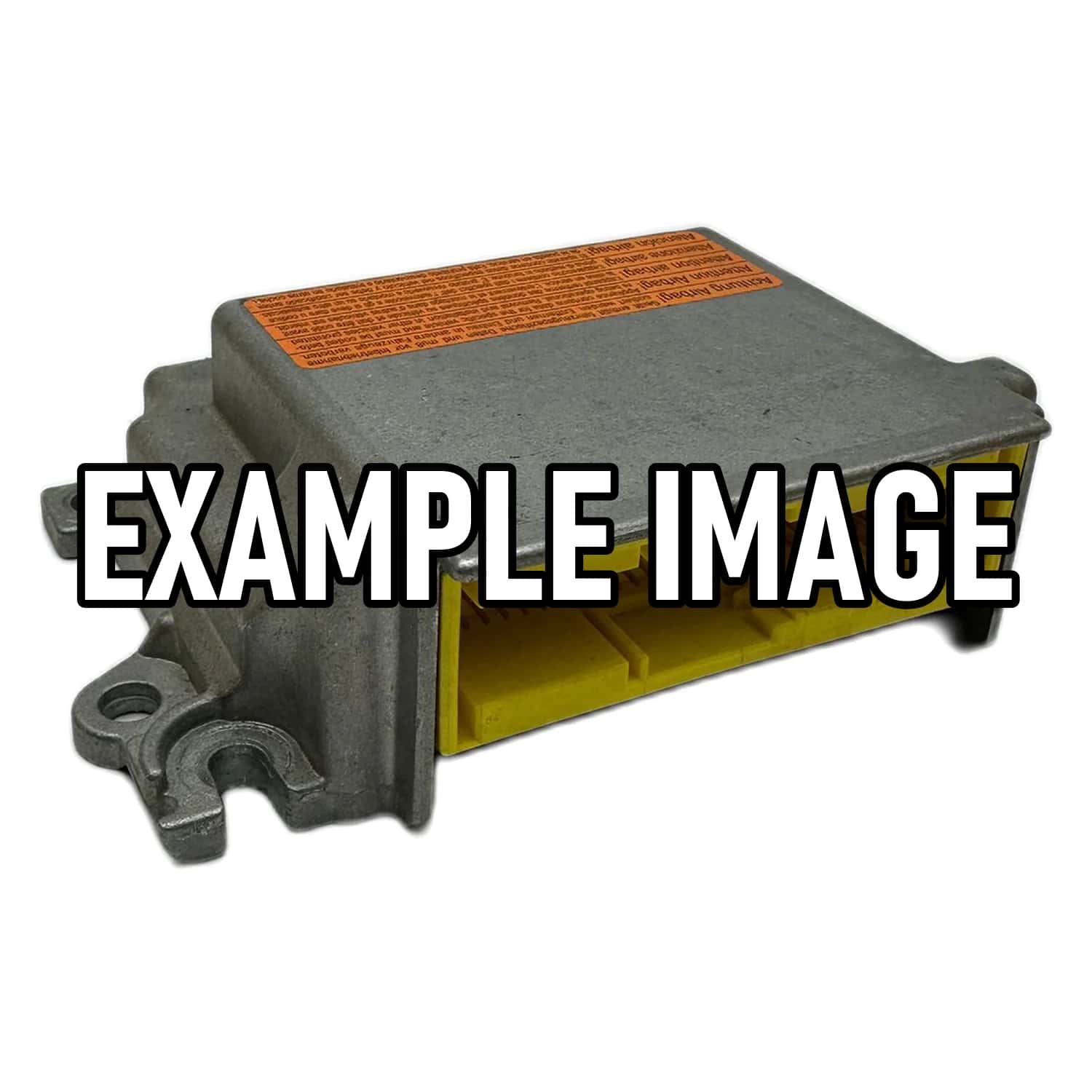
Suzuki Alto K10 airbag control units can be uniquely identified by part number, year of manufacture, and vehicle identification number (VIN). Each generation uses specific control unit variants for optimal compatibility and functionality.
The part number is the primary identifier and is usually located on a sticker directly on the control unit. This number is crucial for determining the exact model and compatibility of the airbag control unit with your Suzuki Alto K10.
Additionally, the vehicle's year of manufacture and the vehicle identification number (VIN) are important information, as they provide information about the specific configuration and components installed during production. This information helps identify the correct control unit for the respective trim level and safety features.
Since the Alto K10 has undergone various evolutions over the years, precise identification is essential to ensure that a repaired or replaced control unit harmonizes perfectly with the existing airbag system and the installed sensors.
What airbag equipment does the Suzuki Alto K10 have?
The airbag configuration of the Suzuki Alto K10 varies considerably depending on the model year and trim level. While early models use basic airbag systems, newer generations feature enhanced safety packages with additional airbag modules.
In its early years of production and in certain markets, the Suzuki Alto K10 was often offered as a low-cost city car, with airbags being limited or sometimes even missing entirely, depending on the variant chosen.
A crucial turning point for safety equipment is the introduction of the third generation and, in particular, the adaptation to stricter safety standards from the beginning of 2025. From this point on, the Suzuki Alto K10 will be delivered with six airbags as standard.
This comprehensive equipment includes driver and passenger airbags, additional side airbags, and potentially additional airbags, such as knee airbags, to significantly improve occupant protection. This positions the Alto K10 as a leader in its segment.
The enhanced airbag system in the newer models is complemented by additional electronic safety features. These include the Electronic Stability Program (ESP), the Anti-lock Braking System (ABS) with Electronic Brake-force Distribution (EBD), and standard reversing sensors, which contribute to comprehensive passive and active safety.
Common fault codes in this category
Shipping & repair from Germany
Airbag24 repairs your component in Berlin — usually within 3–4 working days.
Standard shipping within Germany is free; we normally return your part by UPS.
You pay for and insure the inbound shipment to us. On explicit request we ship by express — the extra cost is borne by the customer.
If you withdraw from the contract, you bear the cost of returning the item.