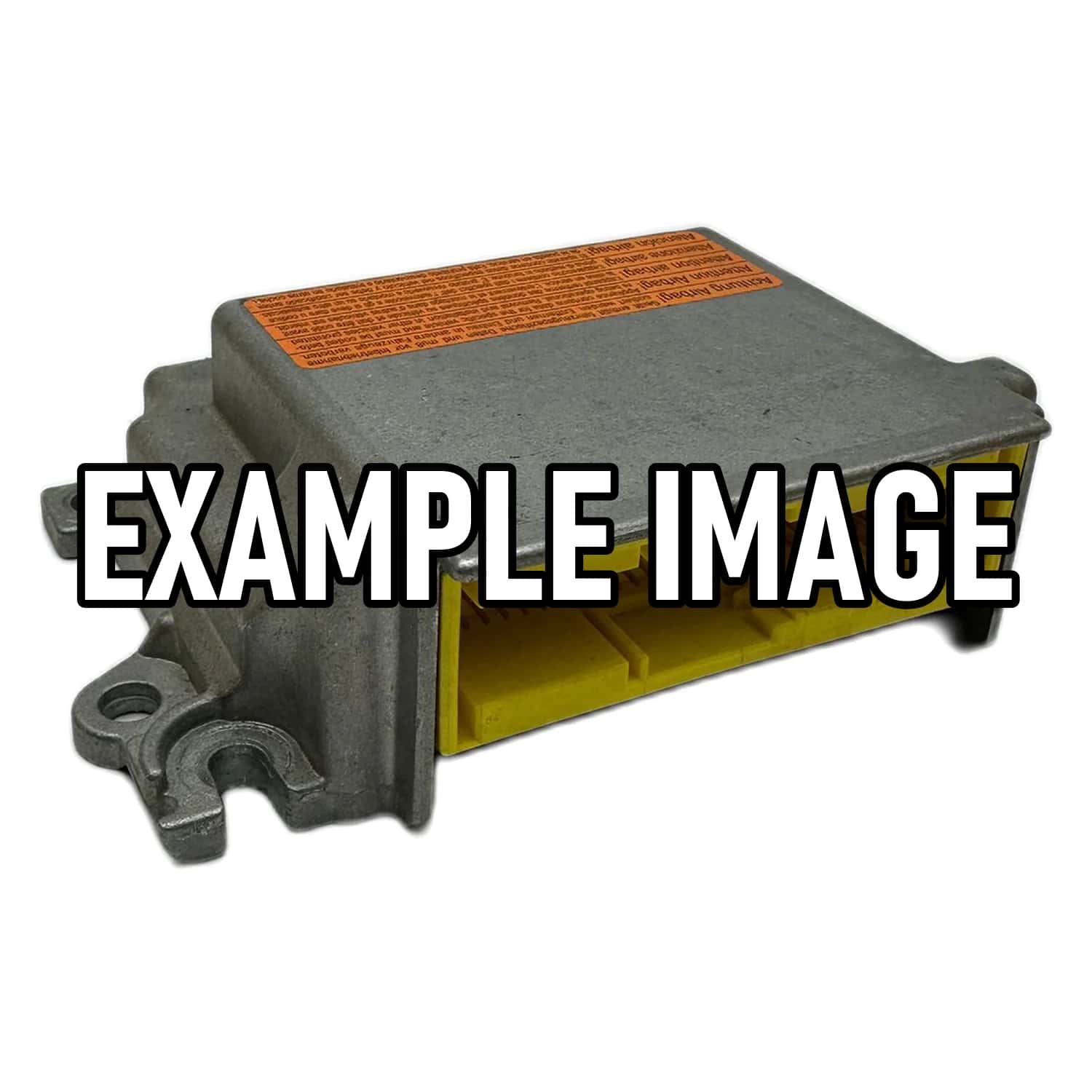
airbag control unit repair Suzuki APV GA
from€79.00
 Quality since 2002
The airbag technology used in the Suzuki APV focuses on essential safety features and remains consistent across model years. Professional repair of defective Suzuki APV airbag control units is crucial to maintaining original functionality and ensuring the safety of vehicle occupants.
The Suzuki APV has been in production since 2004 and is known as a versatile multi-purpose vehicle (MPV), particularly popular in Asian and select international markets. The 2008 facelift led to the introduction of the APV Arena as a minibus and the APV Luxury as a minivan, although the underlying platform, and thus the basis of the airbag system, remained largely unchanged.
The development of the airbag system in the Suzuki APV was characterized by a focus on essential safety components. Dual front airbags for the driver and front passenger were standard from the outset. This configuration underscores the practical and functional approach of the vehicle, which was primarily designed as a reliable commercial and family vehicle.
The Suzuki APV has been in production since 2004 and underwent at least one significant facelift in 2008, which spawned several model variants. Although there were no complete new developments in the sense of a classic generational change, the adjustments in the design and positioning of the APV, APV Arena, and APV Luxury reflect a continuous evolution.
The facelift in 2008 was crucial in differentiating the model range. The Suzuki APV continued to be offered as a practical panel van, while the Suzuki APV Arena was positioned as a comfortable minibus for passenger transport. The APV Luxury complemented the range as a minivan with expanded features.
Despite this model update, the technical basis, including the structure of the airbag system, has remained largely unchanged over the years. This means that while the airbag control units may exhibit minimal revision-related differences, they are essentially based on a similar architectural design, designed for the dual front airbag configuration.
When repairing your Suzuki APV airbag control unit, it's important to know the exact model and year of manufacture to ensure precise assignment and compatibility of the repair. Whether it's a Suzuki APV GA or Suzuki APV Arena, professional repair is essential for your safety.
Suzuki APV airbag control units can be reliably identified by the specific part number located directly on the control unit. The vehicle's year of manufacture and the vehicle identification number (VIN) are also important features for determining the correct version for repair. Each control unit is optimally tailored to the standard airbag equipment of the respective model.
The part number is the primary identifier and ensures that the repaired or replaced control unit is a precise fit for the vehicle. This number, often in conjunction with manufacturer logos and other codes, is printed on a sticker or directly on the control unit's housing.
Since the Suzuki APV, including the APV GA and APV Arena models, has been produced since 2004, minor revisions to the electronic components may have occurred over the years, even if core functionality remains the same. Therefore, specifying the exact year of manufacture is crucial to ensure the correct repair method and compatibility of the airbag control unit, and to efficiently resolve any defective condition.
The Suzuki APV's airbag configuration is primarily designed for basic safety and has focused on dual front airbags since production began. Regardless of model year, this is the standard configuration for most models, including the Suzuki APV GA and APV Arena.
Since their launch in 2004, Suzuki APV models, including the popular APV GA and APV Arena variants, have been equipped with two front airbags as standard: one for the driver and one for the passenger. This basic safety feature is standard in many markets, particularly in Southeast Asia, Australia, and Algeria.
It's important to note that the Suzuki APV generally doesn't have side or curtain airbags. Advanced safety systems such as ABS, Electronic Stability Control (ESC), or traction control aren't standard on most models. This focus on dual front airbags reflects the APV's mission as a cost-effective, robust, and functional MPV optimized for practicality and space.
Although the Suzuki APV's safety rating (e.g., three stars in the 2008 ANCAP crash test) is moderate, the integrated front airbags are an essential component of the passive safety system. If the airbag control unit fails, proper repair is essential to ensure the continued functionality of these life-saving components.
Airbag24 repairs your component in Berlin — usually within 3–4 working days.
Standard shipping within Germany is free; we normally return your part by UPS.
You pay for and insure the inbound shipment to us. On explicit request we ship by express — the extra cost is borne by the customer.
If you withdraw from the contract, you bear the cost of returning the item.