
Suzuki Cappuccino airbag control unit repair(2)
2 products
What should be considered with Suzuki Cappuccino airbag control units?
The airbag technology used in the Suzuki Cappuccino varies depending on the model year and trim level. Airbag control units for the Suzuki Cappuccino require precise repair to restore the safety system's full functionality. A professional repair ensures true-to-original functionality and reliability for years to come.
The Suzuki Cappuccino, an iconic kei-car sports roadster, was produced from 1991 to 1998. During this time, the vehicle went through various stages of development, which also affected the installed electronic components, including the airbag control units. A detailed knowledge of the production history is crucial for a successful repair.
Airbag technology in the Suzuki Cappuccino was an optional feature, especially in the early model years. This meant that not every vehicle in the EA11R or EA21R series was necessarily equipped with an airbag system. Airbag system development primarily focused on a driver airbag, which was offered in the higher-end "High Specification BA" variants.
Since the airbag is not standard equipment but part of an optional package, identifying the specific control unit is particularly important. A repair ensures that even in older models with this optional safety feature, full functionality is available when needed and that the electronic components operate reliably.
Which Suzuki Cappuccino generations are there?
The Suzuki Cappuccino was produced in two main generations, each of which could use different airbag control units. The development of the safety system reflects the technological advances from 1991 to 1998 and is closely linked to the model updates.
The first and earliest version of the Suzuki Cappuccino is the EA11R, which was produced from 1991 to approximately 1995. This generation is characterized by its original engine and basic equipment. Within the EA11R, it was possible to order higher-end BA variants with a driver airbag.
Starting in 1995, Suzuki introduced the revised version EA21R, which remained available until production ended in 1998. The EA21R featured significant innovations, including a lighter engine with chain-driven camshafts and slightly increased torque. Comfort-oriented improvements such as lighter wheels and an optional 3-speed automatic transmission with power steering were also introduced.
Although the focus of the EA21R's innovations was on mechanical and ride comfort, the "High Specification BA" models continued to be the primary carriers of the optional driver airbag. The control units could differ in part numbers and internal specifications between the EA11R and EA21R, even if the core function remained the same.
These generational differences are essential for the precise repair of a defective airbag control unit. Precise identification of the year and model variant is necessary to ensure compatibility and correct operation after repair. Attention to detail is crucial, especially for a vehicle as specialized as the Cappuccino.
How do I identify my Suzuki Cappuccino airbag control unit?
Suzuki Cappuccino airbag control units can be uniquely identified by part number, year of manufacture, and vehicle identification number. Each generation and trim level uses specific control unit variants for optimal compatibility and compliance with the respective safety standards.
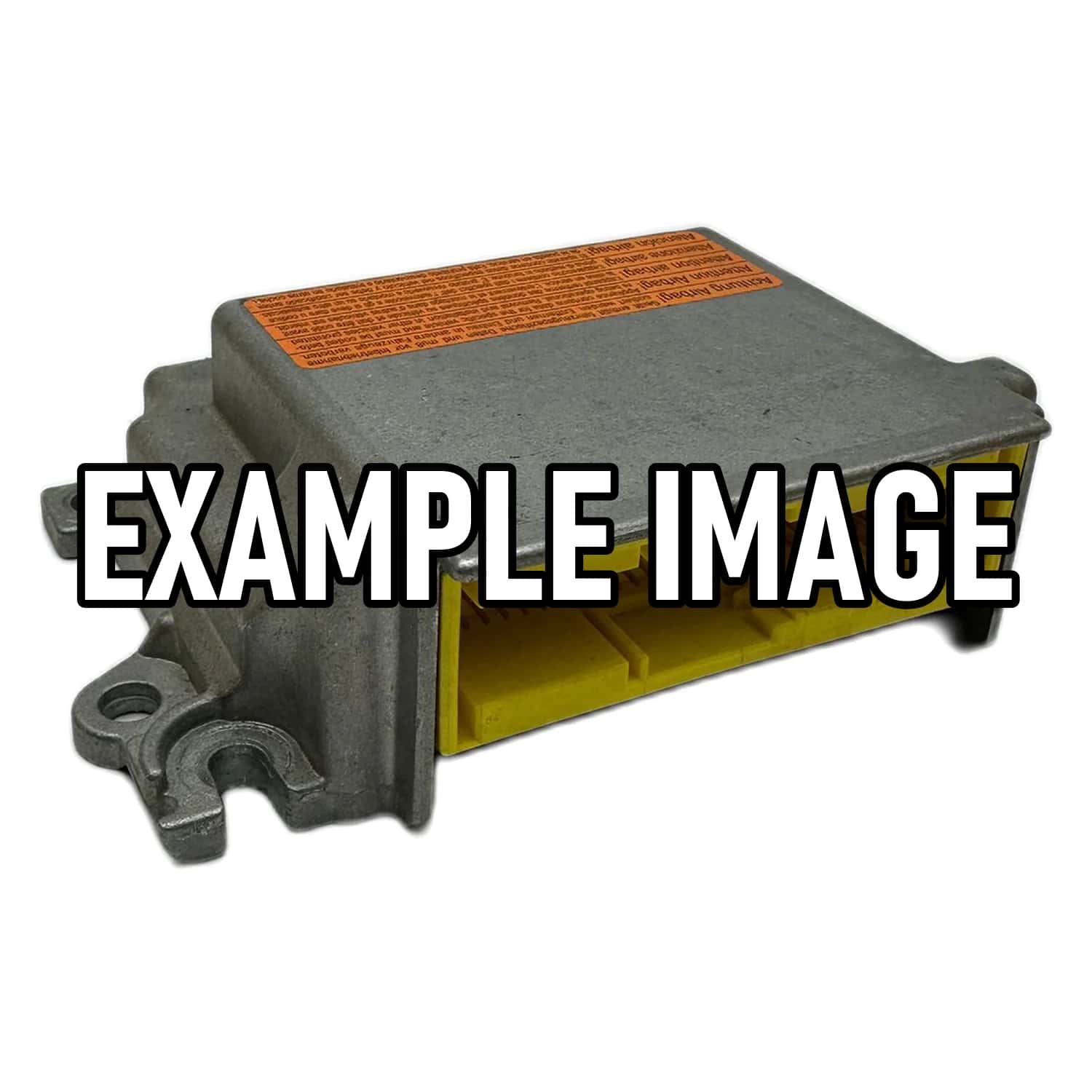
Clearly identifying your Suzuki Cappuccino airbag control unit is the first and most important step for a successful repair. The crucial information is located directly on the control unit's housing. Look for the printed or embossed part number, which is usually a combination of letters and numbers.
In addition to the part number, the year of manufacture of your Suzuki Cappuccino is important. Since the airbag was listed as an optional feature in the EA11R and EA21R, the year of manufacture can provide clues as to the likelihood of the presence of an airbag system, as well as possible revision levels of the control unit. The vehicle identification number (VIN) on your vehicle registration document can also help verify the exact equipment on your specific vehicle.
The compatibility of the airbag control unit is not only tied to the generation (EA11R or EA21R) but also to the specific equipment line. Since the driver airbag was part of a "High Specification BA" package, these vehicles differ from the base models without airbags. A careful examination of these features is essential to determine the appropriate control unit for repair and avoid malfunctions.
What airbag equipment does the Suzuki Cappuccino have?
The airbag configuration of the Suzuki Cappuccino varies depending on the model year and the selected trim level. While the Cappuccino was designed as a kei-car sports roadster, a driver's airbag was primarily available in the higher-end "High Specification BA" variants and was not standard on all models.
The Suzuki Cappuccino was developed as a compact, lightweight sports roadster that met Japanese kei car regulations. This influenced its design and features, with a strong focus on driving pleasure and low weight. Safety features such as airbags were often still optional in the early 1990s, especially on vehicles of this class.
For the Suzuki Cappuccino, both in the EA11R and EA21R series, a driver's airbag was available as part of the optional "High Specification BA" package. These higher-spec models often offered other premium features in addition to the airbag, such as ABS on all four wheels, a limited-slip differential, and sometimes electrically operated exterior mirrors. The passenger airbag was not included in this model.
The Cappuccino's target audience was enthusiasts seeking an agile, compact, and purist sports car. The optional nature of the airbag underscored this, as buyers could choose whether they preferred additional safety features or the lightweight base version. This makes precise knowledge of the equipment installed in your specific Suzuki Cappuccino crucial for repairing the airbag control unit.
Common fault codes in this category
Shipping & repair from Germany
Airbag24 repairs your component in Berlin — usually within 3–4 working days.
Standard shipping within Germany is free; we normally return your part by UPS.
You pay for and insure the inbound shipment to us. On explicit request we ship by express — the extra cost is borne by the customer.
If you withdraw from the contract, you bear the cost of returning the item.