B1810 airbag control unit fault
Control unit repairs for fault code B1810 in our shop:
Your vehicle isn't listed?
Error “B1810” isn't linked to every vehicle in our database – we can usually repair the airbag control unit anyway. Select your vehicle and we'll show you the matching repair:
What does error code B1810 mean?
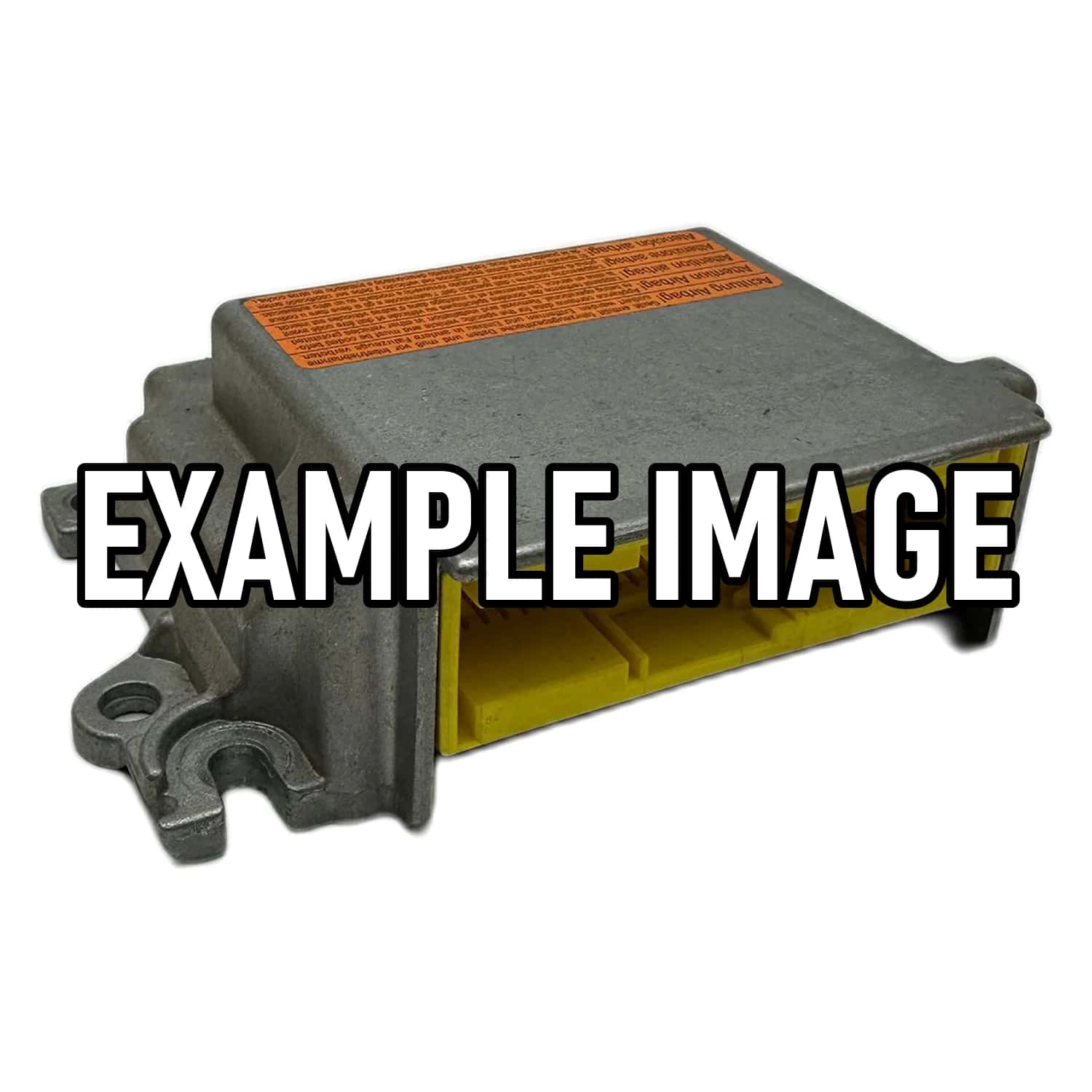
Error code B1810 indicates an internal fault or inherent defect in the airbag control unit. This is often caused by a hardware issue or an EEPROM memory problem and points to an inconsistency in the self-diagnosis system, rather than necessarily indicating that airbags have been deployed. The root cause lies within the device’s internal electronics.
Specifically, this error signals that one of the control unit’s internal monitoring and diagnostic functions has detected a serious anomaly. The issue is not with external components such as sensors or the airbags themselves, but directly on the circuit board of the Airbag Control Unit (ACU).
Electronically, this can result from a variety of defects, including faulty SMD components (such as voltage regulators or MOSFETs), damaged BGA chips (microprocessors), or inconsistencies in the EEPROM memory, where critical operating and configuration data—including potential crash data—are stored.
As a consequence, the control unit enters a safe, locked-down state to prevent malfunctions such as unintended deployment or failure during a crash. The system remains disabled until the internal defect is resolved.
How do you recognize error B1810?
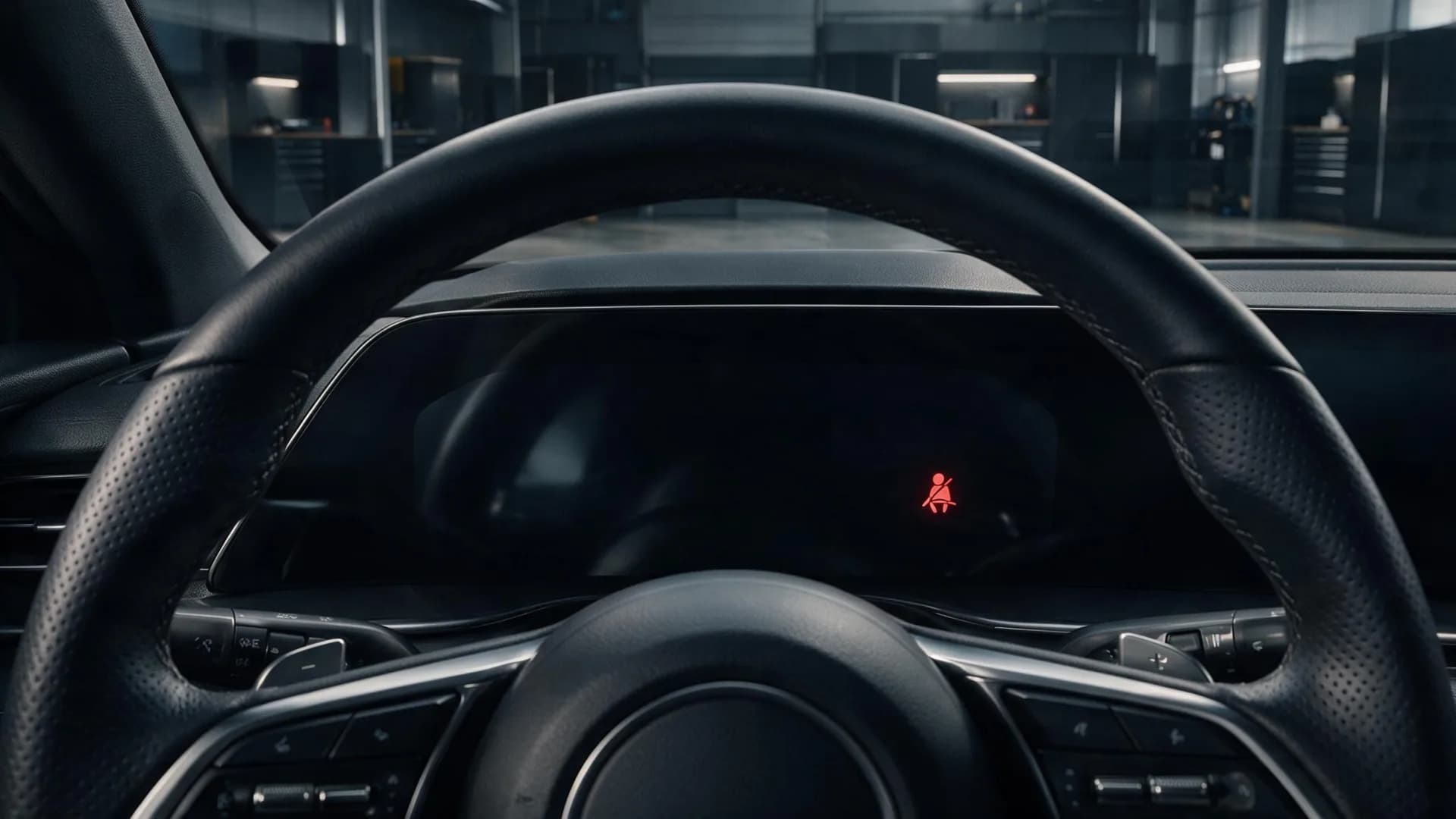
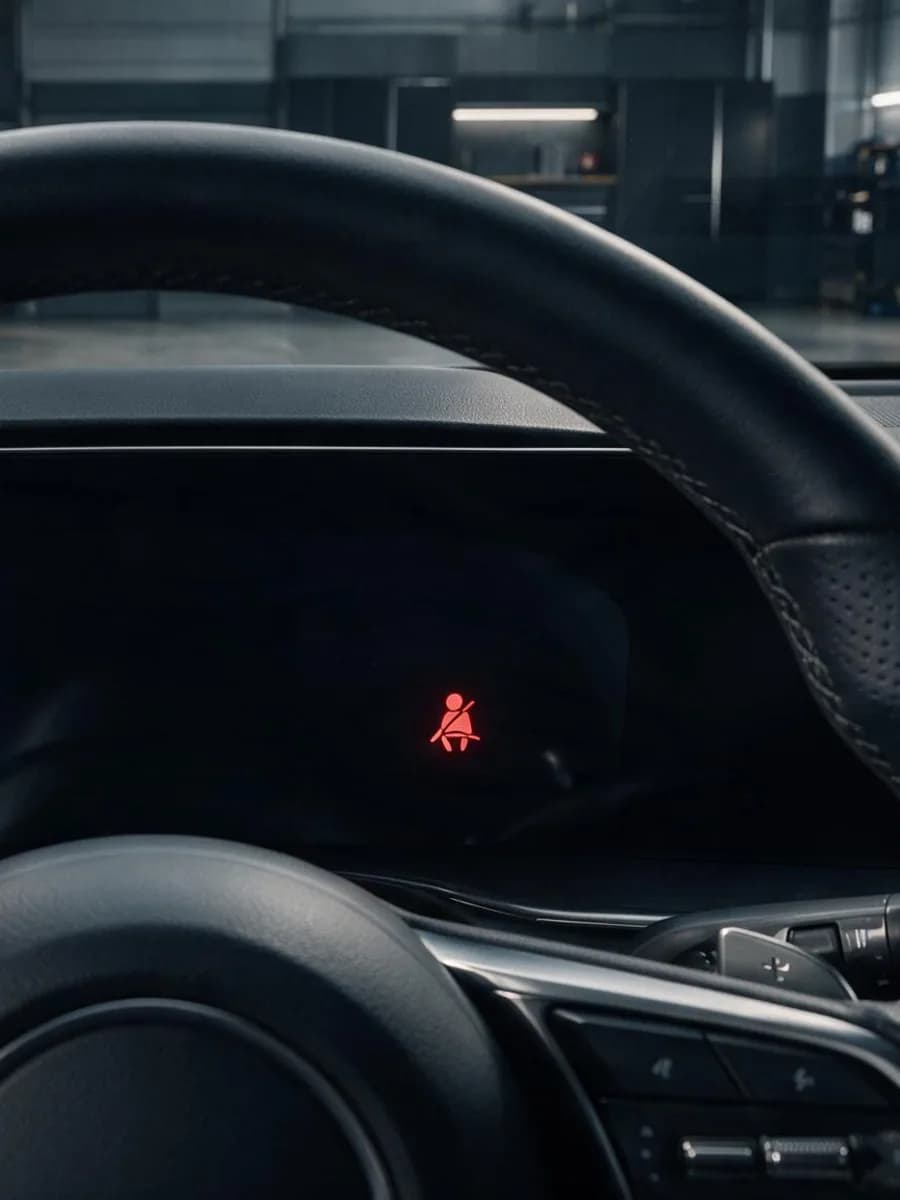
The primary symptom of error code B1810 is a continuously illuminated airbag warning light on the instrument cluster. Additionally, communication with the control unit via a diagnostic tool may be disrupted or impossible, as the internal defect locks the unit and prevents it from responding to requests.
The airbag warning lamp—often displayed as an SRS or airbag symbol—is the most obvious indicator for the driver. It fails to turn off after starting the vehicle, signaling a critical, stored fault in the safety system.
Another characteristic is that error code B1810 cannot be cleared using standard diagnostic equipment. Since the root cause is a persistent hardware or memory fault, the error reappears immediately after any attempt to clear it, until the underlying issue is fixed.
What causes B1810?
The main cause of B1810 is hardware defects on the airbag control unit’s circuit board. These include damaged SMD components, faulty microprocessors (BGA chips), or corrupted EEPROM memory data that locks the unit’s safety logic. External factors such as overvoltage or corrosion can also harm the internal electronics.
Defective SMD and BGA components are a common culprit. This includes blown voltage regulators, malfunctioning driver ICs, or damaged traces. Such damage can arise from aging, vibrations, or electrical disturbances like overvoltage in the vehicle’s electrical system.
A damaged or locked EEPROM memory is another core cause. When crash data is stored in the EEPROM, the control unit locks itself accordingly. Inconsistent or erased EEPROM data can likewise disrupt self-diagnosis and trigger error B1810.
An internal microprocessor fault or issues with the bootloader or flash memory may also be responsible. If the central BGA chip that controls the unit’s logic fails, it inevitably results in an internal error code.
Although less frequent, external factors such as corroded connectors or ground faults should always be checked before removing the control unit. These can produce similar symptoms and must be ruled out as potential causes.
Which vehicles are affected by B1810?
Error code B1810 occurs across various manufacturers, particularly in models from Fiat, Seat, Lexus, Porsche, Subaru, and Toyota. As different types of control units are installed, the exact part number is crucial for successful repair.
At Airbag24, we repair error code B1810 for a wide range of models. The repair requires specialized knowledge of each specific control unit’s hardware.
Among the affected models for which we offer repairs are:
Fiat: Fiorino 146 (1994–2001)
Seat: Leon ST Mk3
Lexus: NX NX350h
Porsche: Panamera 4S E-Hybrid 970
Subaru: Outback BG (1996–1999)
Toyota: Crown Royal, GT86 TRD, GR86 ZN8 (from 2021), 86 ZN8, Harrier XU60 (2013–2020)
It is essential to verify the exact part number of the control unit before sending it in, as different generations and models use varying hardware layouts and software protection mechanisms.
How is error code B1810 professionally repaired?
Professional repair of error B1810 involves detailed component-level diagnostics on the circuit board, replacement of defective SMD/BGA components, and restoration of EEPROM memory data. This includes erasing crash data and conducting a final functional test to ensure full operational readiness.
After being sent to Airbag24, the control unit undergoes a standardized, safety‑tested repair process. This begins with an incoming inspection, during which the part number and error code provided by the customer are verified.
The first step involves a visual inspection of the circuit board under a microscope for corrosion, signs of burning, or damaged components. Subsequently, critical parts such as voltage regulators, capacitors, and resistors are tested using precision measurement tools to identify any defective components.
Next, the EEPROM or Flash memory is read out to verify data integrity and back up any stored crash data. Using specialized tools, this crash data is then reset, thereby lifting the electronic lock on the control unit.
Identified defective SMD or BGA components are carefully desoldered and replaced with new, high‑quality parts. This work is performed at an ESD‑protected workstation to prevent further damage to the sensitive electronics.
Finally, a comprehensive functional test is carried out. The control unit is connected to a diagnostic device to test communication and ensure that no error codes remain. We provide 2 years' statutory liability for defects on all repairs.
Shipping & repair from Germany
Airbag24 repairs your component in Berlin — usually within 3–4 working days.
Standard shipping within Germany is free; we normally return your part by UPS.
You pay for and insure the inbound shipment to us. On explicit request we ship by express — the extra cost is borne by the customer.
If you withdraw from the contract, you bear the cost of returning the item.
4.8

Based on 246 reviews
What our customers say
„Ok.“
 Zsolt Szabólast week
„Works like a charm!“
 Leoly4 weeks ago
„Everything went perfectly, I can only recommend it.“
Automatically translated · Original: German
 ka irgendwas2 days ago
„From the first phone call, the order processing, to the shipping everything was done very quickly and professionally. Now I still have to send the repaired unit to the Swedish workshop and then hopefully the Honda can fi…“
Automatically translated · Original: German
 Gerd Goldammer2 days ago
„Airbag control unit Fiat 500 was broken. Hard to believe but they can really repair it! Recommendation!!“
Automatically translated · Original: German
 Christian Maegerlein4 days ago
„Everything worked out great! Read out fault memory, sent it in, received offer and sent in the defective control unit. Got it back repaired after 3 days, price exactly as in the offer. It can't get any better 👍“
Automatically translated · Original: German
 Toni Buien5 days ago
„Uncomplicated service. Fast and thorough. Can only recommend.“
Automatically translated · Original: German
 Abdul KS5 days ago
„All great👍“
Automatically translated · Original: German
 Edin Avdic6 days ago
„All great, fast delivery. Thanks.“
Automatically translated · Original: German
 Andrej Ivanovlast week
„100% satisfied. Everything handled very professionally and transparently. Only the return shipping took too long. This was however due to UPS and less to Aairbag24. Thank you very much“
Automatically translated · Original: German
 Dennis Welast week
„VAG airbag control unit with error B2000 00 reliably repaired. Price very high in comparison, but everything worked out. No exact protocol of what was carried out, probably just newly flashed“
Automatically translated · Original: German
 Tokeh Tokehlast week
„A great shop, even when there are sometimes problems. There are quick responses and very good help. I can only recommend the shop. Thank you very much“
Automatically translated · Original: German
 Sven Wegenerlast week
„Ok.“
Zsolt Szabólast week