
Alfa Romeo 146 airbag control unit repair(1)
1 product
What should I pay attention to with Alfa Romeo 146 airbag control units?
The airbag technology used in the Alfa Romeo 146 varies depending on the model year. Airbag24 professionally repairs control units for all Alfa Romeo 146 generations with original functionality and a 2-year warranty.
The Alfa Romeo 146, a compact five-door, was produced from 1995 to 2000 and succeeded the Alfa Romeo 33. This compact model appealed to customers seeking a practical, everyday vehicle with typical Italian design and dynamic driving characteristics. Although it only underwent one major facelift during its production run, technological developments in vehicle safety were rapid in the 1990s.
In December 1996, the Alfa Romeo 146 underwent a major facelift, primarily focused on revamping the engine lineup. The traditional boxer engines were replaced by more modern Twin Spark inline four-cylinder engines. These technical innovations also brought about subtle adjustments to the electronic systems and thus to the airbag control unit, which is important when repairing the Alfa Romeo 146 airbag control unit .
An airbag control unit is the heart of the passive safety system and is responsible for detecting impact situations and precisely deploying the airbags. Due to the age of vehicles built between 1995 and 2000, these control units are often subject to age-related defects. These include typical errors such as error messages, persistently illuminated airbag warning lights, or the storage of crash data after an accident. In such cases, a professional repair is not only essential for safety but is often more cost-effective than purchasing a new one.
Which Alfa Romeo 146 generations are there?
The Alfa Romeo 146 was produced in one generation, although the 1996 facelift may have included adjustments to the airbag control units. The development of the safety system reflects the technological progress from 1995 to 2000.
Strictly speaking, the Alfa Romeo 146 was conceived as a single generation during its production period from 1995 to 2000. This distinguishes it from many other models that were built over several generational changes. Nevertheless, the facelift in December 1996 marked an important turning point in the vehicle's technical specifications.
This facelift included not only minor visual changes to details like brake lights and exhaust tailpipes, but, above all, a comprehensive change to the engine lineup. The replacement of the boxer engines with modern Twin Spark engines with dual ignition also had an impact on the onboard electronics. Although there were no separate body generations , knowing the exact production date of the vehicle is crucial for Alfa Romeo 146 airbag control unit repair .
Even within a single generation , such substantial model updates can result in different versions of the airbag control unit being used. A defective control unit from a pre-facelift model may differ in architecture and the required spare parts from a post-facelift unit. Precise knowledge of the model year and any equipment variants is therefore essential to ensure compatibility and functionality after a repair .
How do I identify my Alfa Romeo 146 airbag control unit?
Alfa Romeo 146 airbag control units can be clearly identified by part number, model year, and vehicle identification number. The specific control unit variants are designed for optimal compatibility with the respective safety system of each model year.
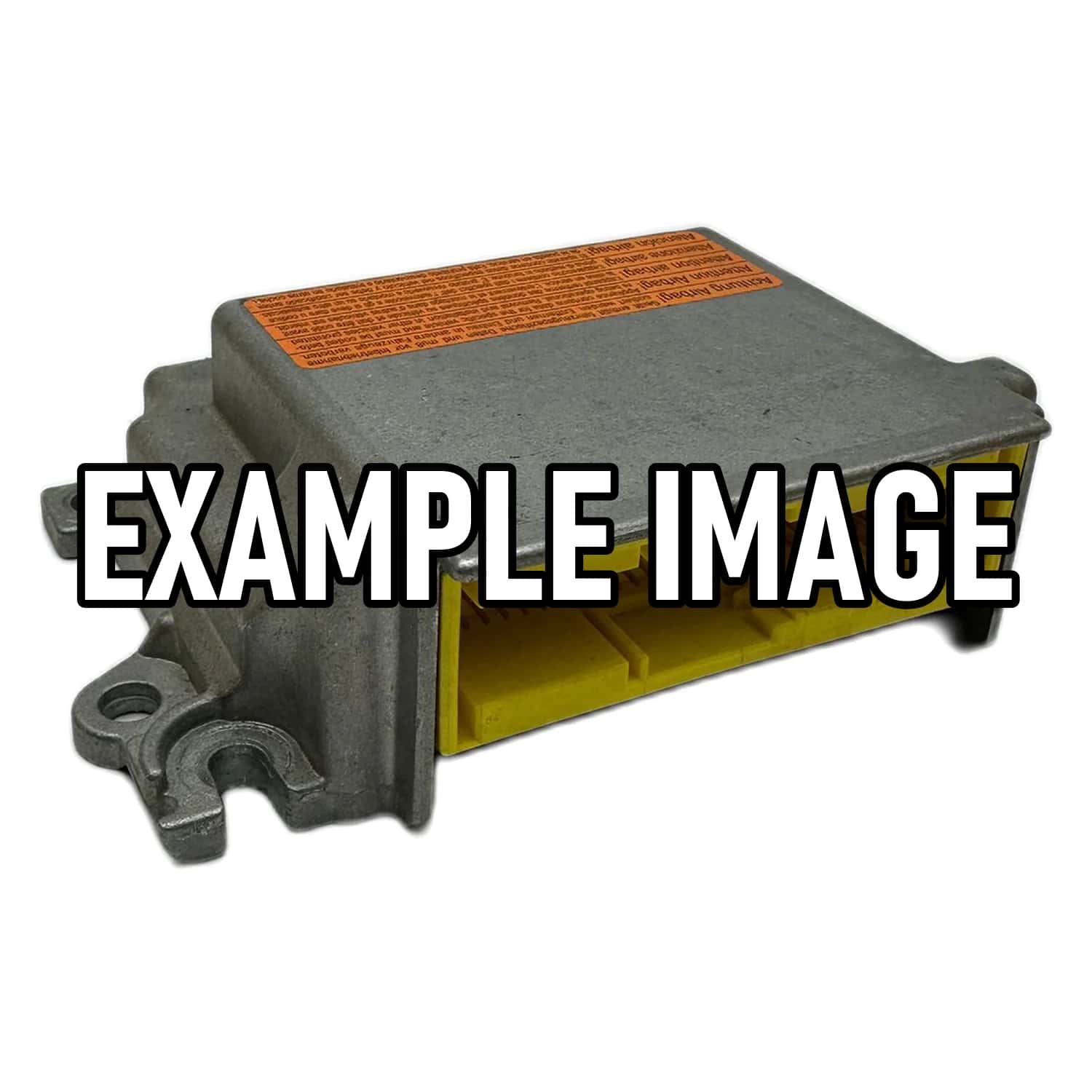
Correctly identifying your Alfa Romeo 146 airbag control unit is the first and most important step for a successful repair . The key piece of information here is the part number. This can usually be found on a label attached directly to the control unit. The airbag control unit is often installed in the center tunnel area or under the center console.
In addition to the part number, the exact year of manufacture of your Alfa Romeo 146 and the vehicle identification number (VIN) are also crucial. This information helps to account for any subtleties or manufacturing differences that may arise despite the 146's single- generation policy. Since the 1996 facelift brought technical changes, vehicle data is crucial for determining the correct version of the airbag control unit and for precise repair .
A defective airbag control unit can only be professionally repaired if the exact model and revision are known. This ensures that, after the repair, all components of the passive safety system, such as the airbags and belt pretensioners, communicate seamlessly with the control unit and function correctly in an emergency. Precise identification avoids compatibility issues and ensures the functionality of the Alfa Romeo 146 airbag control unit repair .
What airbag equipment does the Alfa Romeo 146 have?
The airbag equipment of the Alfa Romeo 146 varies depending on the model year and trim level. While early models use basic airbag systems, later models or higher trim levels feature enhanced safety packages with additional airbag modules.
When the Alfa Romeo 146 was launched in 1995, its safety features met the standards common for compact cars at the time. A driver airbag was usually included as standard equipment to significantly improve occupant protection in a frontal collision. This was an important step in the development of automotive safety systems in the 1990s.
Over the course of production and depending on the chosen trim level, additional airbag modules could be added. These typically included a passenger airbag, often available as an option or in higher trim levels. Side airbags, which increase protection in the event of a side impact, were even rarer in this vehicle class at the time, and if available, were also available as an option. The exact configuration depended heavily on the specific model year and the market in which the vehicle was sold.
The airbag control unit in the Alfa Romeo 146 is responsible for coordinating and monitoring all of the installed airbag modules. A defective control unit can cause the airbag warning light to stay on permanently and, in the worst case, prevent the entire system from deploying in an emergency. A professional repair ensures that all sensors and firing circuits are correctly monitored and that the entire airbag system in the Alfa Romeo 146 functions optimally in the event of an accident. A precise Alfa Romeo 146 airbag control unit repair is therefore crucial for restoring the vehicle's original safety.
Common fault codes in this category
Shipping & repair from Germany
Airbag24 repairs your component in Berlin — usually within 3–4 working days.
Standard shipping within Germany is free; we normally return your part by UPS.
You pay for and insure the inbound shipment to us. On explicit request we ship by express — the extra cost is borne by the customer.
If you withdraw from the contract, you bear the cost of returning the item.