
Alfa Romeo 164 airbag control unit repair(1)
1 product
What should I pay attention to with Alfa Romeo 164 airbag control units?
The airbag technology used in the Alfa Romeo 164 varies depending on the model year. Airbag24 professionally repairs control units for all Alfa Romeo 164 generations with original functionality and a 2-year warranty.
The Alfa Romeo 164, a distinctive upper-middle-class sedan, was produced from 1987 to 1997, and in some cases even until 1998. During this decade, safety technology also continued to evolve, particularly in the area of passive safety through airbag systems.
Initially, airbags were often optional, but became increasingly standard over the course of production. While less complex than today's systems, the airbag control units of this era are essential for proper operation. A defect can compromise safety or cause the airbag warning light to remain permanently illuminated, typically for about 10 seconds when the vehicle is started.
Repairing these specialized control units requires specific expertise in the electronics and the fault patterns that often arise due to aging or external influences. Professional repair ensures the restoration of your vehicle's original safety function.
Which Alfa Romeo 164 generations are there?
The Alfa Romeo 164 was produced in two main generations, each of which could use different airbag control units. The development of the safety system reflects technological advances from 1987 to 1997.
The first generation of the Alfa Romeo 164 was offered from 1988 until approximately 1992/1993. These early models laid the foundation for the integration of passive safety systems into Alfa Romeo's upper mid-range vehicles.
The second generation followed in 1993, featuring a revised design with slimmer headlights and larger bumpers. The dashboard also underwent improvements, often accompanied by adjustments to the onboard electronics, including the airbag control system.
The first facelift took place in 1990, bringing changes to the front axle and the introduction of a fully galvanized body. Such facelifts could require subtle adjustments to installed components, such as the airbag control unit, even if the core architecture of the airbag systems remained unchanged.
How do I identify my Alfa Romeo 164 airbag control unit?
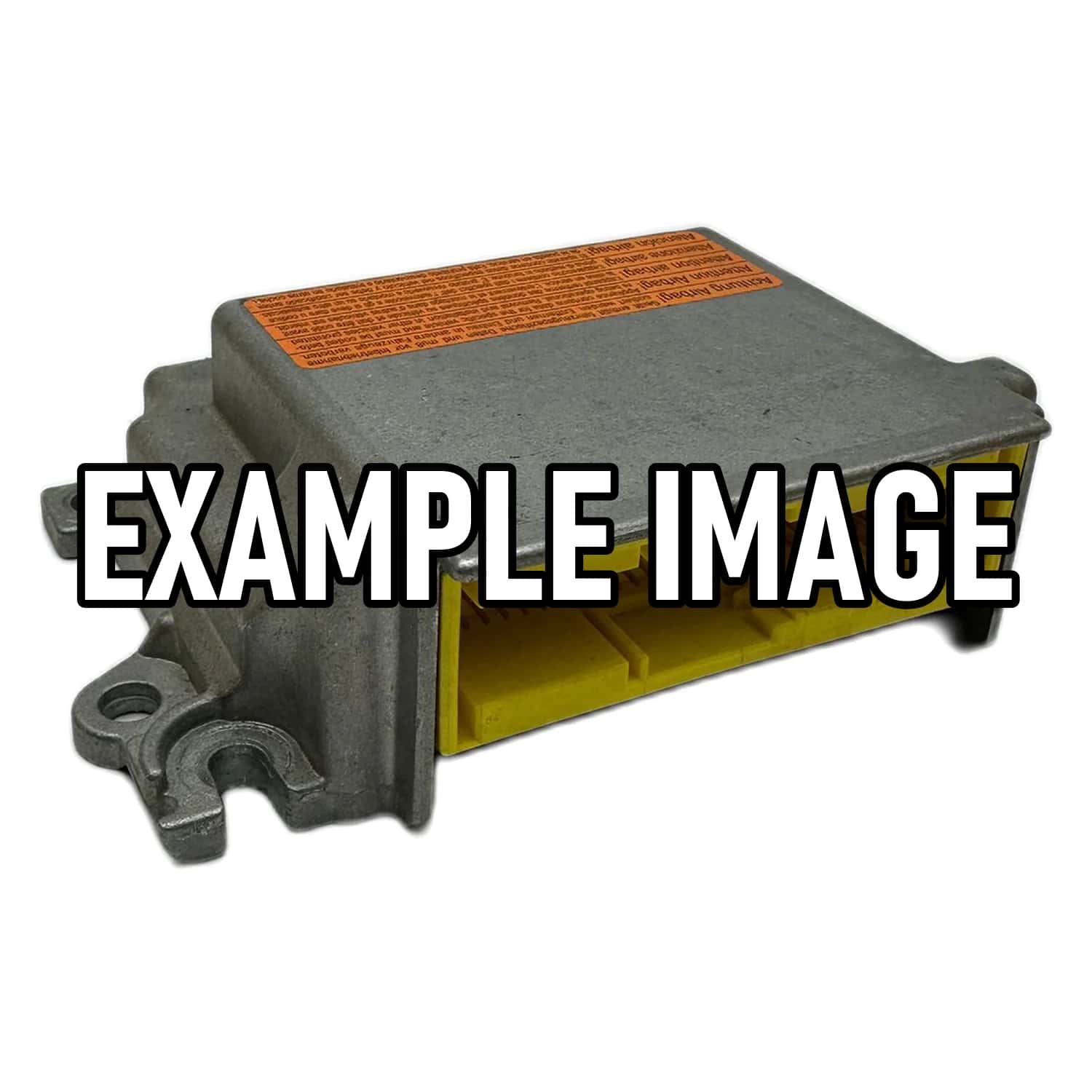
Alfa Romeo 164 airbag control units can be uniquely identified by part number, year of manufacture, and vehicle identification number (VIN). Each generation uses specific control unit variants for optimal compatibility with the respective vehicle model and its equipment.
The exact part number is the most important indicator for correctly identifying your airbag control unit. It is usually printed directly on the control unit's housing or attached to a separate sticker. If unsure, the vehicle's model year is also helpful, as certain control units were only installed during specific production periods.
Another clue is the vehicle identification number (VIN), which can be used by workshops or specialized databases to determine the exact original equipment and thus also the installed airbag control unit. Due to the transitions between generations and facelifts, precise identification is crucial to ensure compatibility during repair or replacement.
The airbag control unit is usually installed centrally in the vehicle, often under the center console or near the transmission tunnel. Reading the part number usually requires removing the unit.
What airbag equipment does the Alfa Romeo 164 have?
The airbag configuration of the Alfa Romeo 164 varies depending on the model year and trim level. While early models use basic airbag systems, newer generations feature enhanced safety packages that were gradually integrated.
In the early production years of the Alfa Romeo 164, an airbag was often an optional feature or only available in higher trim levels. This reflected the state of the art at the time, when airbags were not yet standard across the board. In these models, the system was typically limited to a driver's airbag.
As time progressed and the second generation of the 164, especially from the mid-1990s onward, airbags became more comprehensive and more frequently fitted as standard. Although the systems are considered rather rudimentary compared to today's multi-airbag systems, they represented a significant improvement in passive safety.
Relevant to airbag control unit repair is that for models around 1993 and later, a dedicated airbag control unit exists, which is responsible for the correct functioning of the safety system. The integration of other safety systems such as ABS, which was initially optional and later standard, also underscores the evolution of the safety concept in the Alfa 164.
The typical start-up function test, in which the airbag light illuminates for about 10 seconds and then goes out, is a clear sign that the system is functioning properly. If the light remains on continuously, it indicates a system fault that requires inspection and potential repair of the airbag control unit.
Common fault codes in this category
Shipping & repair from Germany
Airbag24 repairs your component in Berlin — usually within 3–4 working days.
Standard shipping within Germany is free; we normally return your part by UPS.
You pay for and insure the inbound shipment to us. On explicit request we ship by express — the extra cost is borne by the customer.
If you withdraw from the contract, you bear the cost of returning the item.