
Alfa Romeo 33 airbag control unit repair(1)
1 product
What should I pay attention to with Alfa Romeo 33 airbag control units?
The airbag technology used in the Alfa Romeo 33 varies depending on the model year and is typical of compact cars from the 1980s and early 1990s. A professional repair restores original functionality and is covered by a 2-year warranty.
The Alfa Romeo 33 was produced from 1983 to 1994 (partly until 1995) and replaced the Alfasud. This compact class vehicle included the well-known 905 and 907 models, which represent the main series of this model range.
At that time, airbags were neither standard nor widespread in the Alfa Romeo 33, as they were not yet standard in the compact class. Airbag control units were installed as optional accessories or required as spare parts for later repairs.
Which Alfa Romeo 33 generations are there?
The Alfa Romeo 33 was primarily produced in two main series, the 905 and 907, which used different airbag control unit variants, if airbags were installed at all. The development of the safety system reflects the technological advances from 1983 to 1994, although airbags remained a rarity.
The Alfa Romeo 33 (Type 905) was launched in the summer of 1983 as the successor to the successful Alfasud. In 1986, the model underwent a slight facelift, primarily consisting of visual adjustments.
A much more significant facelift followed in 1989, leading to the introduction of the Type 907. Despite these updates and the continuous development of the vehicle, electronic airbag systems remained an optional or very rare feature.
Production of the Alfa Romeo 33 finally ended in 1994, with the vehicle being replaced by the Alfa Romeo 145 and 146 models. Specific airbag control units would need to be identified for each of these series and facelifts, if they were factory-installed or retrofitted.
How do I identify my Alfa Romeo 33 airbag control unit?
Alfa Romeo 33 airbag control units can be uniquely identified by their specific part number, vehicle year, and vehicle identification number (VIN). This is crucial because each generation and trim level, even though airbags were rare, uses specific control unit variants for optimal compatibility.
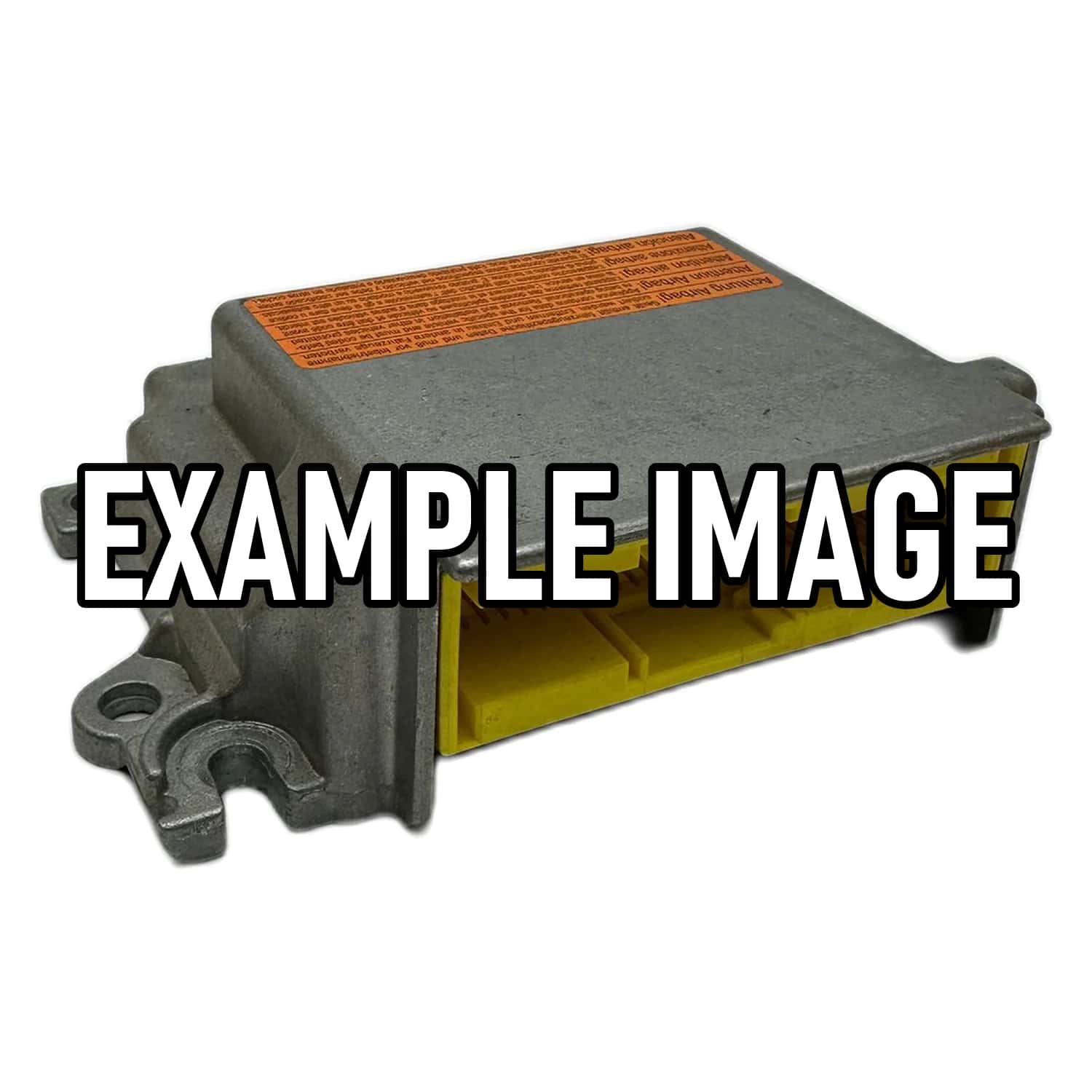
Due to the fact that airbags were often installed optionally or retrofitted in the Alfa Romeo 33, accurate identification is particularly important. The part number of the control unit, usually located directly on the housing, is the primary indicator for the correct version.
Additionally, the exact year of manufacture of the vehicle and the vehicle identification number (VIN) in the vehicle registration document can help determine the exact configuration and thus the appropriate airbag control unit. This ensures that the repair or replacement of the defective unit is compatible with the existing vehicle electronics.
What airbag equipment does the Alfa Romeo 33 have?
The airbag equipment of the Alfa Romeo 33 varied greatly and, as was typical for compact cars of the 1980s and early 1990s, was usually not standard, but rather available as an optional extra. Early models relied primarily on mechanical safety systems.
The Alfa Romeo 33, designed as a compact family car, was aimed at young families and commuters seeking a sporty and practical city car. During its production run from 1983 to 1994, airbags were not yet standard equipment in this vehicle class.
The vehicle generations, including the 905 and 907 models, primarily featured mechanical safety systems such as seat belts and a robust body structure. Electronic airbag control units and the associated airbag modules were, if available at all, rarely available as optional accessories or may only have been required as part of later maintenance work or as spare parts for very specific models.
This means that an Alfa Romeo 33 airbag control unit often indicates a retrofitted system or one rarely installed in very high-end trim levels. The vehicle's technical details, such as the boxer engines and 1980s design, reflect the technology of the time, when passive safety systems like airbags were still in their infancy.
Common fault codes in this category
Shipping & repair from Germany
Airbag24 repairs your component in Berlin — usually within 3–4 working days.
Standard shipping within Germany is free; we normally return your part by UPS.
You pay for and insure the inbound shipment to us. On explicit request we ship by express — the extra cost is borne by the customer.
If you withdraw from the contract, you bear the cost of returning the item.