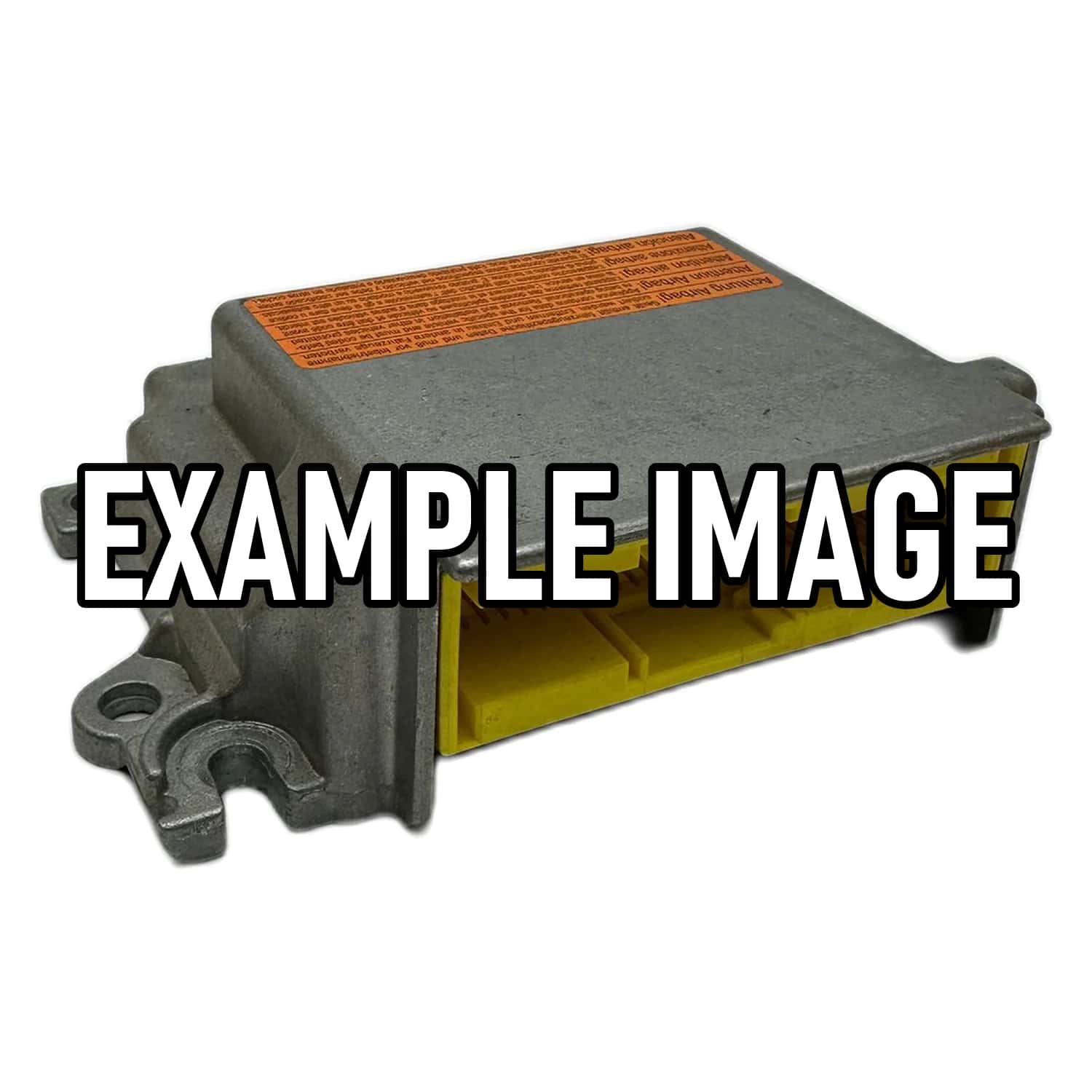
airbag control unit repair Audi A7 C8 4K
from€66.39
 Quality since 2002
The airbag technology used in the Audi A7 varies considerably depending on the model year and model series. Airbag control units for all Audi A7 generations require specific expertise to ensure true-to-original functionality after repair and to guarantee safety.
The Audi A7 was produced over two main generations: the Audi A7 4G (internal designation C7) from July 2010 to February 2018 and its successor, the Audi A7 4K (internal designation C8), from February 2018 until March 2025. Each series brought technological advances, which are also reflected in the airbag control units installed.
The evolution of the airbag system in the Audi A7 from the 4G to the 4K demonstrates a significant increase in scope and complexity. While the 4G model was equipped with standard side, curtain, driver, and front passenger airbags, the 4K offers an expanded range of safety systems, requiring correspondingly more complex control and, in the event of a failure, precise repair of the control unit.
The Audi A7 has been produced in two main generations to date: the Audi A7 4G (C7) and the Audi A7 4K (C8). Each generation uses different airbag control units, specifically tailored to the respective vehicle architecture and safety features. The development of the safety system reflects the technological advances from 2010 to the present.
The first generation, the Audi A7 4G, was manufactured from 2010 to 2018. This model, based on the MLB platform, underwent a facelift in 2014. The airbag control unit in this model is often version 10.43, designed for the airbag and sensor infrastructure of the time. Repairing an airbag control unit on this model requires specific knowledge of the 4G systems.
The second generation began with the introduction of the Audi A7 4K in 2018. This model features even greater digitalization, more connected systems, and more advanced driver assistance systems. This also requires more modern and complex airbag control units that can interact with the central driver assistance controller (zFAS). Repairing these control units requires specialized expertise.
Both series are designed as sporty, elegant hatchback sedans and positioned in the upper price segment. They reflect Audi's commitment to comfort, safety, and performance, with the newer models integrating the latest innovations in active and passive safety.
Audi A7 airbag control units can be uniquely identified by their specific part number, exact year of manufacture, and vehicle identification number (VIN). This information is crucial, as each generation, and often specific model years or trim levels, use specific control unit variants to ensure optimal compatibility and functionality.
The part number of the airbag control unit is located directly on the component housing and is the most important indicator. It is essential to check this number, as different hardware and software versions can exist even within a single generation. The exact model year of the Audi A7 is also important, as Audi often makes minor changes to its systems during production cycles that can affect repairs.
The vehicle identification number (VIN) is another important reference. It allows for precise assignment of the installed control unit and its coding to the respective vehicle. A repaired airbag control unit returns with all vehicle data and needs no recoding; only a replacement unit has to be recoded to the vehicle's VIN.
The airbag configuration of the Audi A7 varies significantly between model generations and can be further enhanced with optional safety packages. While the Audi A7 4G already offered comprehensive basic equipment, newer generations such as the Audi A7 4K feature even more advanced and intelligent airbag modules that further optimize occupant protection.
The Audi A7 4G (C7) came standard with a robust airbag system. These included front airbags for the driver and front passenger, side airbags for the front occupants, and head airbags (sideguard) for the entire side area. Additional safety systems such as seat belt pretensioners and active head restraints could be optionally added to the passive safety package. A defective airbag control unit can impair the function of all these components.
The Audi A7 4K (C8) builds on this foundation and significantly expands its equipment. Front, side, and curtain airbags are also standard, but driver and front passenger knee airbags have been added to improve lower extremity protection in a frontal impact. Sideguard curtain airbags now protect front and rear passengers and are connected via the central airbag control unit.
In addition, numerous advanced driver assistance systems in the Audi A7 4K, such as emergency braking and parking assistance systems, are closely linked to the airbag control unit. These systems can initiate preventive measures in advance of a potential impact, influencing the deployment behavior of the airbags and thus maximizing occupant protection. The precise functioning of the airbag control unit is therefore crucial for the entire safety chain of the Audi A7 and underscores the importance of professional repair.
Airbag24 repairs your component in Berlin — usually within 3–4 working days.
Standard shipping within Germany is free; we normally return your part by UPS.
You pay for and insure the inbound shipment to us. On explicit request we ship by express — the extra cost is borne by the customer.
If you withdraw from the contract, you bear the cost of returning the item.