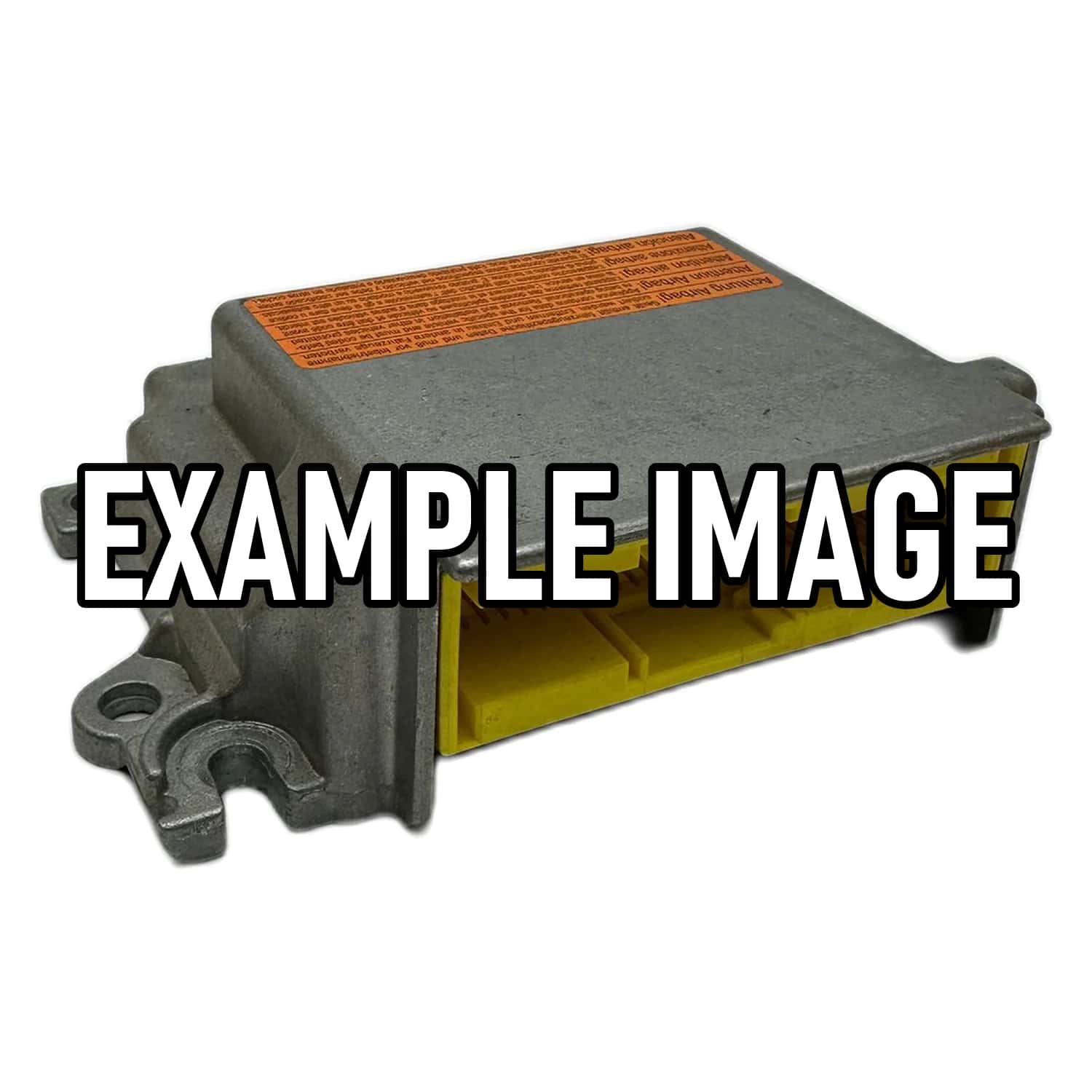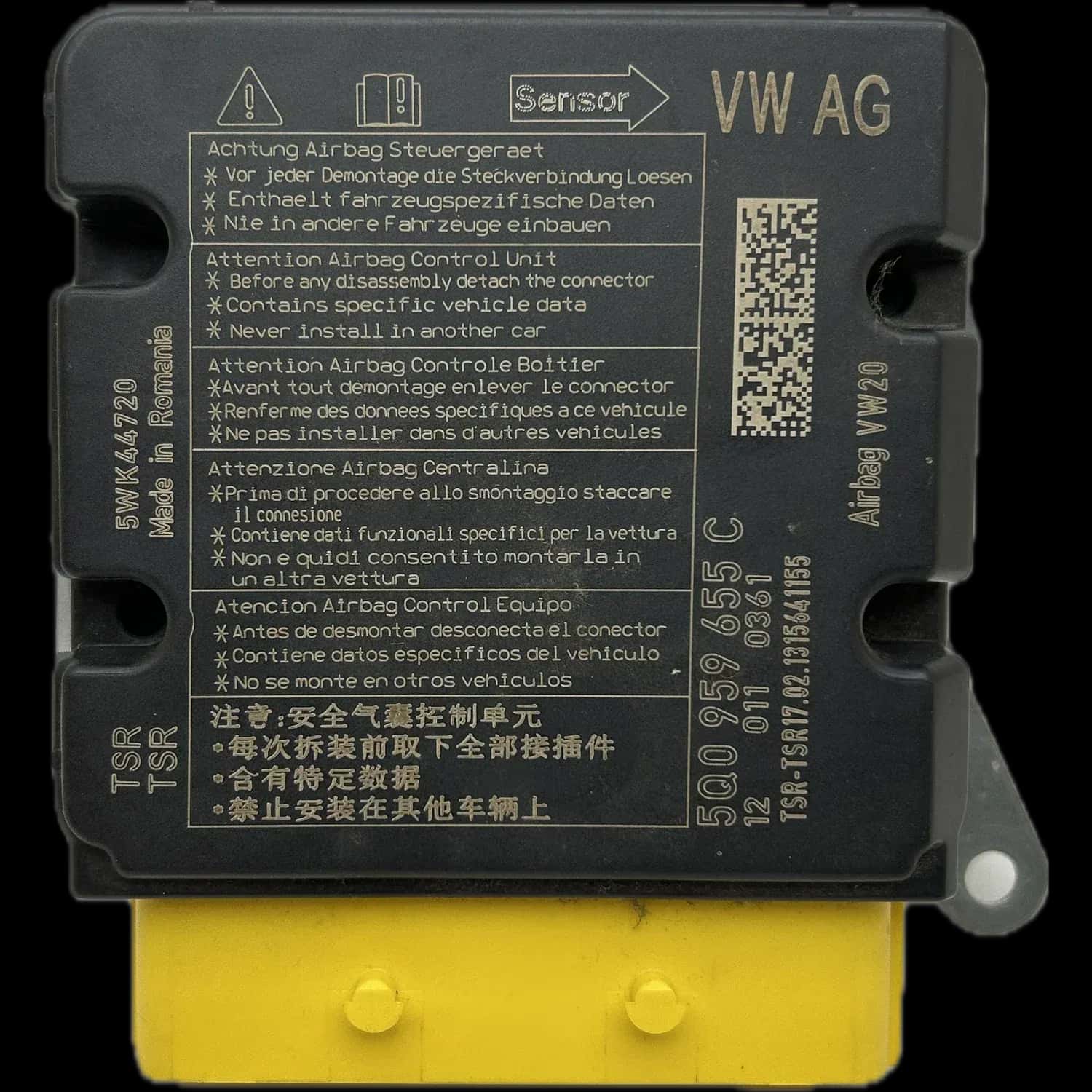
airbag control unit repair Audi RSQ3 F3
from€79.00
 Quality since 2002
The airbag technology used in the Audi RSQ3 varies depending on the model year. For safe and reliable operation, it is crucial to consider the specifications of the respective vehicle model. Airbag24 professionally repairs control units of all Audi RSQ3 generations with true-to-original functionality and a 2-year warranty.
The Audi Q3 series was first introduced in 2011, with the sporty Audi RSQ3 first appearing in 2013 as part of the first generation (8U). The RSQ3 underwent significant development with the generation change to the F3 series starting in 2019, which will be produced until at least 2025 and is significantly more powerful.
The development of the airbag systems in the Audi RSQ3 reflects this technological advancement. While early models offered solid basic systems, newer generations of the RSQ3 integrate more complex control units that are closely integrated with comprehensive assistance systems such as Audi pre sense.
This advanced integration requires a deep understanding of the specific software and hardware of each generation during repair. Only then can the flawless functioning of all safety components be ensured after a repair.
The Audi RSQ3 has been produced in two main generations, each with different airbag control units. The development of the safety system reflects technological advances from 2013 to the present, with significant leaps in performance and features.
The first generation of the Audi RSQ3 (internally designated 8U) was produced from 2013 to 2018. It launched with 310 hp and received a facelift in 2015 that increased power to 340 hp. These models use specific airbag control units tailored to the vehicle architecture of the time.
The second and current generation, the Audi RSQ3 F3, has been in production since 2019. This version features a 400 hp five-cylinder turbo engine and a platform based on the Modular Transverse Matrix (MQB). This new architecture also brought with it more advanced and complex airbag control units, tailored to the expanded assistance systems and increased vehicle performance.
The differences in control units between generations are significant and affect both hardware and software. Therefore, precise knowledge of the model year and specific generation is essential for the correct repair or replacement of a defective airbag control unit.
Audi RSQ3 airbag control units can be uniquely identified by part number, year of manufacture, and vehicle identification number (VIN). Each generation uses specific control unit variants for optimal compatibility and full functionality of all safety features.
The part number, located directly on the control unit, is the most important identifier. It provides information about the model series, year of manufacture, and specific features of the control unit. In addition, the vehicle's year of manufacture can provide an initial indication of which control unit generation is likely to be installed.
The vehicle identification number (VIN) is also crucial, as it allows for precise identification of the factory-installed components. Using the VIN, detailed information about the original equipment and thus the correct airbag control unit can be retrieved.
Correct identification ensures that the repaired or replaced control unit communicates perfectly with the other systems of the Audi RSQ3 and performs its safety functions flawlessly. This is especially important because modern airbag control units are integrated into a complex network of sensors and other safety systems.
The airbag equipment of the Audi RSQ3 varies depending on the model year and trim level, but is already very comprehensive as standard. While early models use solid basic airbag systems, newer generations feature enhanced safety packages with additional airbag modules and intelligent assistance systems.
Front airbags for the driver and front passenger are standard in the Audi RSQ3. Also standard are side airbags in the front and a comprehensive head protection airbag system that protects front and rear occupants. This standard equipment ensures a high level of passive protection.
In addition to the airbags, ISOFIX child seat anchorages with Top Tether for the outer rear seats and a seat belt monitoring system are standard. These features contribute to increased occupant safety, especially for families.
Modern RSQ3 models also integrate advanced driver assistance systems such as Audi pre sense basic and front, which are closely linked to the airbag control system. These systems can initiate preventive measures such as tightening the seat belts or preparing the airbags in the event of an impending collision, further increasing the effectiveness of the entire safety system.
Airbag24 repairs your component in Berlin — usually within 3–4 working days.
Standard shipping within Germany is free; we normally return your part by UPS.
You pay for and insure the inbound shipment to us. On explicit request we ship by express — the extra cost is borne by the customer.
If you withdraw from the contract, you bear the cost of returning the item.