
BMW M3 airbag control unit repair(8)
8 products
What should be considered with BMW M3 airbag control units?
The airbag technology used in the BMW M3 varies depending on the model year and generation. Airbag control units for the BMW M3 must always be professionally repaired with true-to-original functionality and the utmost precision to ensure complete safety.
The BMW M3 models, starting with the E30 in 1986, have undergone an impressive evolution. Each generation brought technological advances that also significantly influenced the complex airbag systems.
The evolution of the airbag systems in the BMW M3 reflects the increasing focus on occupant safety. From basic systems in early models to state-of-the-art, networked protection systems in the latest generations, the complexity of airbag control units has steadily increased, making professional repair essential if the airbag control unit is defective.
Which BMW M3 generations are there?
The BMW M3 has been produced in several distinct generations, with each model series using specific airbag control units. The evolution of the safety systems reflects the technological advances from 1986 to the present.
The legendary BMW M3 E30 (1986-1991) marked the starting point, although airbags were often still optional or only installed as driver airbags. It was a homologated version for motorsports and aimed at performance enthusiasts.
The BMW M3 E36 (early 1990s–1999) increasingly introduced airbags as standard, mostly for the driver and front passenger, with later versions sometimes including side airbags. It combined sporty handling with improved everyday usability.
With the BMW M3 E46 (1999-2006), driver, passenger, and side airbags became largely standard, complemented by the first electronic safety systems. This model already offered a high level of dynamic performance and comfort.
The BMW M3 E90 (sedan), E92 (coupe), and E93 (convertible) generations (2007-2013) featured full airbag systems, including side and curtain airbags, offering comprehensive protection. These models were aimed at discerning premium sports car customers.
The BMW M3 F80 (2014-2018) sedan also featured comprehensive airbag systems and modern passive safety features as standard. It appealed to drivers with racing ambitions as well as everyday users.
The latest generation, the BMW M3 G80 (from 2020), features state-of-the-art airbag systems with advanced protection features that meet the latest safety standards. This high-performance vehicle is designed for enthusiasts seeking an intense driving experience.
How do I identify my BMW M3 airbag control unit?
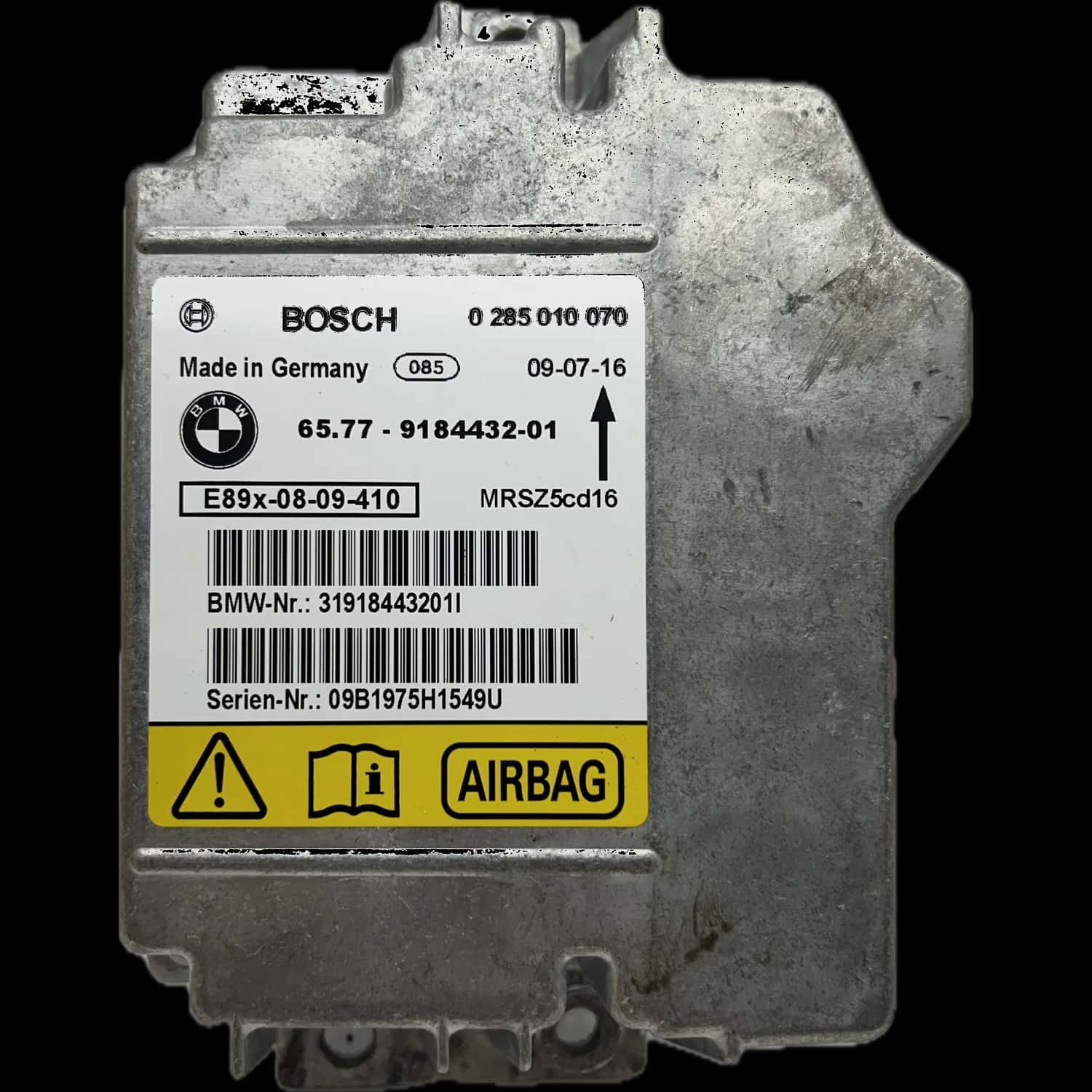
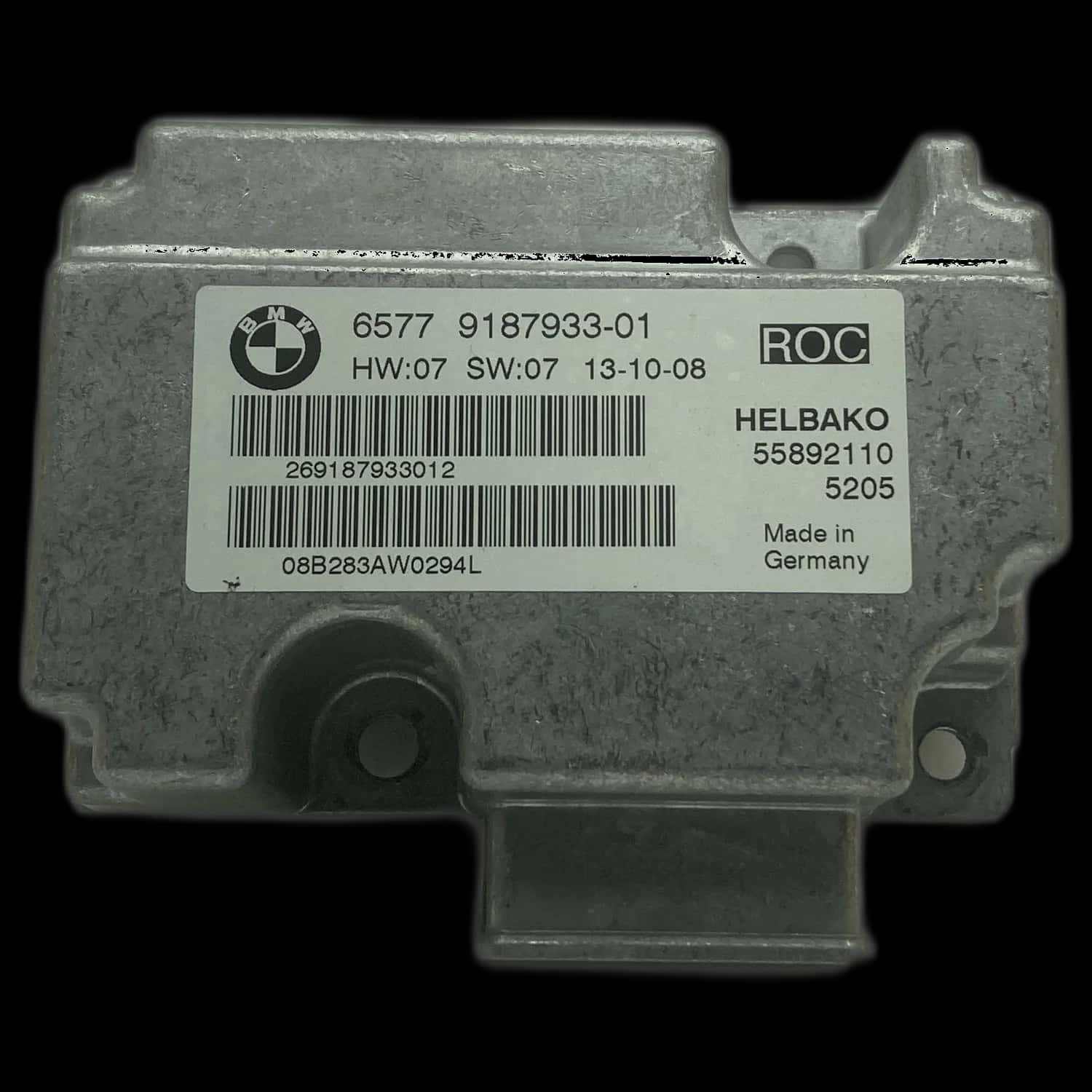
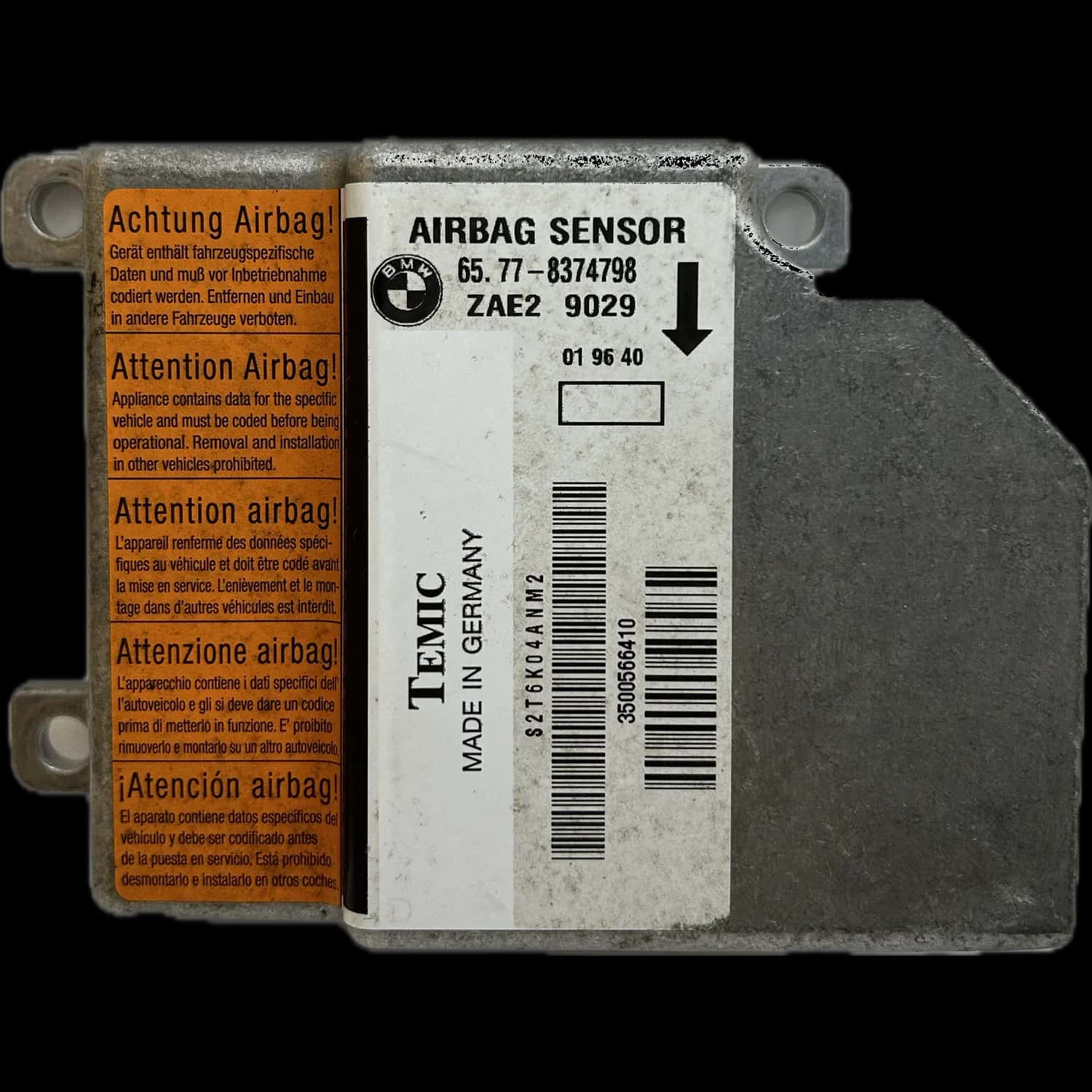
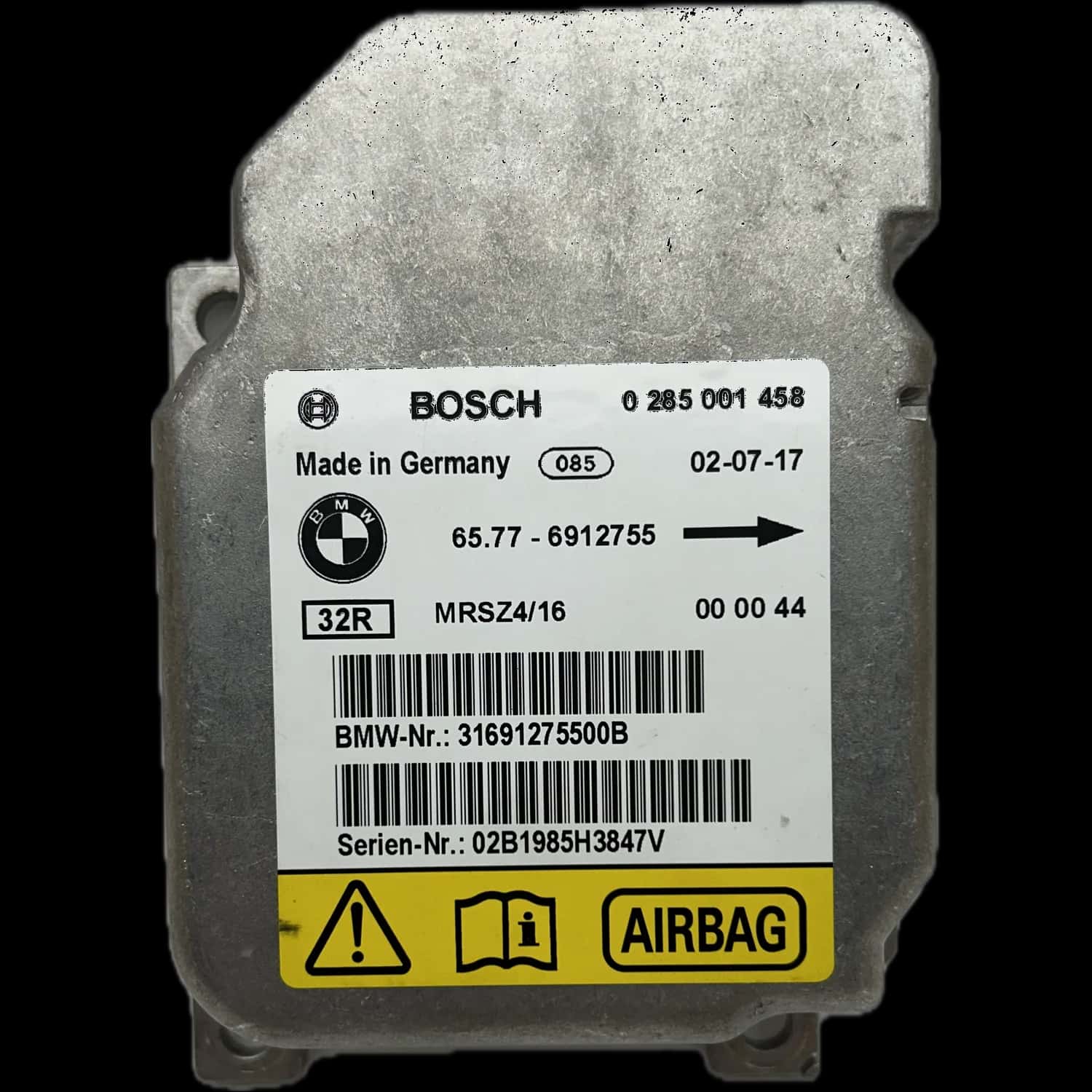
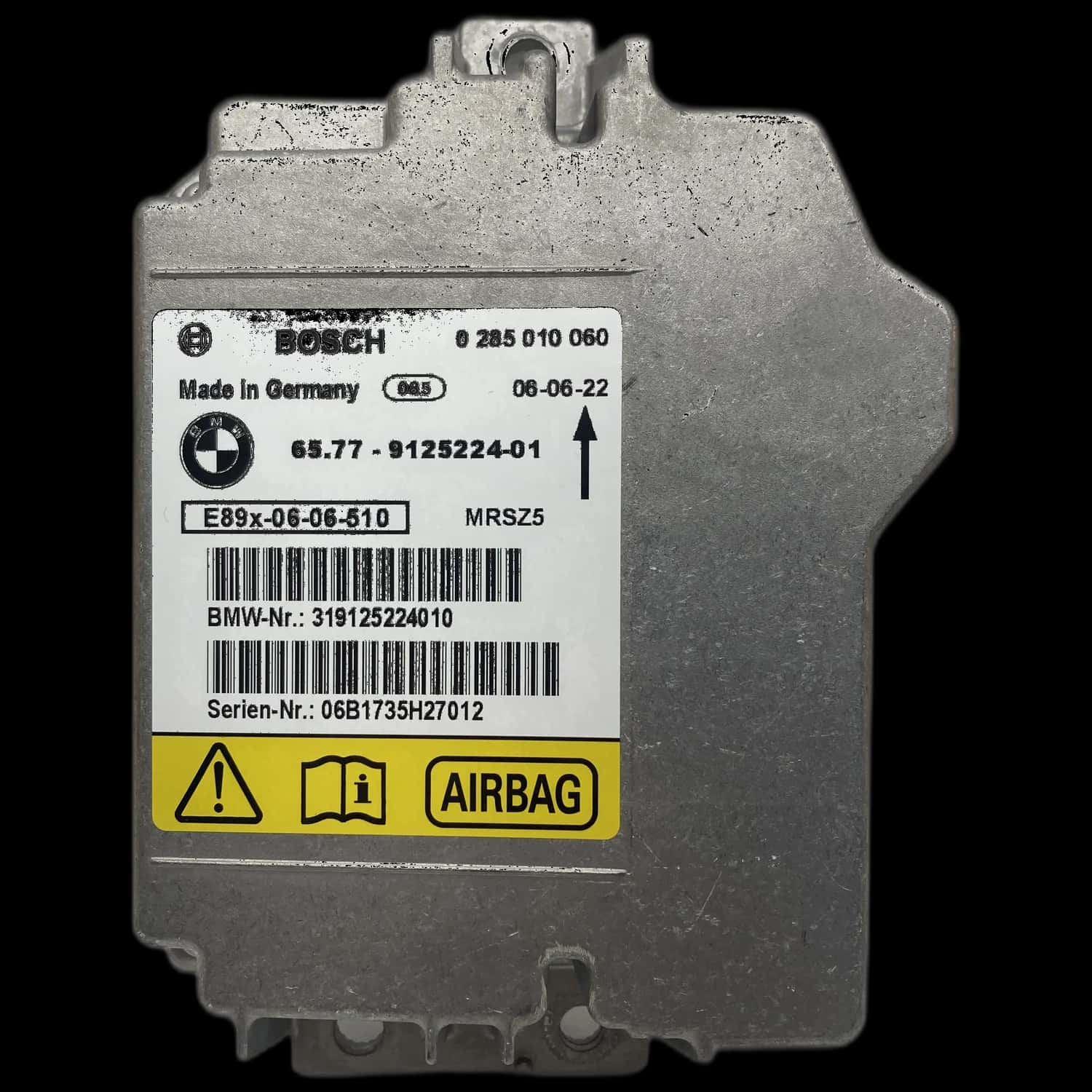
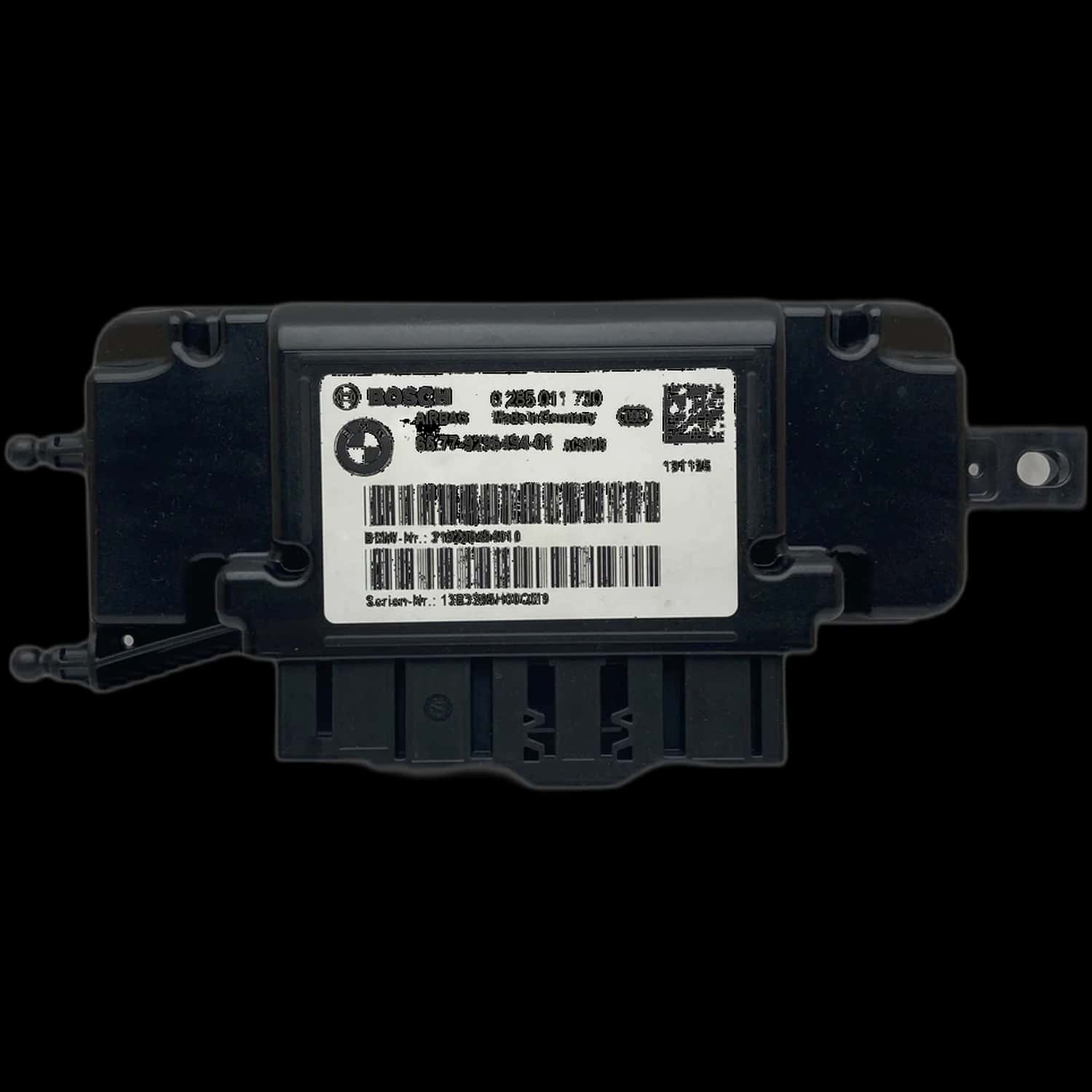
BMW M3 airbag control units can be uniquely identified by the precise part number, the year of manufacture, and the vehicle identification number (VIN). This information is crucial for identifying the correct control unit for repair.
Each BMW M3 generation, and often different model years within a generation, use specific control unit variants. Precise identification is therefore essential to ensure compatibility and correct functionality after repair. If these details are missing, repairing the airbag control unit can be difficult or impossible.
The part number can usually be found directly on the housing of the airbag control unit. If your BMW M3 airbag control unit is defective, providing this information will make the repair process much easier.
What airbag equipment does the BMW M3 have?
The airbag configuration of the BMW M3 varies significantly depending on the model year and the respective trim level. While early models mostly used only basic airbag systems, newer generations feature enhanced safety packages with a variety of airbag modules.
In the late 1980s, airbags were not yet a standard feature on the BMW M3 E30, often only available as an option or as a driver-side airbag. The BMW M3 E36 saw increasing standardization of driver and passenger airbags, with the option of side airbags in later versions.
With the BMW M3 E46, driver, passenger, and side airbags became standard, often supplemented by curtain airbags or other electronic safety systems. This reflected the more stringent safety standards and offered improved occupant protection.
The BMW M3 E90, E92, and E93 models, as well as the BMW M3 F80 and the current BMW M3 G80, are equipped with comprehensive airbag systems. These typically include front airbags, side airbags for the driver and front passenger, and curtain airbags that extend across the entire window line. Modern control units are an integral part of complex, networked safety systems.
Common fault codes in this category
Shipping & repair from Germany
Airbag24 repairs your component in Berlin — usually within 3–4 working days.
Standard shipping within Germany is free; we normally return your part by UPS.
You pay for and insure the inbound shipment to us. On explicit request we ship by express — the extra cost is borne by the customer.
If you withdraw from the contract, you bear the cost of returning the item.