
Chevrolet Uplander airbag control unit repair(1)
1 product
What should I look out for with Chevrolet Uplander airbag control units?
The Chevrolet Uplander's airbag control unit is a key component of the passive safety system and requires professional repair or replacement in the event of a defect or after an accident. The technology has varied slightly within the single generation of the Uplander, but the need for precise identification remains constant.
The Chevrolet Uplander was produced from 2004 to 2008, with model years in the US ranging from 2005 to 2008 and in Canada/Mexico until 2009. Designed as a "crossover sport van," it offered families spacious comfort and a rock-solid safety package.
A defective airbag control unit typically causes the airbag warning light to illuminate and impairs the functionality of the entire safety system. Of particular importance is the fact that replacement modules for the Chevrolet Uplander, even if they are tested, require recoding to the specific vehicle identification number (VIN). Therefore, repairing the existing module is often the most efficient solution to avoid compatibility issues and complex programming, and to permanently eliminate error codes.
Which Chevrolet Uplander generations are there?
The Chevrolet Uplander was produced in only one generation, which was on the market from 2004 to 2008. Despite this single generation, there were minor adjustments throughout the model years that could affect the technical specifications and the integration of safety systems.
As part of GM's minivan lineup, which also included the Pontiac Montana SV6, the Saturn Relay, and the Buick Terraza, the Uplander presented itself as a versatile family van. During its production run, there were no major facelifts or generational changes in the traditional sense. However, important updates were made starting with the 2007 model year, such as the introduction of a more powerful 3.9-liter V6 engine as standard and the discontinuation of optional all-wheel drive.
These continuous, albeit small, improvements reflect technological advances in the automotive industry and may result in slight variations in the software and interfaces of the airbag control unit. Nevertheless, the basic architecture of the airbag systems remains consistent throughout their production lifecycle.
How do I identify my Chevrolet Uplander airbag control unit?
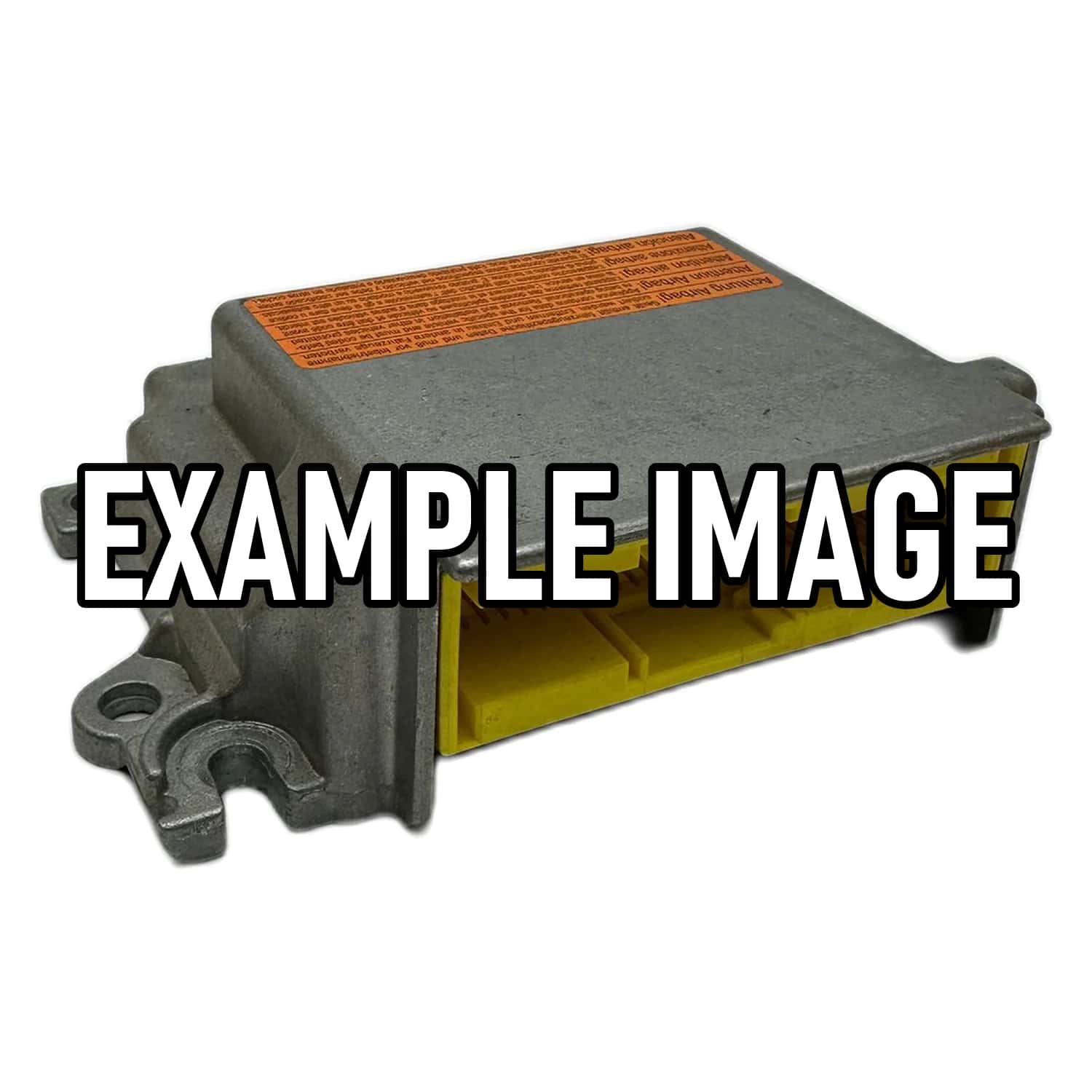
Chevrolet Uplander airbag control units can be precisely identified by their unique part number, vehicle year, and vehicle identification number (VIN). This information is critical to ensuring compatibility during repair or replacement.
The part number, usually located on a sticker directly on the airbag control unit, is the primary identifier. It provides information about the module's exact specifications, including any revisions or modifications for specific trim levels. The year of your Chevrolet Uplander also helps narrow down the correct version of the control unit, as minor changes to the electronic components can occur even within a single generation.
The Vehicle Identification Number (VIN) is of utmost importance, as it contains all vehicle-specific details essential for the proper function and programming of the airbag control unit. Matching the part number, year of manufacture, and VIN ensures that the repaired or replaced module works optimally with your Chevrolet Uplander's existing systems, restoring full vehicle safety.
What airbag equipment does the Chevrolet Uplander have?
The Chevrolet Uplander's airbag system offered rock-solid passive safety, which could be upgraded depending on the trim level and model year. Important front airbags were standard, complemented by optional side airbags for additional protection.
Every Chevrolet Uplander came standard with frontal airbags for the driver and front passenger, providing basic protection in a frontal collision. An all-wheel anti-lock brake (ABS) was also standard, actively supporting driving safety.
The Uplander's optional equipment included passenger-side side-impact airbags, which were standard on the higher-end LT trim and optional on the LS trim. Second-row side-impact airbags were also available as an option to provide rear passengers with better protection in side collisions. It's important to note, however, that the Chevrolet Uplander was not equipped with three-row side-curtain airbags, which are common in newer vehicles.
In addition to the airbags, electronic stability control (StabiliTrak) was initially available as an option and later became standard in some trim levels. All of these safety systems are precisely monitored by the airbag control unit and activated in an emergency to provide optimal occupant protection.
Common fault codes in this category
Shipping & repair from Germany
Airbag24 repairs your component in Berlin — usually within 3–4 working days.
Standard shipping within Germany is free; we normally return your part by UPS.
You pay for and insure the inbound shipment to us. On explicit request we ship by express — the extra cost is borne by the customer.
If you withdraw from the contract, you bear the cost of returning the item.