
Chrysler PT Cruiser airbag control unit repair(1)
1 product
What should I pay attention to with Chrysler PT Cruiser airbag control units?
The airbag technology used in the Chrysler PT Cruiser varies depending on the model year. Therefore, specialized repairs to the airbag control unit require extensive expertise in the various models and their electronic systems.
The Chrysler PT Cruiser, produced from 2001 to 2010, is known for its unique retro design and versatile usability. During this production period, adjustments were made to the installed airbag technology, which must be taken into account when repairing the airbag control unit. The airbag control unit, also known as the SRS module, is a safety-critical component that must be precisely tailored to the specific vehicle model.
A defective airbag control unit can cause the airbag warning light to illuminate or disable the entire safety system. This not only significantly compromises the vehicle's passive safety but can also cause the Chrysler PT Cruiser to fail a vehicle inspection. Repairing it is therefore crucial for the vehicle's operational safety and value retention.
Which Chrysler PT Cruiser generations are there?
The Chrysler PT Cruiser was produced in two main generations, each with its own airbag control units and customized safety systems. The evolution of the safety system reflects technological advances from 2001 to 2010.
The first generation of the Chrysler PT Cruiser (PT Cruiser I) was produced from 2000/2001 to 2006. These models laid the foundation for the distinctive design and flexible interior layout. The 2006 model year saw a comprehensive facelift, leading to the transition to the second generation (PT Cruiser II), which was built until production ended in 2010.
Although the external features differed only slightly between generations, important technical updates were made behind the scenes. These modifications also affected the vehicle's electronic components, including the airbag systems and their associated control units. Each generation had its own specific requirements regarding communication protocols and the functionality of the SRS module, which is of utmost importance when repairing the airbag control unit.
The PT Cruiser was available as both a five-door station wagon and, from 2005 to 2008, a two-door convertible. Regardless of the body style, the airbag control unit had to ensure the correct functioning of all installed airbags, which increased in number over the years.
How do I identify my Chrysler PT Cruiser airbag control unit?
Chrysler PT Cruiser airbag control units can be uniquely identified by their specific part number, vehicle year, and vehicle identification number (VIN). Each generation, and sometimes even certain trim levels, use specific control unit variants for optimal compatibility.
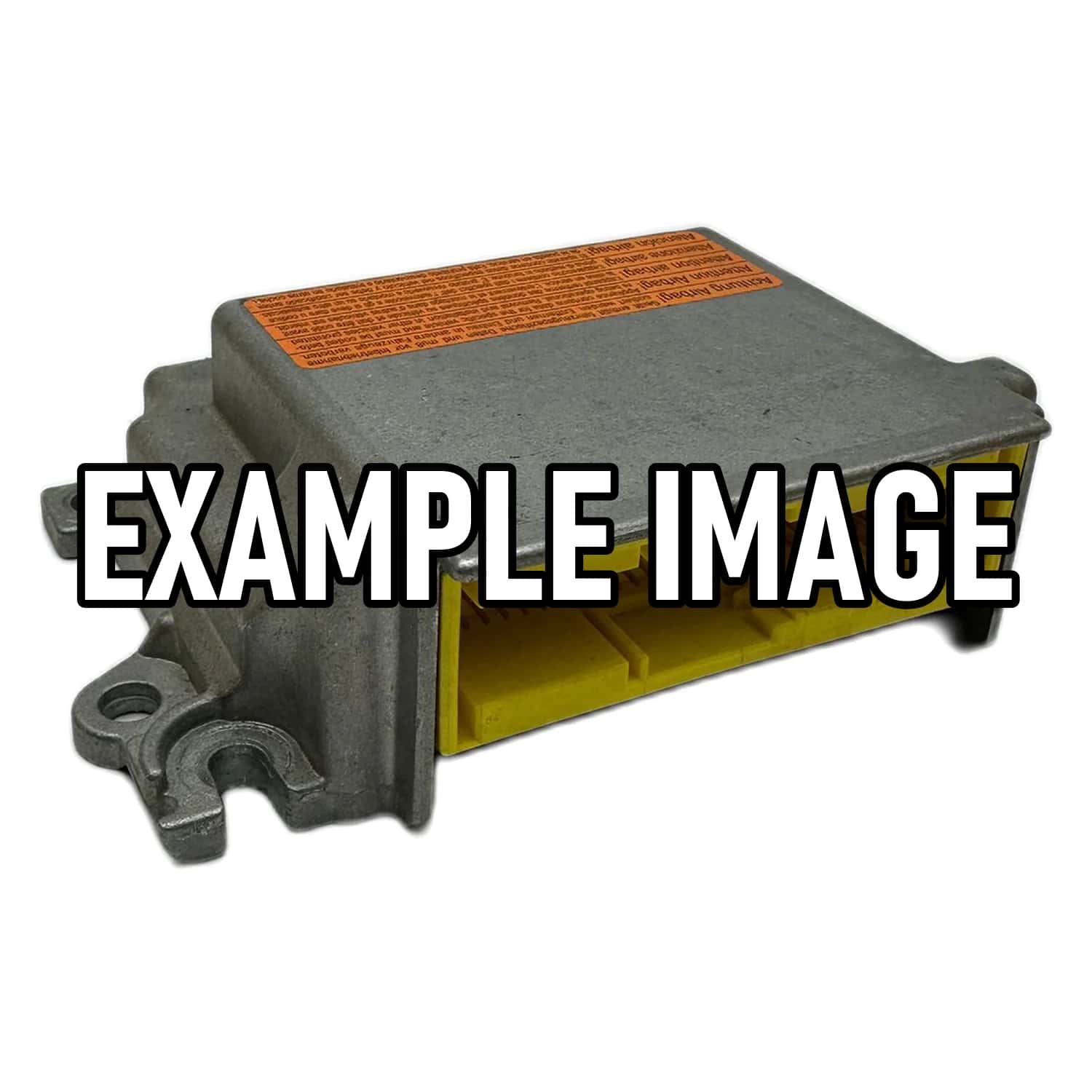
The part number of the airbag control unit is the most important identification clue. It is usually printed directly on the control unit housing. To access the control unit, it is usually installed in the vehicle floor under the center console. However, the exact location can vary slightly depending on the year and model.
The Vehicle Identification Number (VIN) is also crucial, as airbag control units are coded with the VIN for each vehicle. This means that a replacement unit, even if it has the correct part number, may still need to be specifically programmed to the vehicle to avoid error messages and ensure proper function. This is especially important when repairing a defective airbag control unit to ensure the repaired unit is a perfect fit with the existing vehicle electronics.
Typical error codes indicating a faulty airbag control unit can also aid in diagnosis. These codes are generated by the vehicle's diagnostic system and can be read by a qualified workshop to identify the exact cause of the problem and initiate the necessary repair of the airbag control unit.
What airbag equipment does the Chrysler PT Cruiser have?
The Chrysler PT Cruiser's airbag configuration varies by model year and trim level. While early models used basic airbag systems, newer generations feature enhanced safety packages with additional airbag modules, all coordinated by the airbag control unit.
Dual front airbags for the driver and front passenger were standard equipment in the Chrysler PT Cruiser from the start. This basic safety feature was available in all models and retained throughout its production run. The airbag control unit was always designed to precisely deploy these front airbags in the event of a collision.
Over the years, the PT Cruiser's passive safety features have evolved. Starting with the 2008 and 2009 model years, front and side airbags for the driver and front passenger were introduced as standard on all models. These side airbags, often integrated into the front seats, provide additional protection in side collisions. Some models also featured a driver's knee support airbag, which provides additional protection for the driver's legs in certain impact scenarios.
It's important to note, however, that the Chrysler PT Cruiser did not offer curtain airbags or an Electronic Stability Program (ESP) as standard equipment until production ended in 2010. Anti-lock braking systems (ABS) were only available as standard or optional equipment on higher trim levels. This specific equipment affects the complexity and software of the airbag control unit and must be fully considered when repairing a defective airbag control unit.
Shipping & repair from Germany
Airbag24 repairs your component in Berlin — usually within 3–4 working days.
Standard shipping within Germany is free; we normally return your part by UPS.
You pay for and insure the inbound shipment to us. On explicit request we ship by express — the extra cost is borne by the customer.
If you withdraw from the contract, you bear the cost of returning the item.