
Chrysler Sebring airbag control unit repair(3)
3 products
What should I look out for with Chrysler Sebring airbag control units?
The airbag technology used in the Chrysler Sebring varies depending on the year and model. A professional Chrysler Sebring airbag control unit repair restores the original functionality of the safety system and ensures full operational readiness after an accident or malfunction.
The Chrysler Sebring has been produced through three major generations, with each evolution bringing significant changes in design, technology, and safety features. This has a direct impact on the type and complexity of the airbag control units installed.
Over the years, airbag systems have evolved from simple driver airbags to complex, multi-stage systems with side airbags and integrated monitoring functions. Therefore, a professional repair of the airbag control unit is crucial to ensuring vehicle safety.
Which Chrysler Sebring generations are there?
The Chrysler Sebring was produced in three main generations, each featuring different airbag control units and safety standards. The evolution of the safety system reflects technological advances from 1995 to 2010.
The first generation (FJ/JX), produced from approximately 1995 to 2000, included sporty coupes and convertibles. These featured the first multi-stage driver airbags, sometimes supplemented by optional side airbags.
The second generation (JR), which rolled off the production line from 2001 to around 2006/07, introduced a separate sedan alongside the coupe and convertible. These models featured advanced multi-stage airbags and standard side airbags, often in conjunction with ABS and traction control in higher trim levels.
The third generation (JS), produced from 2007 to 2010, modernized the Sebring visually and technically. Multi-stage airbags and side airbags were already standard, and from 2009, four-wheel disc brakes became standard, underscoring the integration of the airbag control unit into a more comprehensive safety system.
How do I identify my Chrysler Sebring airbag control unit?
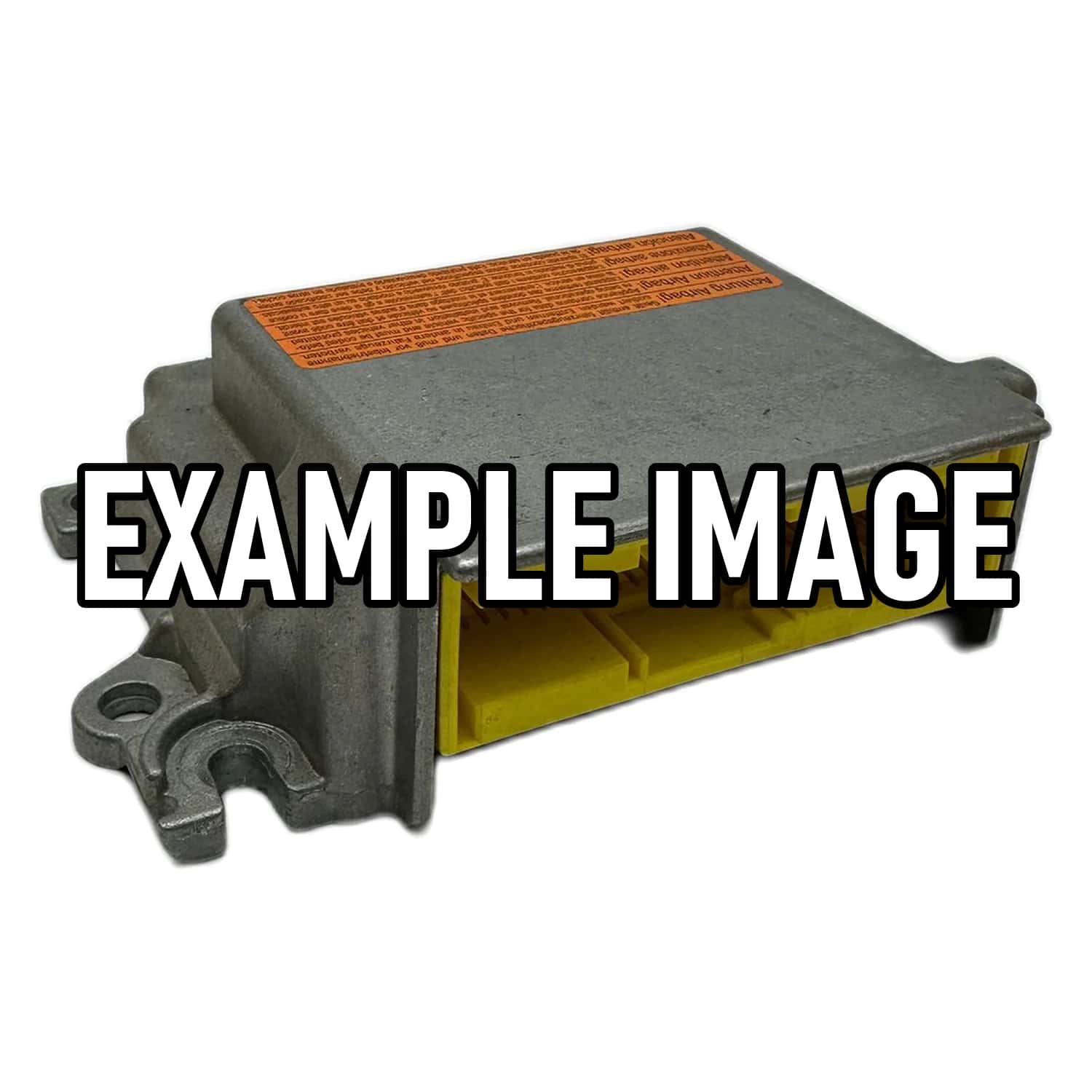
Chrysler Sebring airbag control units can be uniquely identified by part number, model year, and vehicle identification number (VIN). Each generation of the Sebring uses specific control unit variants that are optimally tailored to the respective vehicle configuration and airbag equipment.
The part number is usually located directly on the airbag control unit itself. It is essential to use this number for precise identification during repair or replacement.
In addition, the vehicle's year of manufacture and the VIN provide important information about the airbag control unit's compatibility. Specific modules, such as part number 04602340AF for 2003-2004 models, are coded specifically for each vehicle and require professional repair or reset if defective.
What airbag equipment does the Chrysler Sebring have?
The Chrysler Sebring's airbag configuration varied considerably depending on the model year and trim level. While early models used basic airbag systems, newer generations feature enhanced safety packages with additional airbag modules and more advanced control units.
The first generation of the Chrysler Sebring (FJ/JX, 1995-2000) was primarily equipped with multi-stage driver airbags. Side airbags were optionally available in some trim levels, reflecting the basic safety features of the mid-size car of the time.
With the second generation (JR, 2001-2007), the airbag systems were further developed. So-called "Next Generation Multi-Stage Airbags" were installed as standard, supplemented by side airbags, which were becoming increasingly standard during this era. Integration with other safety systems such as ABS and traction control was also improved.
The third and final generation of the Chrysler Sebring (JS, 2007-2010) continued this trend. Side airbags were standard factory-installed, reflecting increased passive safety requirements. These models featured more modern airbag control units, allowing for more precise deployment and monitoring of the entire safety system. Repairing these more complex units requires specialized expertise.
Regardless of the generation, the full functionality of the airbag control unit is of utmost importance for occupant safety. A defect, often indicated by an illuminated airbag warning light, should be remedied immediately to restore the full protective effectiveness of the passive safety system.
Shipping & repair from Germany
Airbag24 repairs your component in Berlin — usually within 3–4 working days.
Standard shipping within Germany is free; we normally return your part by UPS.
You pay for and insure the inbound shipment to us. On explicit request we ship by express — the extra cost is borne by the customer.
If you withdraw from the contract, you bear the cost of returning the item.