
Chrysler Voyager Airbag Control Unit Repair(5)

What should I look out for with Chrysler Voyager airbag control units?
The airbag technology used in the Chrysler Voyager varies depending on the model year and equipment. Airbag24 professionally repairs control units for all Chrysler Voyager generations with original functionality and a 2-year warranty.
The Chrysler Voyager was a pioneer in the minivan segment and was produced in various generations from the mid-1980s through the 2010s. In addition to North America and Canada, the Magna Steyr production site in Graz, Austria, also played an important role in the European market.
Over the decades, the Voyager's airbag system has evolved steadily, from simple front airbags to complex multi-zone systems. This evolution is reflected in the respective airbag control units, which require specialized repair after accidents or in the event of electronic defects to erase crash data or correct software errors.
Which Chrysler Voyager generations are there?
The Chrysler Voyager has been produced in at least five major generations, each using different airbag control units. The evolution of the safety system reflects technological advances from the early 1980s to the 2010s.
The first generation (approx. 1983–late 1980s) laid the foundation for the van class. It was followed by the second generation (approx. 1990–approx. 1995) with improvements in engine and comfort.
The third generation (1995–c. 2000) introduced a new body design and more modern engines, including diesel variants like the 2.8 CRD. The fourth generation (c. 2000–c. 2007) built on this foundation, with improved safety features and facelifted models.
The fifth generation (approximately 2008–2011 in Europe) was the last to be sold in Europe as the Chrysler Voyager, before the model continued as the Lancia Voyager until 2016. In addition, there were various variants and trim levels throughout the production history, often identified by abbreviations such as S, AS, GS, NS, or RT, which could use specific airbag systems and associated control units.
How do I identify my Chrysler Voyager airbag control unit?
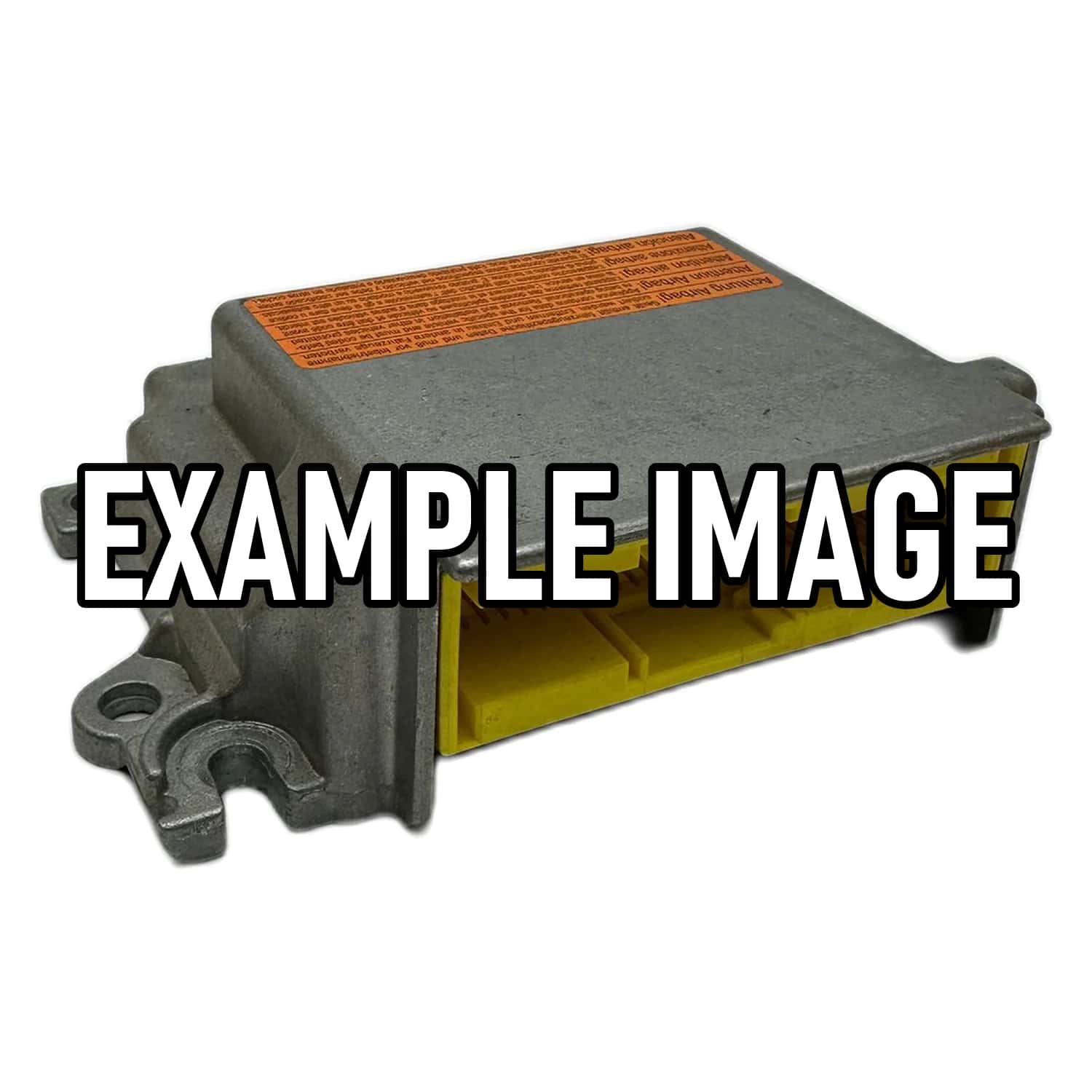
Chrysler Voyager airbag control units can be uniquely identified by part number, model year, and vehicle identification number (VIN). Each generation, and often specific trim levels, use specific control unit variants for optimal compatibility and functionality.
The part number is usually printed directly on the housing of the airbag control unit or attached as a sticker. When repairing or replacing a part, it is crucial that the replacement part exactly matches your vehicle model and year to ensure proper functioning of the safety system.
Using this information and the chassis number, experts can determine the correct specification of the control unit and ensure that all airbag components, such as front airbags, side airbags and, if applicable, airbag curtains, are controlled correctly.
What airbag equipment does the Chrysler Voyager have?
The Chrysler Voyager's airbag configuration varies considerably depending on the model year and trim level. While early models use basic airbag systems, newer generations feature enhanced safety packages with additional airbag modules and sensors.
In earlier generations of the Chrysler Voyager, particularly in the 1980s and early 1990s, airbags were mostly limited to the front driver and passenger airbags and were sometimes optional or available only on higher trim levels. This was the safety standard for this vehicle class at the time.
Starting with the third generation, which came onto the market in 1995, a significant leap forward in safety technology occurred: This was the first time that side airbag curtains were introduced, extending across all three rows of seats. These airbag curtains deployed via sensors only on the relevant side of the vehicle in the event of a side impact, significantly increasing occupant protection.
Later models, especially the fourth and fifth generations, featured increasingly comprehensive airbag systems, often combined with other modern safety features such as ESP, parking assist, and blind-spot monitoring. These complex systems required correspondingly more powerful and complex airbag control units, necessitating specialized repair in the event of defects or after a crash.
Shipping & repair from Germany
Airbag24 repairs your component in Berlin — usually within 3–4 working days.
Standard shipping within Germany is free; we normally return your part by UPS.
You pay for and insure the inbound shipment to us. On explicit request we ship by express — the extra cost is borne by the customer.
If you withdraw from the contract, you bear the cost of returning the item.