
Dacia SupeRNova airbag control unit repair(1)
1 product
What should be considered with Dacia SupeRNova airbag control units?
The airbag technology used in the Dacia SupeRNova is comparatively simple due to its production period (2000-2003) and its focus on cost-effectiveness. Professional repair of Dacia SupeRNova airbag control units ensures that original functionality is maintained and safety is guaranteed according to the manufacturer's specifications.
The Dacia SupeRNova was a compact class vehicle produced from autumn 2000 to 2003. As a further development of the Dacia Nova and the direct predecessor of the Dacia Solenza, it represented a transitional model that already benefited from Renault technology, particularly in the areas of the engine and manual transmission.
At that time, the development of airbag systems at Dacia was still in its infancy. While modern vehicles feature complex airbag networks, the SupeRNova relied on a mostly rudimentary system. Nevertheless, the airbag control unit is a central safety module whose proper functioning is essential for occupant safety, even if in this model it often only controlled a driver's airbag.
Common defects in these older airbag control units can be caused by aging, overvoltage, or even crashes. A professional Dacia SupeRNova airbag control unit repair is therefore a cost-effective alternative to purchasing a new one and restores the reliability of the safety system.
Which Dacia SupeRNova generations are there?
The Dacia SupeRNova was produced in a single generation from 2000 to 2003. It is considered a facelift of the Dacia Nova, although this generation represented a significant technical development through the integration of Renault components, thus forming a standalone model with specific airbag control units.
Although the Dacia SupeRNova spanned only one generation, it represented a decisive step in the evolution of Dacia vehicles. It replaced the Dacia Nova and laid the foundation for the later Dacia Solenza. This continuity means that the SupeRNova's airbag control unit was designed specifically for this production period and reflects the safety requirements of the time.
During this period, the technological development of the safety system focused primarily on basic functions. The lack of multiple generations simplifies the assignment of airbag control units, as only minor changes were to be expected within the foreseeable production period. However, repairing these specific control units requires in-depth knowledge of the installed Renault-based components.
The Dacia SupeRNova airbag control unit repair therefore focuses on the specific features of this individual generation to ensure the full functionality of the passive safety system.
How do I identify my Dacia SupeRNova airbag control unit?
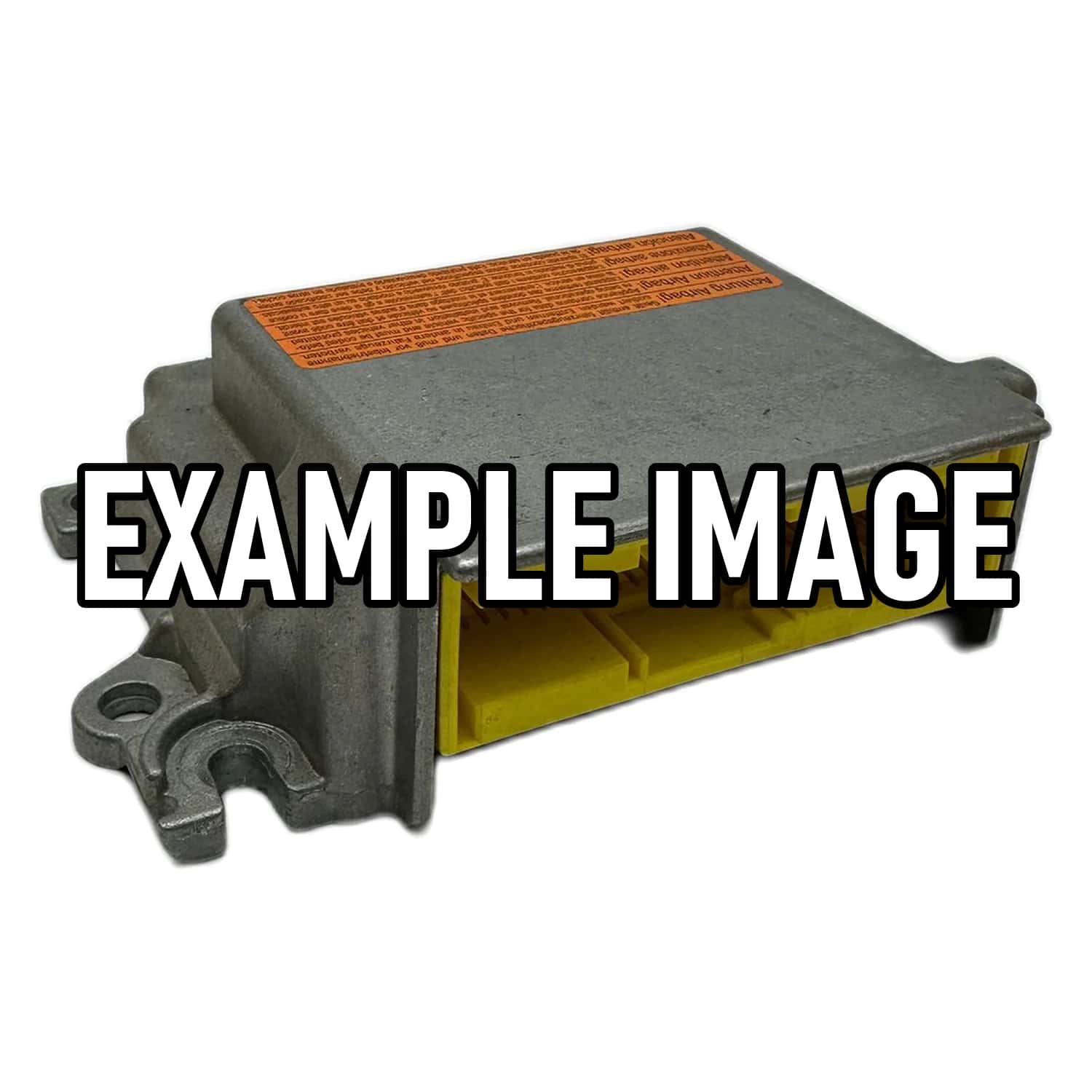
Dacia SupeRNova airbag control units can be reliably identified by the printed part number. This number, often in combination with the vehicle's year of manufacture and the vehicle identification number (VIN), allows for a clear identification of the specific control unit for a precise Dacia SupeRNova airbag control unit repair.
The airbag control unit on the Dacia SupeRNova is typically located in the center console area, under the carpet, or behind the trim panel. To read the part number, it may be necessary to remove the relevant trim panels. Make a note of all numbers visible on the control unit's sticker, including the manufacturer's designation and serial number.
Since the SupeRNova was produced over a relatively short period of time and as a single generation, the variety of installed airbag control units is manageable. Nevertheless, correct identification by part number is crucial to ensure compatibility during repairs and to account for any minor hardware revisions.
A correctly identified defective airbag control unit is the first step towards a successful Dacia SupeRNova airbag control unit repair, which guarantees the restoration of the original safety functions.
What airbag equipment does Dacia SupeRNova have?
Due to its production period (2000-2003) and its positioning as an affordable compact car, the Dacia SupeRNova's airbag equipment was generally minimal. Many models had no airbags as standard or only an optional driver airbag, reflecting the technical complexity of the airbag control unit.
Unlike today's vehicles, which come standard with multiple airbags, the Dacia SupeRNova was relatively sparsely equipped in terms of safety technology. Research shows that safety features were not yet widely standardized on Dacia models in the early 2000s. This means that the SupeRNova's airbag control unit was typically designed for a simple system that primarily controlled a single driver airbag, if one was installed at all.
Even in the successor model, the Dacia Solenza, the driver's airbag was available in the higher trim levels (e.g., the Scala), but sometimes it was still an optional extra. This suggests that the base models of the SupeRNova were often delivered without airbags at all.
Regardless of the number of airbags installed, a functioning airbag control unit is of utmost importance. If a corresponding warning light illuminates or the unit is defective after an accident, a professional Dacia SupeRNova airbag control unit repair is essential to restore the functionality of the passive safety system and maintain the vehicle's operating license.
Common fault codes in this category
Shipping & repair from Germany
Airbag24 repairs your component in Berlin — usually within 3–4 working days.
Standard shipping within Germany is free; we normally return your part by UPS.
You pay for and insure the inbound shipment to us. On explicit request we ship by express — the extra cost is borne by the customer.
If you withdraw from the contract, you bear the cost of returning the item.