
Daewoo 1.5i airbag control unit repair(1)
1 product
What should I pay attention to with Daewoo 1.5i airbag control units?
The airbag technology used in the Daewoo 1.5i varies depending on the model year. Airbag24 professionally repairs control units for all Daewoo 1.5i generations with original functionality and a 2-year warranty.
The Daewoo 1.5i, known as the Daewoo LeMans (1986-1994) and later the Cielo (1994-1997), was a compact car based on the GM T platform (Opel Kadett E). Its production history spanned eleven years, during which the components used, including the airbag control units, were able to evolve.
The development of the airbag system in the Daewoo 1.5i reflects the technological state of the art in the late 1980s and 1990s. At that time, airbags were not yet standard equipment, especially in affordable compact models, but were often only available as an option or in higher trim levels.
If defects occur in the airbag control unit of your Daewoo 1.5i, this is usually indicated by an illuminated airbag warning light. A professional repair is crucial to ensure vehicle safety and restore the restraint system's functionality.
Which Daewoo 1.5i generations are there?
The Daewoo 1.5i was produced in two main phases, each of which could use different airbag control units. The development of the safety system reflects technological progress from 1986 to 1997.
The first major phase began in 1986 with the Daewoo LeMans, which was manufactured in South Korea until 1994. This model established the 1.5-liter four-cylinder engine and the basic vehicle architecture.
The second phase followed from 1994 to 1997 with the Daewoo Cielo, which represented a comprehensive facelift of the LeMans. Although the exterior appearance changed, the basic mechanical and electrical components, including the basis for the airbag control system, remained largely unchanged.
These two model phases—LeMans and Cielo—are crucial for identifying the correct airbag control unit. Although the basic design remained the same, adjustments to the control units could be made over the years, requiring precise assignment by model year.
The Daewoo 1.5i series was replaced after 1997 by new models such as the Daewoo Lanos and Nubira, which in turn used more modern airbag systems.
How do I identify my Daewoo 1.5i airbag control unit?
Daewoo 1.5i airbag control units can be clearly identified by part number, year of manufacture, and vehicle identification number. Each model phase used specific control unit variants for optimal compatibility.
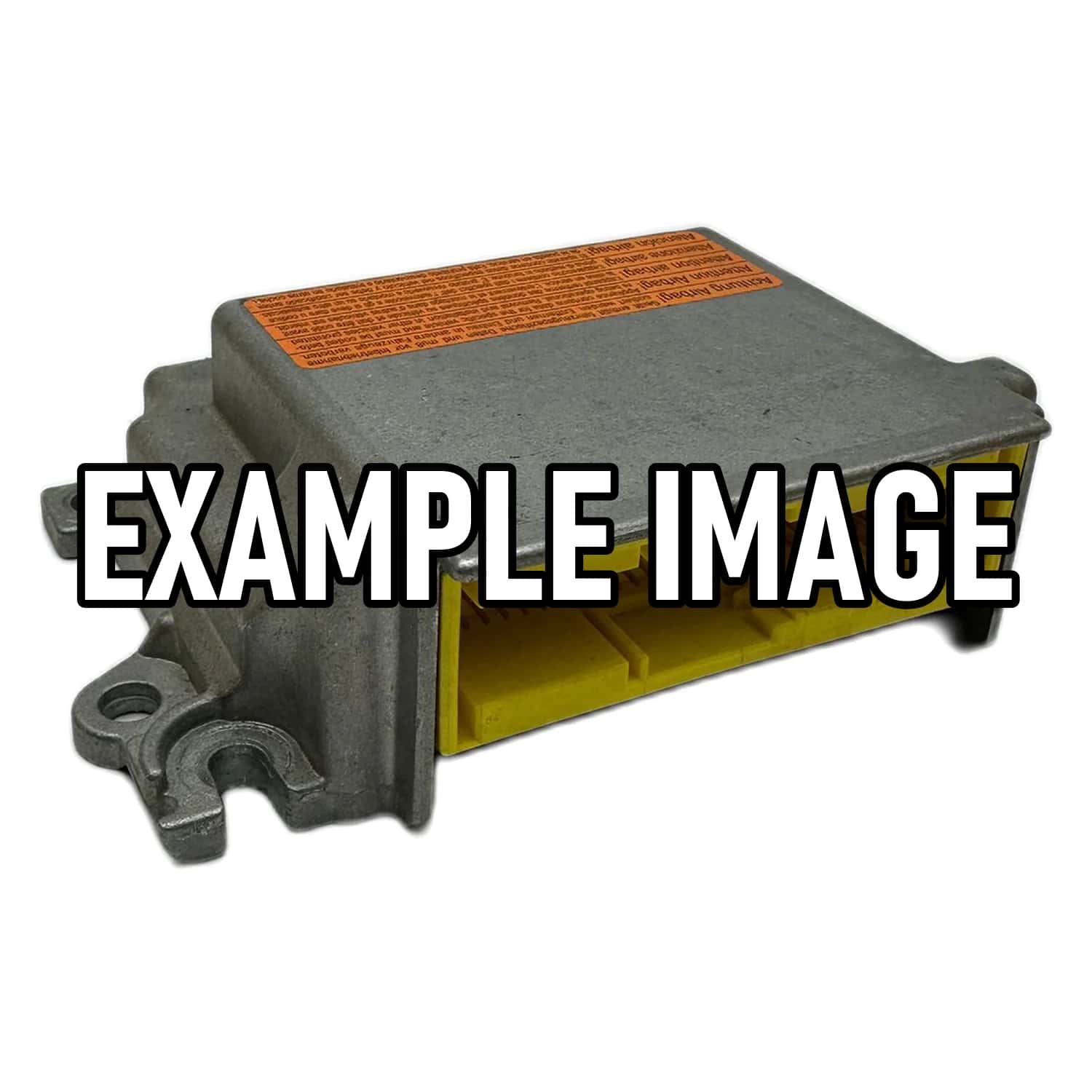
The airbag control unit's part number is the most important identifier. It is located directly on the control unit's housing and is essential for an accurate repair or replacement.
Additionally, the exact year of manufacture of your Daewoo 1.5i (LeMans or Cielo) and the vehicle identification number (VIN) are helpful. This information allows us to more precisely narrow down the vehicle's history and thus the potential control unit types.
The airbag control unit in the Daewoo 1.5i is typically located in the center console area, under the carpet, or under one of the front seats. The exact location may vary depending on the model phase and equipment.
What airbag equipment does Daewoo 1.5i have?
The airbag equipment of the Daewoo 1.5i varies depending on the model year and trim level. While early models could use standard airbag systems, airbags were often optional or not available in this affordable compact car.
The Daewoo 1.5i (LeMans/Cielo) was designed as a budget-oriented compact car for the mass market. In the late 1980s and early 1990s, standard airbags, especially for front passenger or side airbags, were still very rare in this vehicle class.
It's likely that later models of the Cielo or higher-end trim levels of the LeMans offered a single driver's airbag as an option. A comprehensive multi-airbag system, as is common in modern vehicles, was not planned for the Daewoo 1.5i at that time.
The Daewoo 1.5i's priority was practical everyday usability and attractive value for money. This meant that advanced safety features such as extensive airbag systems were often omitted in favor of cost-effectiveness.
Despite the potentially spartan equipment, the proper functioning of the existing airbag control unit is of utmost importance for occupant safety. A defective airbag control unit should therefore be repaired immediately to restore the full functionality of the passive safety system.
Common fault codes in this category
Shipping & repair from Germany
Airbag24 repairs your component in Berlin — usually within 3–4 working days.
Standard shipping within Germany is free; we normally return your part by UPS.
You pay for and insure the inbound shipment to us. On explicit request we ship by express — the extra cost is borne by the customer.
If you withdraw from the contract, you bear the cost of returning the item.