
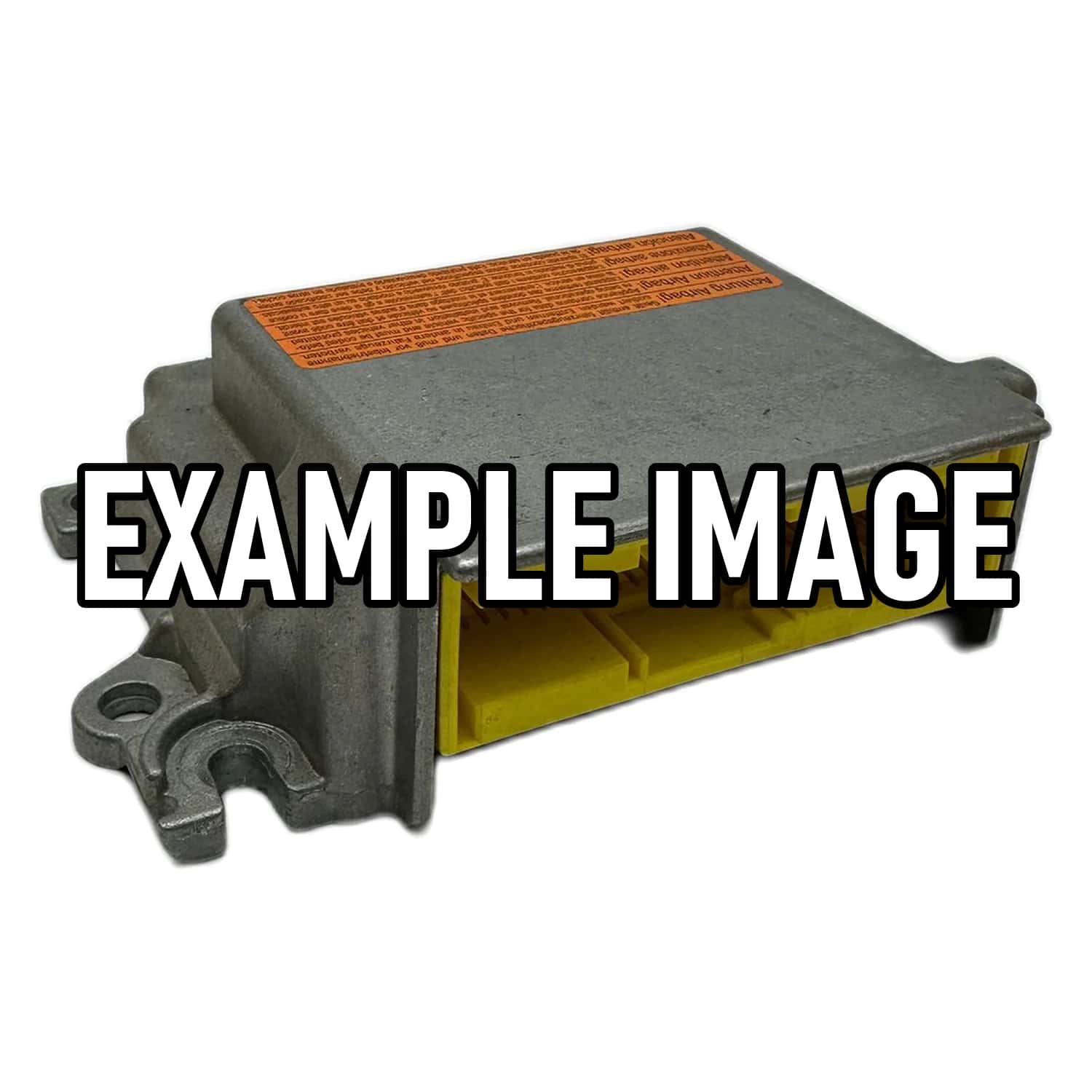
Daewoo Cielo airbag control unit repair(1)
1 product
What should I pay attention to with Daewoo Cielo airbag control units?
The airbag technology used in the Daewoo Cielo varies depending on the model year and market. Repairing airbag control units for the Daewoo Cielo ensures the restoration of the original safety functions after a defect.
The Daewoo Cielo, introduced in 1994, is based on the proven Opel Kadett E platform and its predecessor, the Daewoo LeMans. It was produced in South Korea until 1997, but production in some countries, such as Uzbekistan, continued significantly longer, in some cases until 2016. This long production span means there is a wide range of model years for which a Daewoo Cielo airbag control unit repair may be relevant.
The Daewoo Cielo's airbag systems were basic but effective for their era and vehicle class. They typically included at least two airbags—one for the driver and one for the front passenger—and focused on reliable basic safety. A defect in the airbag control unit is therefore a serious problem that impairs the functionality of the entire safety system and requires professional repair.
Which Daewoo Cielo generations are there?
Although the Daewoo Cielo was produced in one main generation, there were design adjustments and regional variants throughout its long production run, which could result in different airbag control units. The development of the safety system reflects technological progress from 1994 to approximately 2016.
Officially, the Daewoo Cielo is considered a single generation, representing an evolution of the Daewoo LeMans. Nevertheless, over the years there have been minor facelifts and country-specific adaptations that have altered the appearance and, in some cases, the equipment. These continuous modifications, especially during the long production run in export markets, may have affected the internal components of the airbag system, although the basic concept remained the same.
The technical basis remained the Opel Kadett E, which speaks to the reliability and simplicity of the components. Even though there are no separate "generations" in the traditional sense, it is important to consider the exact year of manufacture and equipment features when repairing a Daewoo Cielo airbag control unit. This helps identify the appropriate control unit and understand its specific software and hardware configuration.
How do I identify my Daewoo Cielo airbag control unit?
Daewoo Cielo airbag control units can be uniquely identified by part number, year of manufacture, and vehicle identification number (VIN). Correct identification is crucial for a successful repair and compatibility with the vehicle's existing airbag system.
Each airbag control unit has a specific part number, usually printed directly on the housing. This number is the most important indicator of the control unit's exact version. For precise identification, it is recommended to note the part number before scheduling a Daewoo Cielo airbag control unit repair.
In addition to the part number, the exact year of manufacture of the vehicle and the vehicle identification number (VIN) are important. This information allows us to take into account the vehicle's history and any country-specific equipment differences. Combining this data ensures that the repaired or replaced control unit is a perfect fit for the vehicle and fully restores its safety functions.
What airbag equipment does Daewoo Cielo have?
The Daewoo Cielo's airbag equipment was typical for its era and vehicle class, with most standard models featuring at least two airbags—one for the driver and one for the front passenger. This basic equipment offered a solid level of safety for the compact class.
The Daewoo Cielo was designed as a cost-effective, reliable vehicle for families and everyday users. Standard safety features typically included a driver airbag and a passenger airbag, which was not yet universally standard in the compact class in the 1990s. This feature contributed significantly to the vehicle's passive safety and was a key selling point.
Depending on the market and specific trim level (e.g., GL, GLX), minor variations in the airbag configuration could occur, but these did not significantly change the core configuration of at least two airbags. For a successful Daewoo Cielo airbag control unit repair, it is crucial to know the original airbag configuration of the respective vehicle. This ensures that the repaired control unit controls the correct number and type of airbag modules and that the system is fully functional after the repair.
Common fault codes in this category
Shipping & repair from Germany
Airbag24 repairs your component in Berlin — usually within 3–4 working days.
Standard shipping within Germany is free; we normally return your part by UPS.
You pay for and insure the inbound shipment to us. On explicit request we ship by express — the extra cost is borne by the customer.
If you withdraw from the contract, you bear the cost of returning the item.