
Daewoo Matiz airbag control unit repair(2)
2 products
What should I pay attention to with Daewoo Matiz airbag control units?
The airbag technology used in the Daewoo Matiz varies depending on the model year and series. A professional repair of airbag control units ensures original functionality and restores the safety of the passive restraint system. This is a cost-effective alternative to purchasing a new unit, especially if the control unit needs to be reset after an accident.
The Daewoo Matiz, a compact subcompact, was produced in various markets and under various names from 1998 until well beyond 2018. This long production history encompasses several generations and facelifts, each of which brings with it specific requirements for the installed components, including the airbag control units.
The airbag technology in the Daewoo Matiz is an essential component of the passive safety system (SRS). While the systems have been continually developed over the years, their core focus has remained on providing front airbags, in keeping with the company's positioning as an economical city car. After an airbag deployment, the control unit is often loaded with crash data, which must be erased to restore full functionality.
Which Daewoo Matiz generations are there?
The Daewoo Matiz has been produced in two main generations, as well as subsequent facelifts and name changes. Each vehicle generation can use specific airbag control units. The development of the safety system reflects the technological progress from its beginnings in 1998 to the end of production in some markets in 2018.
The first generation of the Daewoo Matiz (M100) was introduced in 1998 and received a facelift in 2002, known as the M150. These models were initially sold as the Daewoo Matiz and later, from late 2004, continued as the Chevrolet Matiz in many markets.
The second generation, launched in 2005, was introduced as the M200 and also underwent a facelift to the M250. This generation differed significantly in design and features and was produced in some regions until at least 2018, for example as the Chevrolet Spark Life or ChevyTaxi.
Each of these generations and model updates could use different airbag control units that were tailored to the specific sensor and airbag configurations of the respective model year.
How do I identify my Daewoo Matiz airbag control unit?
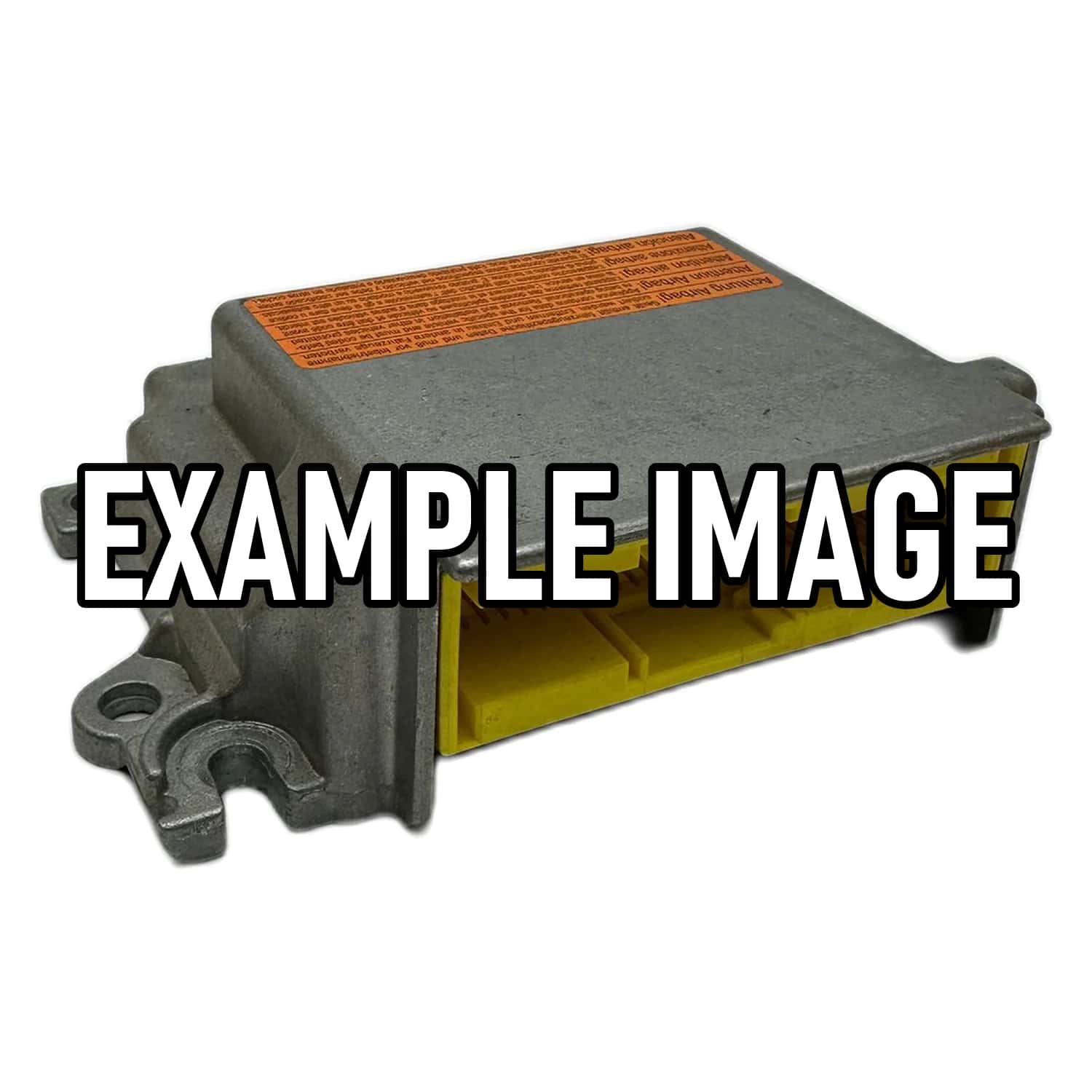
Daewoo Matiz airbag control units can typically be identified by their unique part number, the vehicle's year of manufacture, and the full vehicle identification number (VIN). It is crucial to determine the exact part number of the installed control unit to ensure compatibility during repair or replacement.
The part number of the airbag control unit is usually printed directly on the module's housing or can be found on a sticker. Typical part numbers might be in the format 96 314 932 or 5WK4202, as they are known for certain Matiz models.
The control unit is usually located centrally in the vehicle, often under the center console or under one of the front seats. Removing trim panels may be necessary to read the part number. Accurate identification is the first step toward successful repair or resetting after an airbag deployment.
What airbag equipment does the Daewoo Matiz have?
In keeping with its role as a cost-effective subcompact, the Daewoo Matiz's airbag configuration focused on basic but effective passive safety. Front airbags for the driver and front passenger were standard, working in conjunction with the seatbelts as part of the Supplementary Restraint System (SRS).
The Daewoo Matiz was designed as a practical city car with a focus on economy and functionality. Therefore, comprehensive airbag systems with side or curtain airbags were generally not standard or were only available as options in very rare, higher-end trim levels. Primary protection was provided by the front airbags in conjunction with the seatbelts, supplemented by side-impact protection integrated into the body structure.
After airbags are deployed in an accident, they must be replaced. However, the associated airbag control unit stores crash data and must either be repaired and reset or replaced to restore full functionality of the safety system. This is a crucial step in ensuring the Daewoo Matiz's full safety after an accident.
Common fault codes in this category
Shipping & repair from Germany
Airbag24 repairs your component in Berlin — usually within 3–4 working days.
Standard shipping within Germany is free; we normally return your part by UPS.
You pay for and insure the inbound shipment to us. On explicit request we ship by express — the extra cost is borne by the customer.
If you withdraw from the contract, you bear the cost of returning the item.