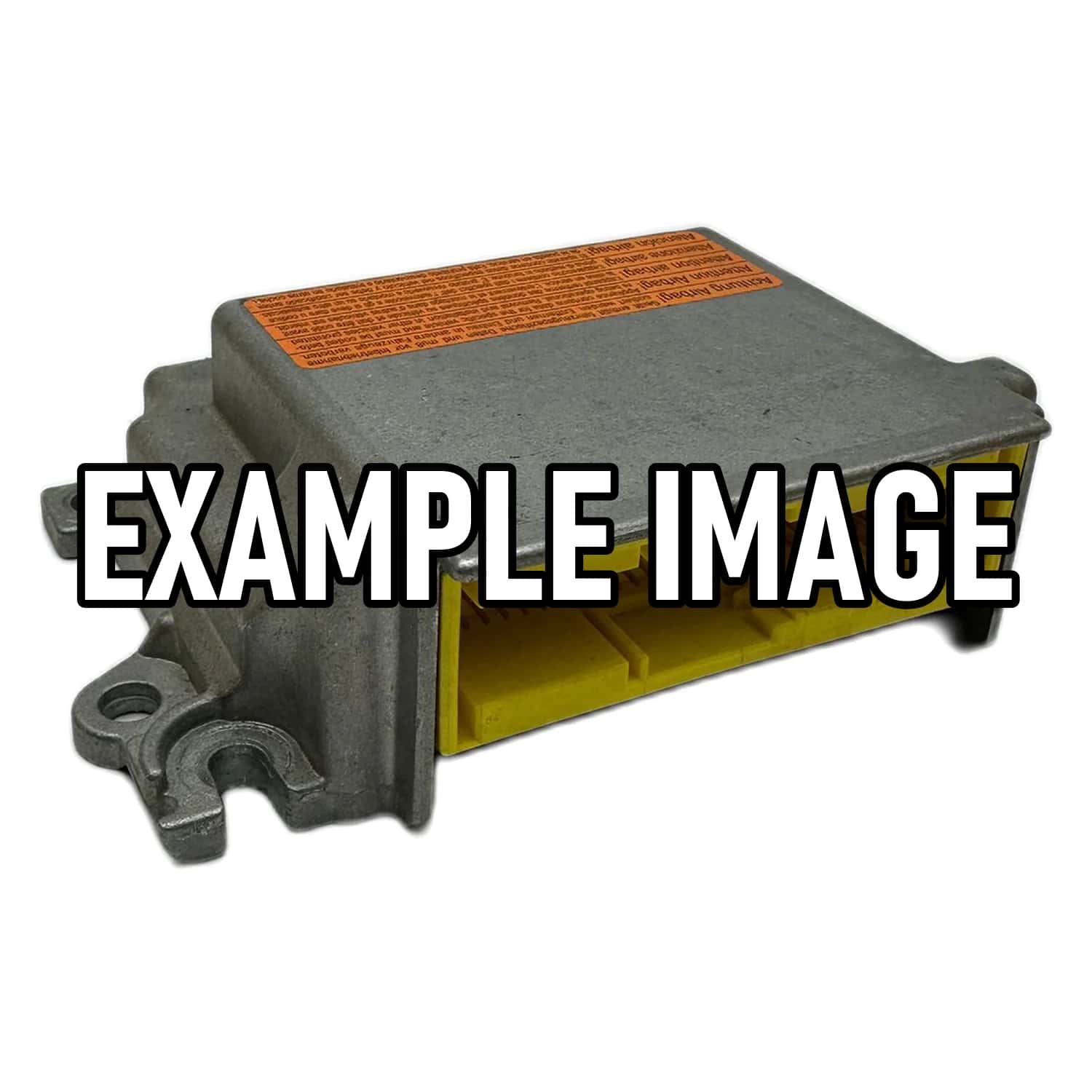
airbag control unit repair Ford Ranger 3
from€79.00
 Quality since 2002
The airbag technology used in the Ford Ranger varies depending on the model year. Repairing a defective Ford Ranger airbag control unit requires specialized expertise. We restore original functionality and offer a 2-year warranty on the repair.
The Ford Ranger has undergone remarkable development since its introduction in the early 1980s. Originally conceived as a rugged compact pickup, it has evolved over the generations into a versatile mid-size pickup truck, ideal for both commercial and recreational use.
As the vehicle evolved, so did the airbag system. While early models lacked airbags, they increasingly became standard from the mid-1990s onward. Each new Ford Ranger generation brought improvements in occupant protection, increasing the complexity of the airbag control units.
An airbag control unit is the heart of the safety system. It monitors sensors, deploys airbags when necessary, and stores important crash data after an accident. A defect in this central component can impair the functionality of the entire airbag system and is often indicated by an illuminated airbag warning light.
Repairing a Ford Ranger airbag control unit is complex, as it requires erasing crash data and restoring the original software. Only specialized workshops with the necessary training and equipment can properly perform these safety-related repairs to ensure full functionality and safety.
The Ford Ranger has been produced in four main generations, each using different airbag control units. The development of the safety system reflects technological advances from approximately 1983 to the present day.
The first generation, the Ford Ranger MK1, was produced from approximately 1983 to 1992. This compact pickup truck was primarily designed as a work vehicle for tradespeople and business owners. Airbags were not yet standard during this early phase and were only later introduced as an option.
The second generation, the Ford Ranger MK2, was launched in the 1990s. Airbags became standard equipment, initially for the driver in 1995, followed by the passenger airbag around 1998. The MK2 was already evolving into a mid-size pickup truck with increasing levels of comfort.
The Ford Ranger MK3 dominated from approximately 2011 to 2021. Front airbags were standard in this generation, and front side airbags were added as an option starting in 2010. The airbag control unit became more complex, with multiple sensors and a diagnostic function.
The current generation, the Ford Ranger MK4, has been on the market since around 2022. It features a state-of-the-art airbag management system with comprehensive sensors, a diagnostic monitor, and the option to deactivate the passenger airbag. This generation particularly appeals to off-road and lifestyle customers.
Each of these generations uses specific airbag control units tailored to the respective vehicle models and the airbag systems installed. A professional repair takes these generation-specific differences into account to ensure the correct functioning of the airbag system.
Ford Ranger airbag control units can be uniquely identified by part number, model year, and vehicle identification number (VIN). Each generation uses specific control unit variants for optimal compatibility with the respective airbag system.
Accurate identification of the airbag control unit is crucial for a successful repair or replacement. The part number is the most important indicator and is located directly on the control unit's housing. It provides information about the exact model and specific software version.
The year of manufacture and generation of your Ford Ranger are also important parameters. They help narrow down the likelihood of the installed control unit variants, as technology has evolved significantly over the production cycles.
Additionally, the vehicle identification number (VIN) can help with identification, as it contains all relevant information about the vehicle's original equipment. This information makes it possible to determine the correct control unit for your specific Ford Ranger model and its equipment.
The airbag control unit is usually installed centrally in the vehicle, often under the center console, the carpet, or under the front seats. Before removing it, it is important to disconnect the battery and wait a reasonable amount of time to prevent accidental airbag deployment.
Extreme caution is required when handling airbag components. Due to the safety implications and potential risks, the diagnosis and removal of the airbag control unit should always be performed by trained personnel.
The Ford Ranger's airbag configuration varies considerably depending on the model year and trim level. While early models used basic airbag systems, newer generations feature enhanced safety packages with additional airbag modules and more complex management.
The first Ford Ranger MK1 models (approximately 1983-1992) did not have airbags. It wasn't until around 1995, with the Ford Ranger MK2, that the driver airbag was integrated as standard equipment, representing a significant advance in passive safety.
A few years later, around 1998, the passenger airbag became a standard part of the safety equipment. Before that, depending on the trim level and market, it was only available as an option and sometimes included only in higher-end equipment packages.
With the introduction of the Ford Ranger MK3 in 2011 and subsequent updates, particularly in newer models from 2010 onward, the airbag range expanded significantly. Optional front seat airbags were added, further improving occupant protection in the event of a side impact.
The current generation, the Ford Ranger MK4 (from approximately 2022), features a state-of-the-art airbag management system. This system includes multiple crash sensors that collect precise data for deployment, as well as a diagnostic monitor that monitors the system's status and indicates faults.
In addition, the latest models offer a passenger airbag deactivation option, which is particularly useful when child seats are used in the front passenger seat. The airbag control unit, with its backup power supply and ability to store crash data, is the central control unit here.
The airbag warning light in the cockpit serves as an important indicator of system errors. If it stays lit or flashes, this indicates a defect in the airbag control unit or another part of the airbag system, which should be checked and repaired immediately by a qualified workshop.
Airbag24 repairs your component in Berlin — usually within 3–4 working days.
Standard shipping within Germany is free; we normally return your part by UPS.
You pay for and insure the inbound shipment to us. On explicit request we ship by express — the extra cost is borne by the customer.
If you withdraw from the contract, you bear the cost of returning the item.