
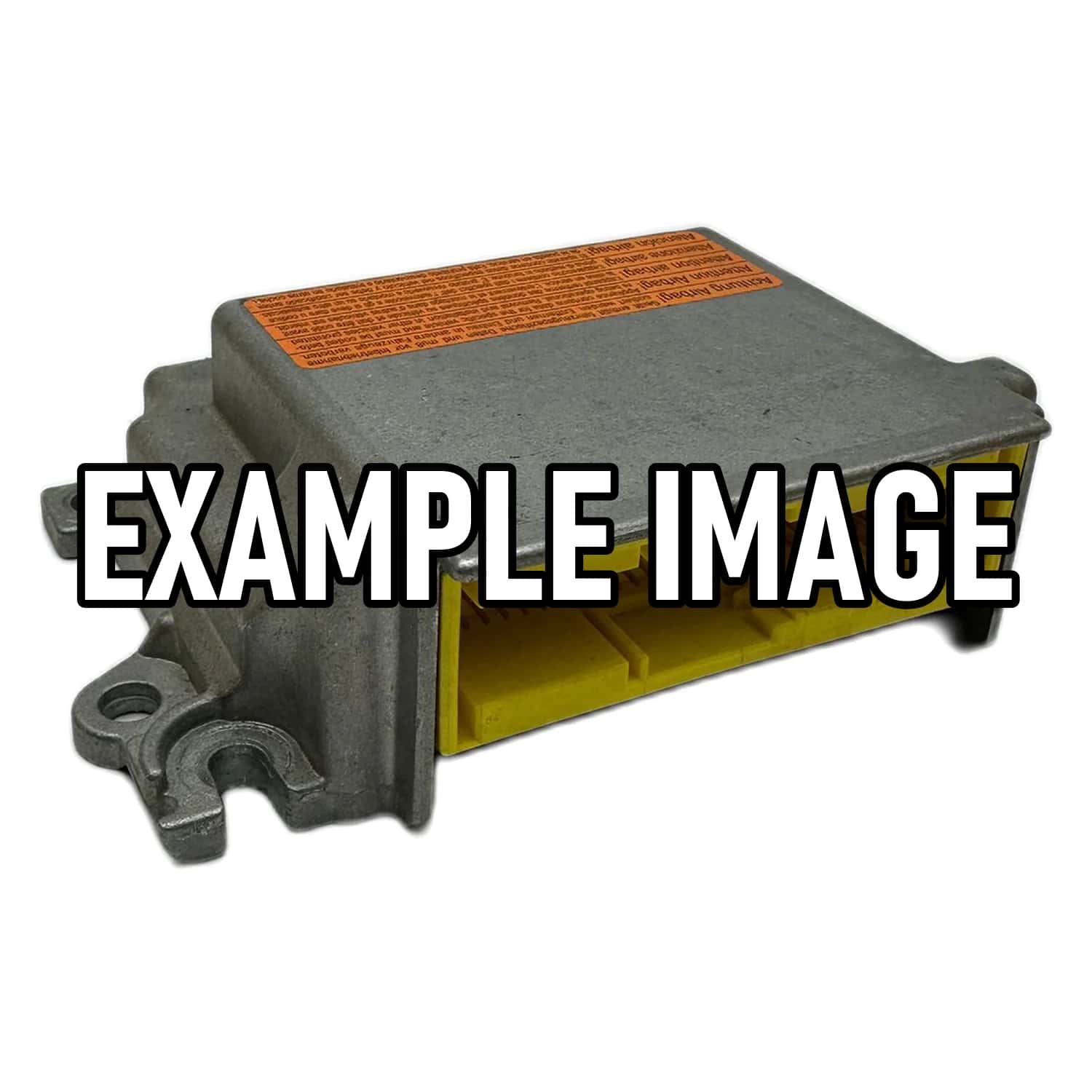

General Motors airbag control unit repair(2)
Rugged engineering from the GM group: identify the matching General Motors airbag control unit here and send it in for testing or repair.
2 products
What should I consider with General Motors airbag control units?
The airbag technology used in General Motors (GM) vehicles varies considerably depending on the model and year. Modern GM airbag control units are key components essential to occupant safety.
The production history of airbags at General Motors goes back a long way. As early as 1974, GM offered the Air Cushion Restraint System (ACRS) as an optional extra for models such as Buick, Cadillac, and Oldsmobile. This was an early step in the development of passive safety systems and underscores GM's pioneering role.
The development of the airbag system has continued steadily over the years. While early implementations were still optional, GM vehicles began offering modern front airbags as standard equipment starting with the 1990 model year. Front airbags have been mandatory in all GM cars since 1998 and in all trucks since 1999, demonstrating the extensive integration and focus on occupant safety in all General Motors vehicles.
Which General Motors models are available?
General Motors has produced a wide variety of models throughout its history, with each model and series generation using different airbag control units. The range includes seven unique models, which often served as technology showcases or visions for the future.
The General Motors models in focus include the General Motors EV1, the General Motors Futurliner, the General Motors Firebird, the General Motors Lean Machine, the General Motors Ultralite, the General Motors Hy-wire, and the General Motors Sequel. These seven models often represent groundbreaking concepts or limited-production vehicles that demonstrated GM's technological capabilities. The EV1 was an early all-electric compact car, while the Futurliner served as a unique show truck. Models such as the Firebird, Lean Machine, Ultralite, Hy-wire, and Sequel were primarily concept vehicles or prototypes that showcased innovations in design, lightweight construction, or alternative propulsion technologies, such as hydrogen fuel cell technology.
The development of the safety system across GM's broader production range reflects the technological advances explored in many concept vehicles, even if they didn't always feature production airbag systems. The advanced airbag control units in subsequent General Motors production models benefit from these years of research and development.
How do I identify my General Motors airbag control unit?
General Motors airbag control units can be uniquely identified by part number, year of manufacture, and vehicle identification number (VIN). This information is crucial for correctly identifying and repairing the specific control unit.
Each generation, and often different trim levels of a General Motors model, uses specific control unit variants to ensure optimal compatibility with the installed airbag modules and sensors. Precisely identifying the defective airbag control unit is the first and most important step toward a successful repair. The control unit is often located in the center console area or under the driver's seat, although the exact location can vary depending on the GM model and year.
What airbag equipment does General Motors have?
General Motors' airbag equipment varies greatly depending on the vehicle's model year and trim level. While early models used basic airbag systems, newer generations feature enhanced safety packages with additional airbag modules.
Modern General Motors vehicles are equipped with a variety of airbag types to ensure comprehensive occupant protection. These include frontal airbags for the driver and front passenger, which deploy in the event of a frontal collision. Many models also feature knee airbags, providing additional protection for the lower extremities. Side airbags are also widely used, often as door-mounted airbags (historically, for example, in the Cadillac DeVille from 1997 to 1999) or seat-mounted airbags, which are installed in the driver, front passenger, and sometimes even the rear seats.
Roof-rail or curtain airbags protect the heads of occupants in side-impact collisions or rollovers and are standard in many newer GM vehicles. In addition, seatbelt pretensioners work closely with the airbag systems, tightening the belt during an impact and keeping the occupants optimally positioned for full airbag deployment. GM has also pioneered innovations such as the introduction of the front-center airbag in 2013, which provides additional protection between the driver and front passenger and underscores the advanced development of the airbag system at General Motors.
Shipping & repair from Germany
Airbag24 repairs your component in Berlin — usually within 3–4 working days.
Standard shipping within Germany is free; we normally return your part by UPS.
You pay for and insure the inbound shipment to us. On explicit request we ship by express — the extra cost is borne by the customer.
If you withdraw from the contract, you bear the cost of returning the item.