
Honda City airbag control unit repair(6)
What should I consider with Honda City airbag control units?
The airbag technology used in the Honda City varies depending on the model year. A professional repair service repairs control units of all Honda City generations with original functionality and a 2-year warranty.
The Honda City, in production since 1981, has undergone remarkable development throughout its history, which is also reflected in its safety systems. Early models in the 1980s did not have airbags, while today's generations offer comprehensive safety packages.
This technological evolution means that Honda City airbag control units have specific hardware and software features depending on the generation and model year. A professional repair therefore requires in-depth knowledge of the respective systems to ensure full functionality and safety.
Which Honda City generations are there?
The Honda City has been produced in at least six main generations and numerous facelifts, with each generation using different airbag control units. The evolution of the safety system reflects technological advances from 1981 to the present.
The first generation (AA/FV/FA) was produced from 1981 to 1986, followed by the second generation (GA) from 1986 to 1993, both of which did not offer airbags as standard. With the third generation (3A/SX), introduced in 1996, the City returned as a sedan and, for the first time, offered airbags as an option or in higher trim levels.
The fourth generation (GD/GE) from 1999 to 2002 increasingly established airbags as standard in higher trim levels. The fifth generation (GM2/3) from 2002 to 2008 made airbags largely standard, often in conjunction with ABS and ESP. The sixth generation (from 2014) and current models offer comprehensive airbag systems and other advanced safety features.
Additional model codes such as SL, GM, GR and RS often refer to country-specific variants or facelifts within these main generations, which may also feature specific adaptations to the airbag control units.
How do I identify my Honda City airbag control unit?
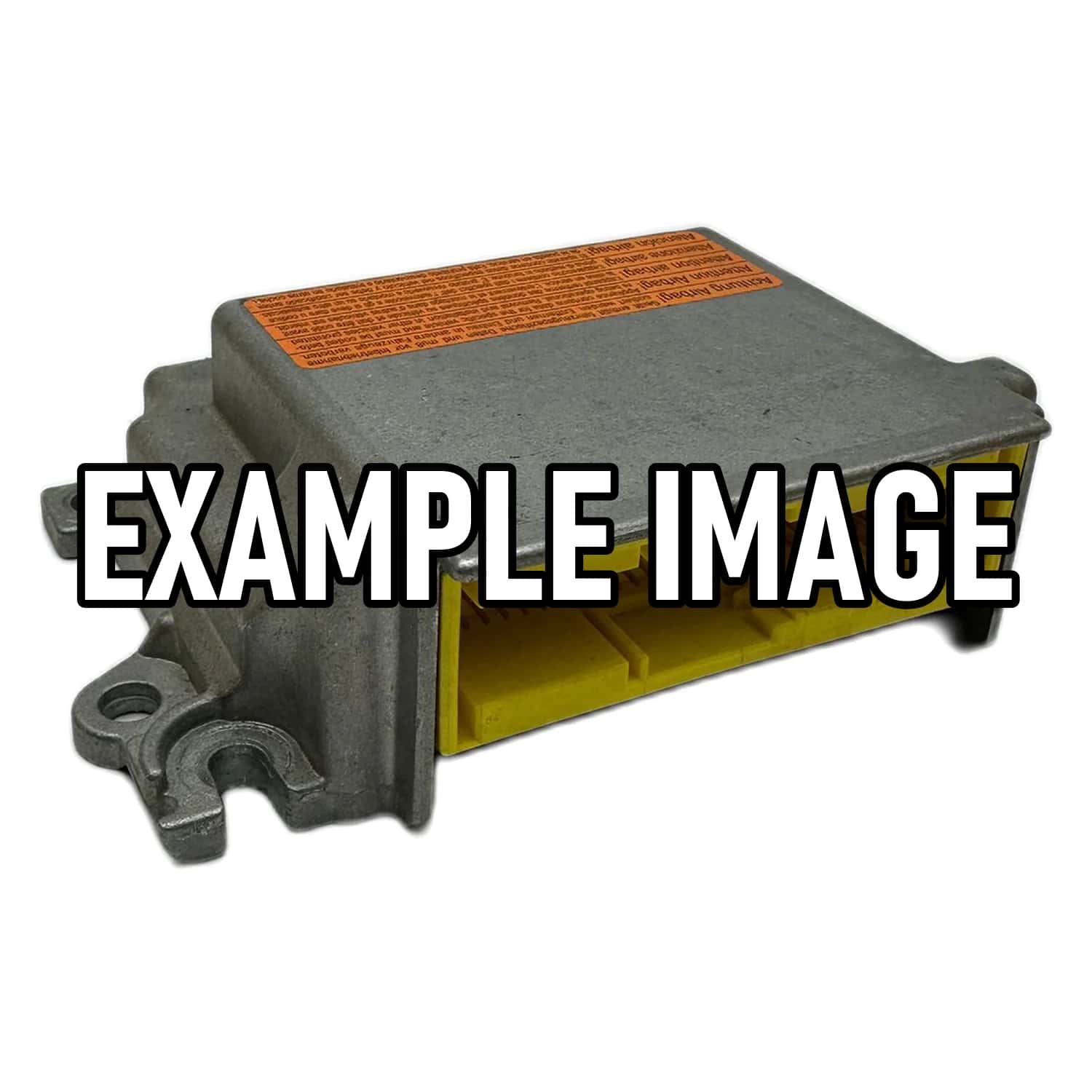
Honda City airbag control units can be uniquely identified by part number, year of manufacture, and vehicle identification number (VIN). Each generation uses specific control unit variants for optimal compatibility and functionality.
The part number of the airbag control unit is the most important identifier and is usually located directly on the control unit housing. This is usually located centrally in the vehicle, often under the center console, under the carpet, or behind the dashboard.
Additionally, the exact year of manufacture of the vehicle and the vehicle identification number (VIN) are crucial, as different control units may have been installed even within a single generation during facelifts or model updates. Precise identification is essential to ensure the compatibility of the repaired or replaced control unit with the specific vehicle model.
What airbag equipment does the Honda City have?
The Honda City's airbag configuration varies considerably depending on the model year and trim level. While early models use basic airbag systems, newer generations feature enhanced safety packages with additional airbag modules.
In the first two generations of the Honda City (1981-1993), airbags were virtually nonexistent or available only in very rare export models. Safety concepts of that era focused more on the body structure and passive restraint systems such as seat belts.
With the reintroduction of the City as a sedan starting with the third generation (1996), the first driver and passenger airbags were offered as an option or in higher trim levels. This trend continued in the fourth (1999-2002) and fifth generation (2002-2008), where airbags increasingly became standard in most trim levels, often complemented by ABS for improved braking performance.
The sixth generation (from 2014) and the latest models of the Honda City offer a comprehensive range of airbags as standard. These typically include front airbags for the driver and front passenger, side airbags for chest protection, and, in higher trim levels, head airbags (curtain airbags). These modern systems are often integrated into a complex network of sensors and driver assistance systems that optimize occupant safety in a variety of accident scenarios.
Common fault codes in this category
Shipping & repair from Germany
Airbag24 repairs your component in Berlin — usually within 3–4 working days.
Standard shipping within Germany is free; we normally return your part by UPS.
You pay for and insure the inbound shipment to us. On explicit request we ship by express — the extra cost is borne by the customer.
If you withdraw from the contract, you bear the cost of returning the item.