
Honda CR-V airbag control unit repair(6)
6 products

What should I consider with Honda CR-V airbag control units?
The airbag technology used in the Honda CR-V varies depending on the model year. Airbag24 professionally repairs control units for all Honda CR-V generations with original functionality and a 2-year warranty.
The Honda CR-V, a popular crossover and midsize SUV, has been in production since 1996 and is currently available in its sixth generation. Each model year and generation brings technical advancements that also affect the airbag system and its control unit.
The evolution of the airbag system in the Honda CR-V ranges from basic driver and passenger airbags in early models to comprehensive safety packages like Honda SENSING 360 in the latest generations. A defective airbag control unit can impair the function of these critical safety components, making proper repair essential.
Airbag control units are central components of the passive safety system and store crucial crash data after an accident. If error messages, persistent warning lights, or stored crash data are displayed, the control unit must be inspected and, if necessary, repaired or reset to restore full system functionality.
Which Honda CR-V generations are there?
The Honda CR-V has been produced in six generations, each with a different airbag control unit. The evolution of the safety system reflects technological advances from 1996 to the present.
The Honda CR-V's model history is rich, spanning six generations, each with its own distinct technological features. The first generation (1996–2001, model code: honda-cr-v-1st-gen) laid the foundation for the vehicle's success as a practical SUV. It was followed by the second generation (2002–2006, model code: honda-cr-v-2nd-gen), which brought further refinements.
The third generation (2007–2012, model code: honda-cr-v-3rd-gen) marked a significant step toward more modern design and safety standards. The fourth generation (2013–2016, model code: honda-cr-v-4th-gen) continued this path, establishing the CR-V as a fixture in the midsize SUV segment. The fifth generation (2017–2022, model codes: honda-cr-v-5th-gen, honda-cr-v-rw, honda-cr-v-rt) introduced advanced assistance systems and improved comfort features.
The current, sixth generation (since 2022, model codes: honda-cr-v-6th-gen, honda-cr-v-rd, honda-cr-v-re, honda-cr-v-rm) offers the latest innovations in connectivity, efficiency, and, above all, safety technologies. Each of these generations uses specific airbag control units tailored to the respective vehicle architecture and installed airbag systems.
How do I identify my Honda CR-V airbag control unit?
Honda CR-V airbag control units can be uniquely identified by part number, model year, and vehicle identification number (VIN). Each generation uses specific control unit variants for optimal compatibility.
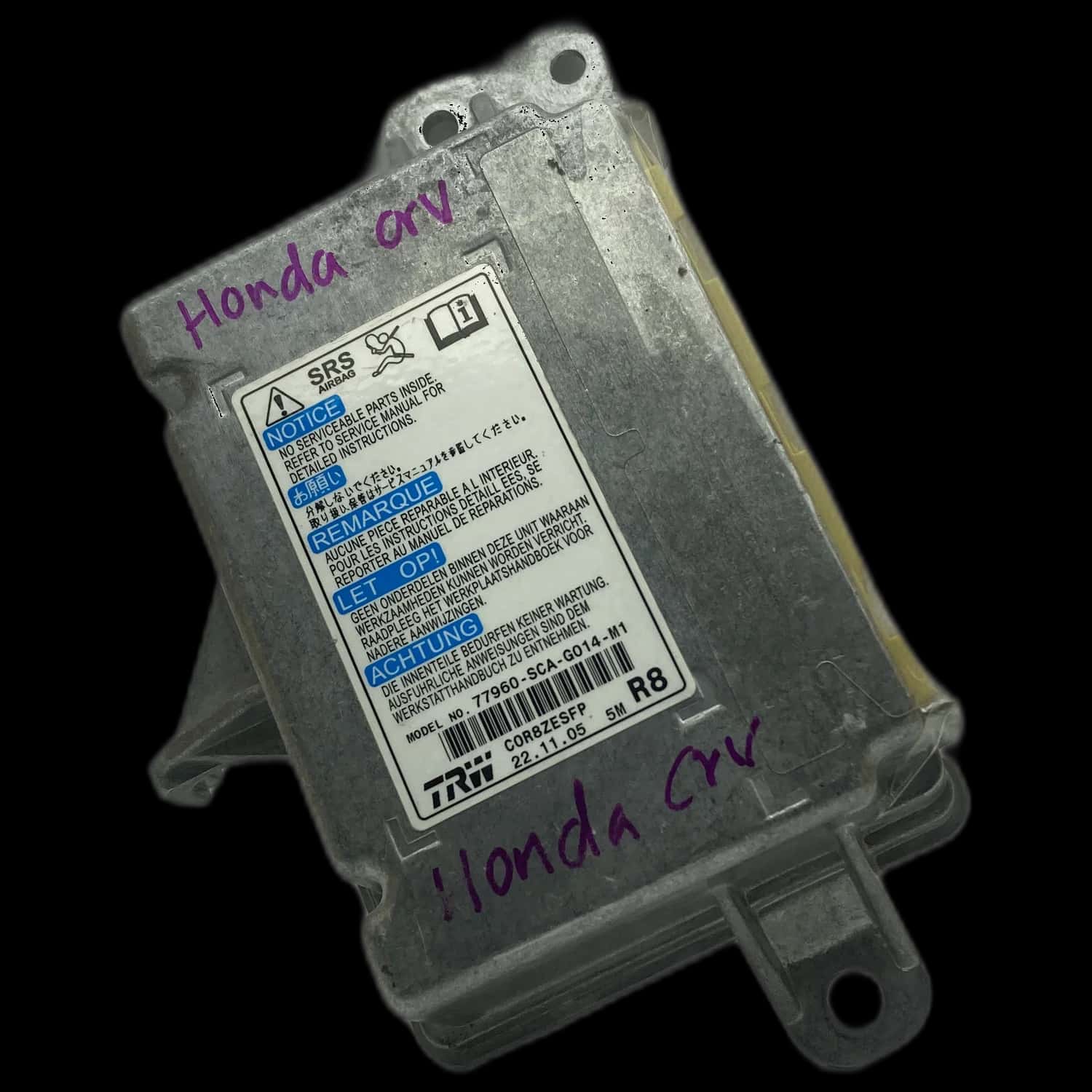
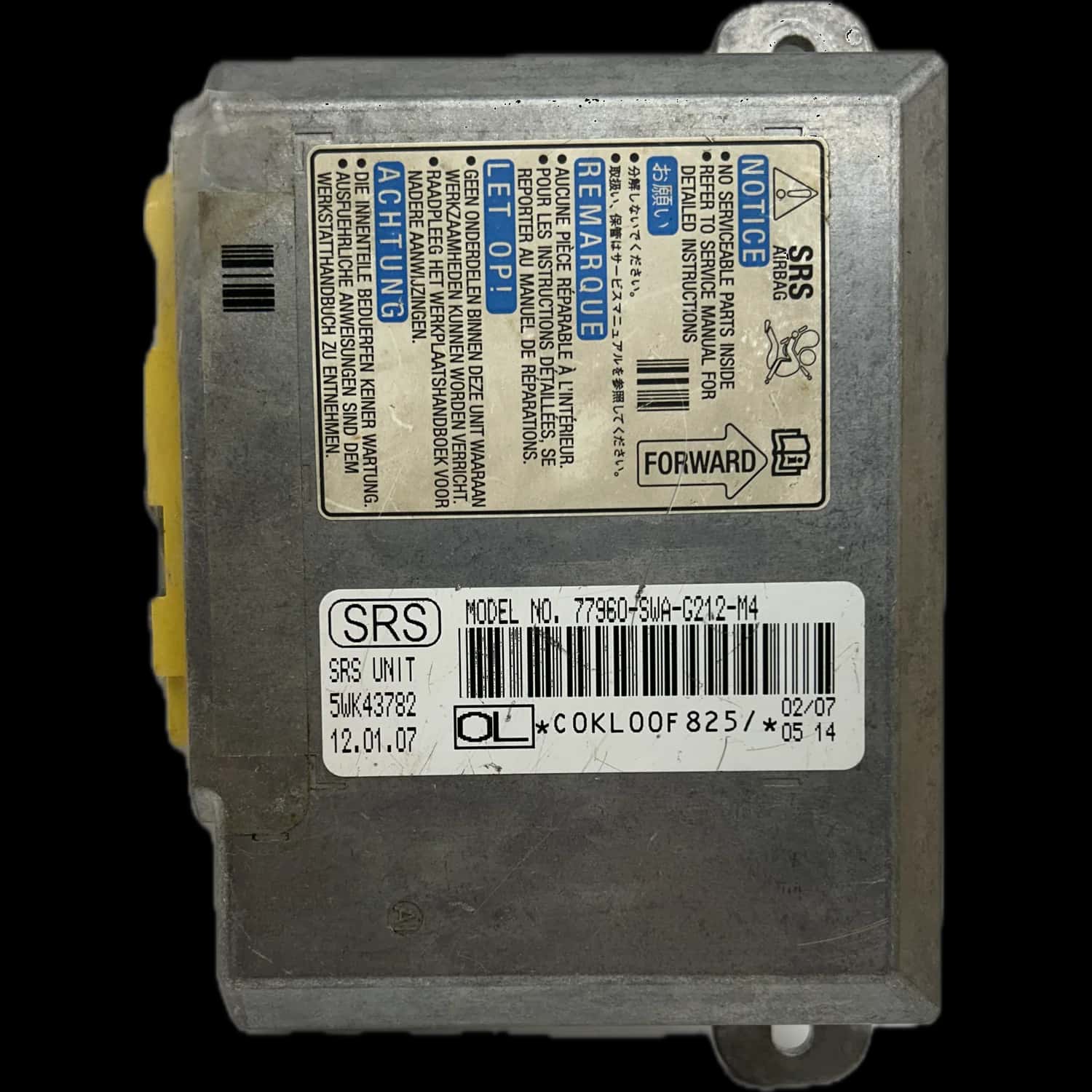
Correctly identifying your Honda CR-V airbag control unit is crucial for a successful repair or replacement. The control unit's part number is the most important reference and is usually located on a sticker directly on the unit. This number ensures exact compatibility with your vehicle model and its specific airbag equipment.
In addition to the part number, the year of manufacture and the vehicle identification number (VIN) of your Honda CR-V play an important role. Since airbag systems and thus also the control units have evolved over the various generations, accurate identification based on this data is essential to ensure that the repaired or replaced control unit functions properly and no longer triggers an error message.
A faulty airbag control unit is often indicated by an illuminated airbag warning light on the dashboard or by specific error codes that can be read during diagnostics. A professional diagnosis helps determine the exact cause of the defect and whether the existing control unit can be repaired.
What airbag equipment does the Honda CR-V have?
The Honda CR-V's airbag configuration varies depending on the model year and trim level. While early models use basic airbag systems, newer generations feature enhanced safety packages with additional airbag modules.
In the first generations of the Honda CR-V, driver and passenger airbags were standard, providing basic protection in frontal collisions. This basic equipment was common for the time and met the safety standards of the production years.
With later generations, especially from the fourth generation onward, airbag equipment was significantly expanded. Side airbags for the driver and front passenger, as well as full-length curtain airbags providing head protection in side collisions and rollovers, became standard. This expansion reflected the growing focus on comprehensive passive safety.
The latest models of the Honda CR-V, such as the sixth-generation, are often equipped with the Honda SENSING 360 safety package. This not only includes advanced driver assistance systems but also optimizes the interaction of the airbag systems with other passive and active safety components. The airbag control units in these vehicles are more complex and manage a multitude of sensors and deployment mechanisms to ensure maximum occupant protection in the event of an accident.
Common fault codes in this category
B1000 (control unit defective)No communication - Control unit defectiveB1187 - Communication between instrument cluster and airbag control unit disrupted (control unit defective)B16151056 - No fault code, fault code without meaning (control unit defective)2025-01-13 - 00:00:00 +01002025-02-13 - 00:00:00 +01002025-07-06 - 00:00:00 +0200
Shipping & repair from Germany
Airbag24 repairs your component in Berlin — usually within 3–4 working days.
Standard shipping within Germany is free; we normally return your part by UPS.
You pay for and insure the inbound shipment to us. On explicit request we ship by express — the extra cost is borne by the customer.
If you withdraw from the contract, you bear the cost of returning the item.