
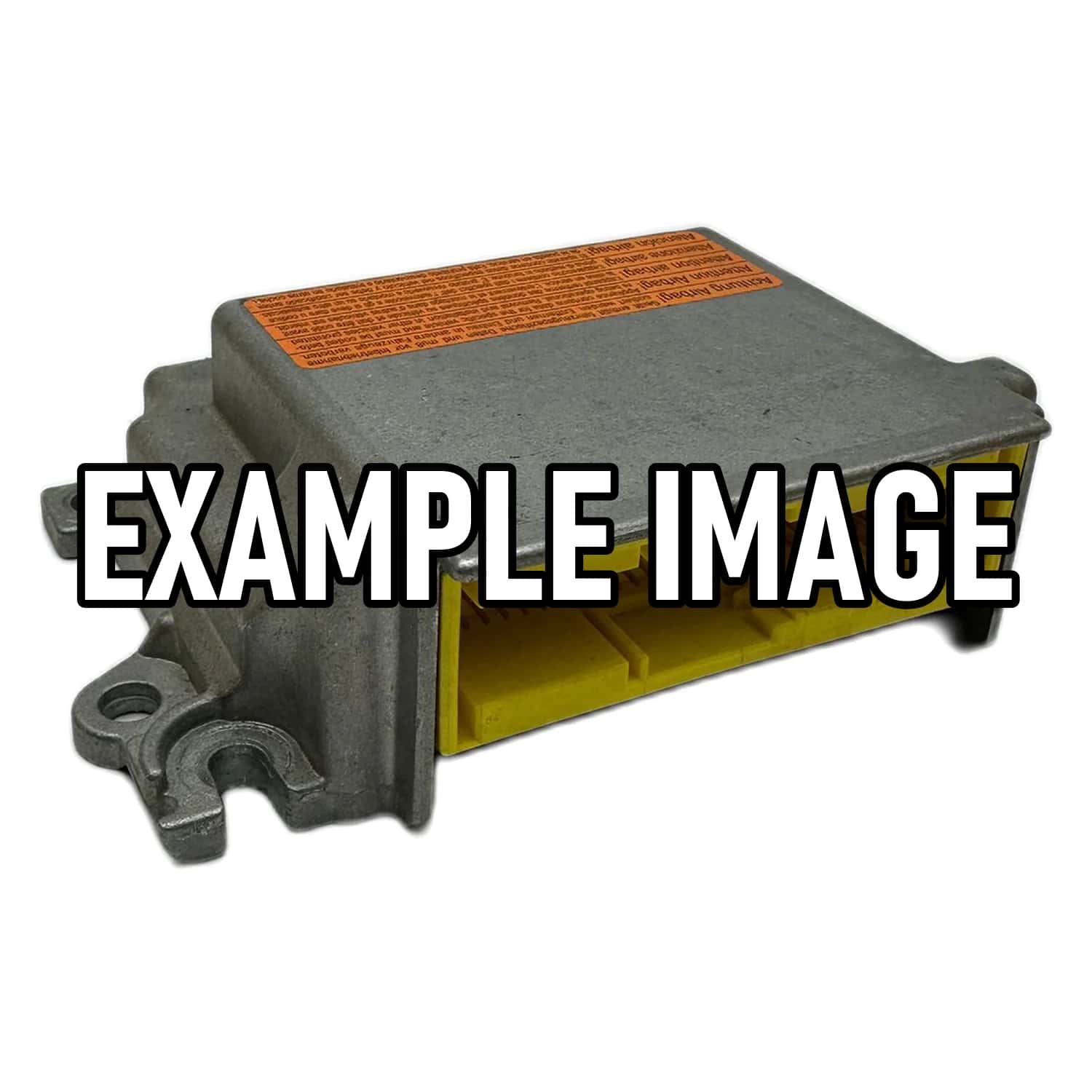
Honda Passport Airbag Control Unit Repair(4)
What should I consider with Honda Passport airbag control units?
The airbag technology used in the Honda Passport varies considerably depending on the model year and generation. Airbag24 professionally repairs control units for all Honda Passport generations with original functionality and a 2-year warranty.
The Honda Passport has a rich production history, which directly impacts its airbag systems. While the first two generations (1993–2004) were based on the Isuzu Rodeo, the Passport, produced since 2018, is a separate Honda development. This evolution is also reflected in the complexity and specific requirements of the airbag control units.
Early Honda Passport models relied on basic airbag systems that primarily controlled driver and passenger airbags. With each new generation, especially from 2018 onward, the systems have become increasingly advanced and now include a multitude of sensors and airbags that require precise control in an emergency. A defective airbag control unit can impair the function of these life-saving systems and must be repaired immediately.
Which Honda Passport generations are there?
The Honda Passport has been produced in four different generations, each with its own airbag control units and safety technologies. The evolution of the safety system reflects technological advances from 1993 to the present.
The first generation of the Honda Passport was produced from 1993 to 1998 and was a rebadged Isuzu Rodeo. These models featured the basic airbag standards of the time. The second generation followed from 1998 to 2004 and was also closely related to the Isuzu Rodeo, but offered slight improvements in performance and features.
After a lengthy hiatus from 2004 to 2018, the Honda Passport returned with its third generation for model years 2019 to 2025. This generation is a separate Honda development and shares the platform with the Honda Pilot and Ridgeline. It features more modern safety systems and a significantly more advanced airbag control unit.
A fourth generation is expected for the 2026 model year, which is expected to integrate even more complex airbag systems and enhanced safety features. Each of these generations requires specialized expertise and diagnostic tools for repairing the airbag control unit.
How do I identify my Honda Passport airbag control unit?
Honda Passport airbag control units can be precisely identified by their unique part number, model year, and vehicle identification number (VIN). Each vehicle generation, and sometimes even different trim levels, use specific control unit variants for optimal compatibility.
The part number of the airbag control unit is the most important identifier and is located directly on the module housing. The control unit is often installed under the driver's seat, under the center console, or near the dashboard. The exact year of your Honda Passport is also crucial, as the installed components can change even within a generation.
The Vehicle Identification Number (VIN) provides additional security for identification, as it contains all relevant information about your specific vehicle. It helps account for even the smallest differences in equipment or revisions of the control unit. A correctly identified control unit is the foundation for a successful repair and restoring full safety functionality to your Honda Passport.
What airbag features does the Honda Passport have?
The Honda Passport's airbag configuration varies greatly depending on the model year and trim level. While early models used basic airbag systems, newer generations feature enhanced safety packages with additional airbag modules and intelligent control systems.
The first and second generation (1993-2004) of the Honda Passport came standard with frontal airbags for the driver and front passenger. These systems were advanced for the time and provided basic protection in frontal impacts.
With the introduction of the third generation (from model year 2019), the airbag equipment of the Honda Passport has evolved significantly. These models feature an advanced airbag system that typically includes the following airbags: front airbags for the driver and front passenger, side airbags for the driver and front passenger, and knee airbags for the driver and front passenger. In addition, improved front passenger airbags have been introduced, specifically designed to minimize the risk of head and neck injuries in a collision.
The third-generation Honda Passport is also integrated into the comprehensive Honda Sensing® safety package. This package includes not only passive safety systems such as airbags, but also a range of active driver assistance systems designed to reduce the risk of collisions. The airbag control unit plays a central role in coordinating and triggering these complex safety systems in the event of an accident.
Common fault codes in this category
Shipping & repair from Germany
Airbag24 repairs your component in Berlin — usually within 3–4 working days.
Standard shipping within Germany is free; we normally return your part by UPS.
You pay for and insure the inbound shipment to us. On explicit request we ship by express — the extra cost is borne by the customer.
If you withdraw from the contract, you bear the cost of returning the item.