
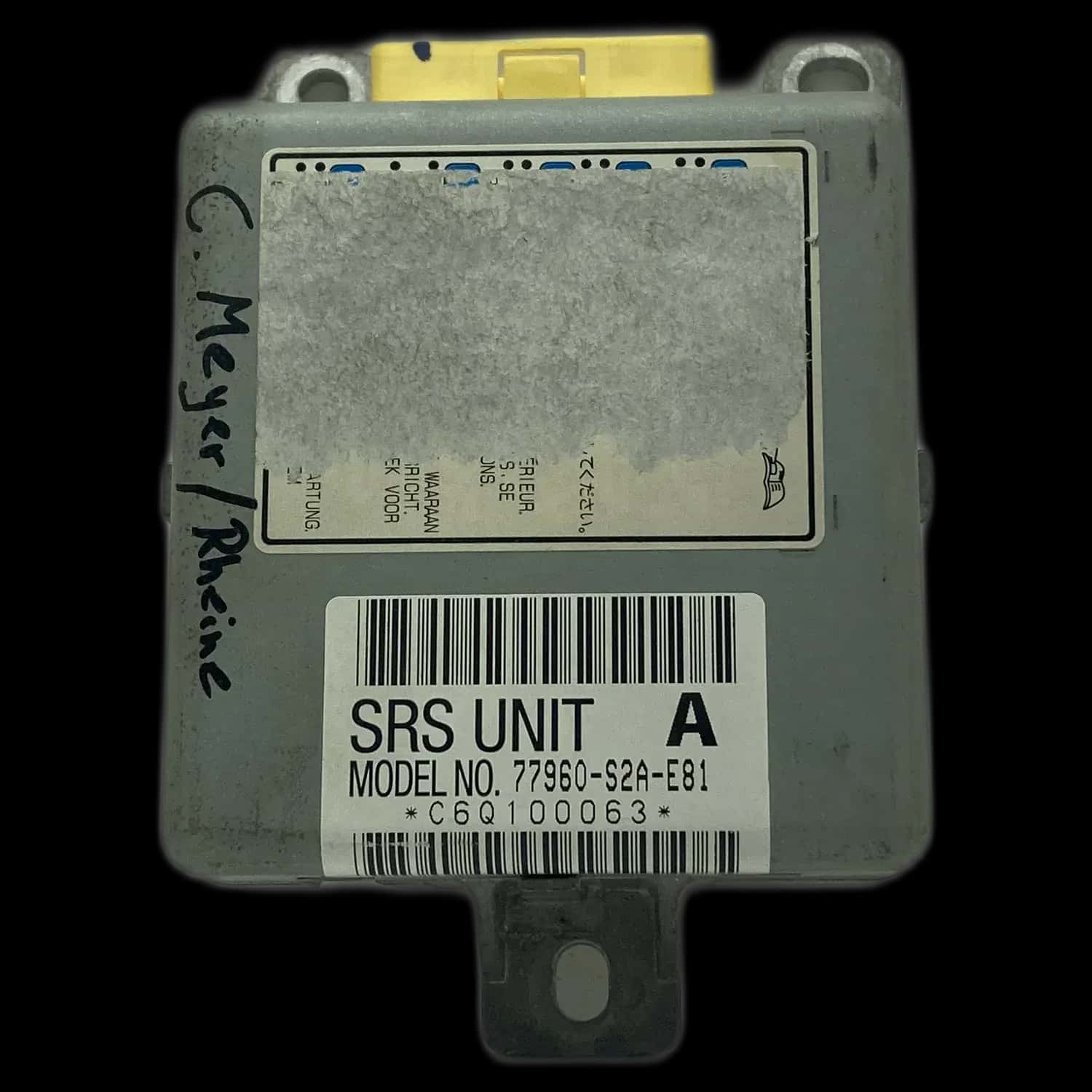
Honda S2000 airbag control unit repair(2)
2 products
What should I consider with Honda S2000 airbag control units?
The airbag technology used in the Honda S2000 varies slightly depending on the production period and variant, but driver and passenger airbags were consistently fitted as standard. Airbag24 professionally repairs control units for all Honda S2000 variants with original functionality and a 2-year warranty.
The Honda S2000 was produced from 1999 to 2009 and is divided into two main variants: the AP1 (1999–2003) and the AP2 (2003/2004–2009), each of which may have specific adaptations to the airbag control unit (SRS module).
The development of the airbag system in the S2000 reflected the safety standards of the time, with a focus on basic protection for the driver and front passenger. The airbag control unit is responsible for the reliable control of these systems in all model years of the Honda S2000 AP1 and AP2.
It is particularly worth noting that the airbags of the AP1 model may have a certain compatibility with those of the first generation of the Honda Insight, which can be advantageous when repairing defective units and sourcing spare parts.
Which Honda S2000 generations are there?
The Honda S2000 was produced in two main variants, AP1 and AP2, each of which may have specific airbag control unit numbers and calibrations. The development of the safety system reflects technological advances from 1999 to 2009.
The first variant, the AP1, was produced from 1999 to 2003 (in some markets until 2004). It is known for its high-revving F20C engine and sporty, precise chassis.
The second variant, the AP2, replaced the AP1 and was built from 2003/2004 until production ended in 2009. The AP2 received significant technical and visual facelifts, including a larger F22C1 engine, a revised transmission and chassis, and minor modifications to the body and interior.
Although Honda does not speak of official "generations" in the traditional sense, AP1 and AP2 mark significant development stages, which may also entail differences in the installed electronic components, including the airbag control unit.
How do I identify my Honda S2000 airbag control unit?
Honda S2000 airbag control units can be uniquely identified by their specific part number, model year, and vehicle identification number (VIN). Each variant (AP1 or AP2) typically uses specific control unit variants for optimal compatibility with the respective vehicle systems.
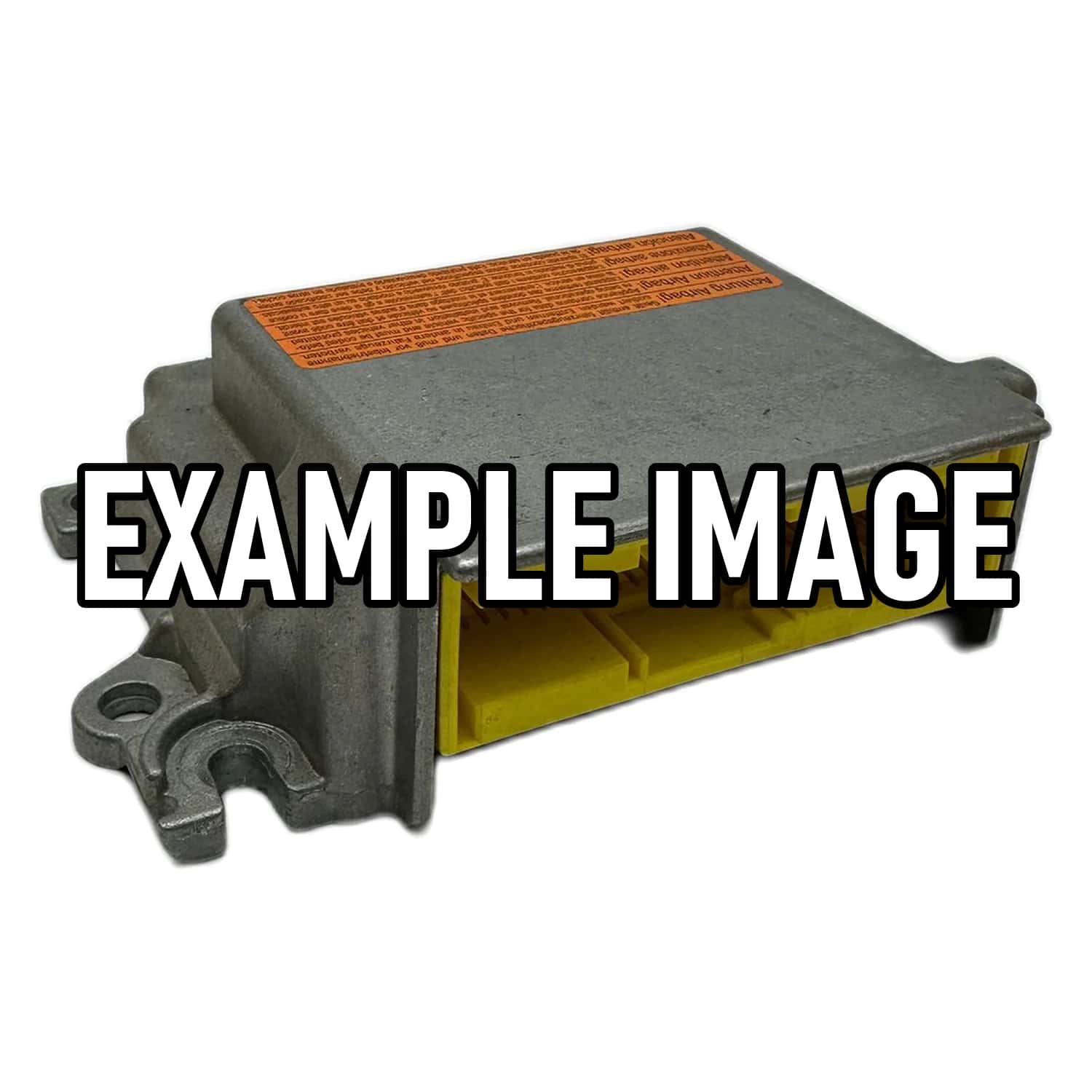
The airbag control unit's part number is the most important identifier. It is located directly on the module's housing, which is usually installed under the center console or in the carpet near the dashboard.
In addition to the part number, the exact model year of the Honda S2000 is crucial. Although both variants share similar basic airbag system functions, internal software versions and hardware revisions can vary between AP1 and AP2, as well as within production years.
When repairing a defective airbag control unit, it is essential to know the exact part number and year of manufacture to ensure correct identification and repair. This ensures that the repaired module is a perfect fit for the specific model year of your Honda S2000 AP1 or AP2 and that the safety system's full functionality is restored.
What airbag equipment does the Honda S2000 have?
The Honda S2000's airbag system is standard across the board, including a driver and passenger airbag in all model years and variants. There were no optional extended airbag packages or additional airbags such as side or knee airbags.
The Honda S2000, designed as a purist sports roadster, focused on essential safety features. Therefore, both driver and passenger airbags were standard in every Honda S2000, regardless of whether it was an AP1 or AP2.
This means that the airbag control unit (SRS module) in all Honda S2000 models controls and monitors these two primary airbags. Malfunctions in this control unit can therefore directly affect the safety of both occupants.
The focus on this basic airbag equipment underlines the driver-oriented philosophy of the S2000, which emphasized driving feel and driving dynamics while providing a solid basis of passive safety.
A defective airbag control unit in your Honda S2000 can be indicated by warning lights illuminating in the cockpit and should be repaired immediately to restore the full functionality of the safety system.
Common fault codes in this category
Shipping & repair from Germany
Airbag24 repairs your component in Berlin — usually within 3–4 working days.
Standard shipping within Germany is free; we normally return your part by UPS.
You pay for and insure the inbound shipment to us. On explicit request we ship by express — the extra cost is borne by the customer.
If you withdraw from the contract, you bear the cost of returning the item.