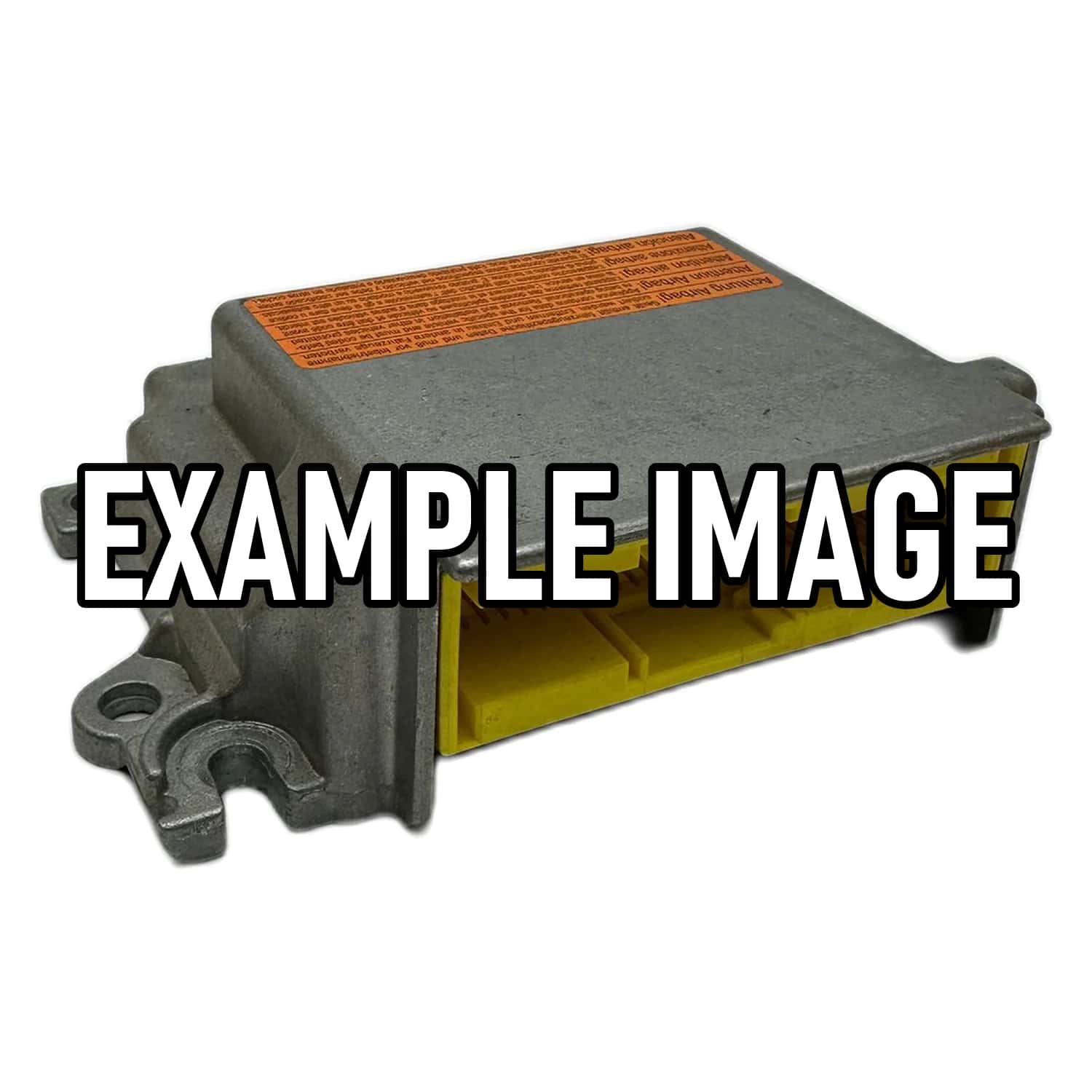
airbag control unit repair Hummer H3 SUV
from€66.39
 Quality since 2002
The airbag technology used in the Hummer H3, a critical component of the passive safety system, requires specialized repair procedures in the event of a malfunction or deployment. This robust technology was continuously adapted from 2005 to 2010 to meet the demands of this off-road vehicle.
The Hummer H3, a distinctive midsize SUV, was produced in the USA from 2005 to 2010 and was available in Germany from summer 2006 to 2010. In 2009, the model underwent a significant facelift, which included, among other things, an expansion of the engine lineup to include a more powerful V8 engine. These developments were also reflected in the technical requirements of the safety systems.
The airbag control unit, also known as the SRS SDM (Supplemental Restraint System Sensing and Diagnostic Module), is the central control unit for all airbags and seatbelt pretensioners in the Hummer H3. It precisely deploys the restraint systems in the event of an accident. Due to its critical function and the fact that it frequently needs to be replaced or reset after deployment or in the event of electronic errors such as internal defects or crash data, repairing the Hummer H3 airbag control unit is a specialized and frequently requested service. Professional repair ensures the restoration of full functionality and thus the safety of your vehicle.
The Hummer H3 was designed and produced as a single generation. Within this generation, however, there was a significant facelift in 2009, which brought technical updates and new engines, thus creating various variants.
Production of the Hummer H3 was concentrated on a single, continuously developed generation. Within this model line, however, there were specific variants such as the classic H3 SUV station wagon, the practical H3T pickup version, and the more powerful H3 Alpha model, which was equipped with a 5.3-liter V8 engine from 2009 onwards. This diversity underscores the H3's adaptability to different needs, from rugged off-road adventures to moderate everyday usability.
The evolution of the safety system in the Hummer H3 has continued within this single generation. While the basic airbag architecture—with standard front airbags—remained constant, the airbag control units and their software have been continually adapted to reflect technical innovations and the specific requirements of the various model variants. This ensures that the passive safety systems are always optimally tailored to the respective vehicle configurations.
Clearly identifying your Hummer H3 airbag control unit is essential for proper repair or replacement. This is primarily done using the part number printed on the module itself, along with the year of manufacture and the vehicle identification number (VIN) of your Hummer H3.
Each airbag control unit in the Hummer H3 has a specific part number that serves as a unique identifier. This number is crucial for determining the module's exact hardware and software version and ensuring its compatibility with your vehicle. Even though the Hummer H3 only encompasses one generation, minor changes to the control units may have occurred over the course of production, which are recorded via the part number.
The airbag control unit in the Hummer H3 is strategically located beneath the center console for optimal access and protection. Identification and removal often require disassembling parts of the center console. Precise identification using part number, year of manufacture, and VIN ensures that, in the event of a necessary repair or reset of the Hummer H3 airbag control unit, the correct technical specifications are considered to ensure the full and safe functionality of the airbag system.
The Hummer H3 comes standard with a comprehensive airbag system, primarily comprising front airbags for the driver and front passenger. Depending on the trim level and model year, the vehicles could be optionally equipped with additional safety features such as roof airbags to further optimize occupant protection.
As a rugged SUV designed for off-road use, the Hummer H3 placed great emphasis on occupant safety. Standard equipment included reliable front airbags, which serve to absorb impact energy and minimize serious injuries in the event of a frontal collision. These systems are an integral part of passive safety and are precisely controlled by the airbag control unit.
For enhanced safety, Hummer H3 models could be optionally equipped with roof-mounted airbags. These protect occupants in side collisions and rollovers by forming a protective barrier along the window line. The central airbag control module (SRS SDM) continuously processes data from various impact sensors in the vehicle as well as from the seatbelt pretensioners to deploy the appropriate airbag modules and seatbelt pretensioners at precisely the right time in the event of an accident. Professional repair of this critical component is therefore essential to ensure the long-term functionality and safety of the Hummer H3 airbag system.
Airbag24 repairs your component in Berlin — usually within 3–4 working days.
Standard shipping within Germany is free; we normally return your part by UPS.
You pay for and insure the inbound shipment to us. On explicit request we ship by express — the extra cost is borne by the customer.
If you withdraw from the contract, you bear the cost of returning the item.