
Hyundai Accent airbag control unit repair(5)
5 products
What should I pay attention to with Hyundai Accent airbag control units?
The airbag technology used in the Hyundai Accent varies depending on the model year. Professional repair of airbag control units in all Hyundai Accent generations ensures true-to-original functionality.
The production history of the Hyundai Accent stretches from 1994 to 2023 and encompasses five different generations. With each new model series, not only were the engines and equipment improved, but the safety features were also continuously developed.
The evolution of the airbag system in the Hyundai Accent reflects technological advances in the automotive industry. While early models featured only basic airbag equipment, later generations feature comprehensive safety systems that also require more complex airbag control units.
Which Hyundai Accent generations are there?
The Hyundai Accent has been produced in five generations, each using different airbag control units. The development of the safety system reflects technological advances from 1994 to 2023.
The first generation, the Hyundai Accent X3 (approx. 1994–1999), established the Accent as an affordable subcompact vehicle. It was followed by the second-generation Accent LC (approx. 2000–2005), which offered improvements in comfort and design.
The third generation, the Accent MC (approx. 2006–2011), featured more modern features and improved handling. The fourth generation Accent RB (approx. 2011–2017) introduced enhanced safety features that met the standards of its time.
The final model series is the Hyundai Accent HCR (approx. 2018–2023), which was designed as a modern subcompact sedan until production ceased in 2023. Each of these generations required specific adaptations to the airbag control units to ensure compatibility with the respective vehicle systems and sensors.
How do I identify my Hyundai Accent airbag control unit?
Hyundai Accent airbag control units can be uniquely identified by part number, model year, and vehicle identification number. Each generation uses specific control unit variants for optimal compatibility.
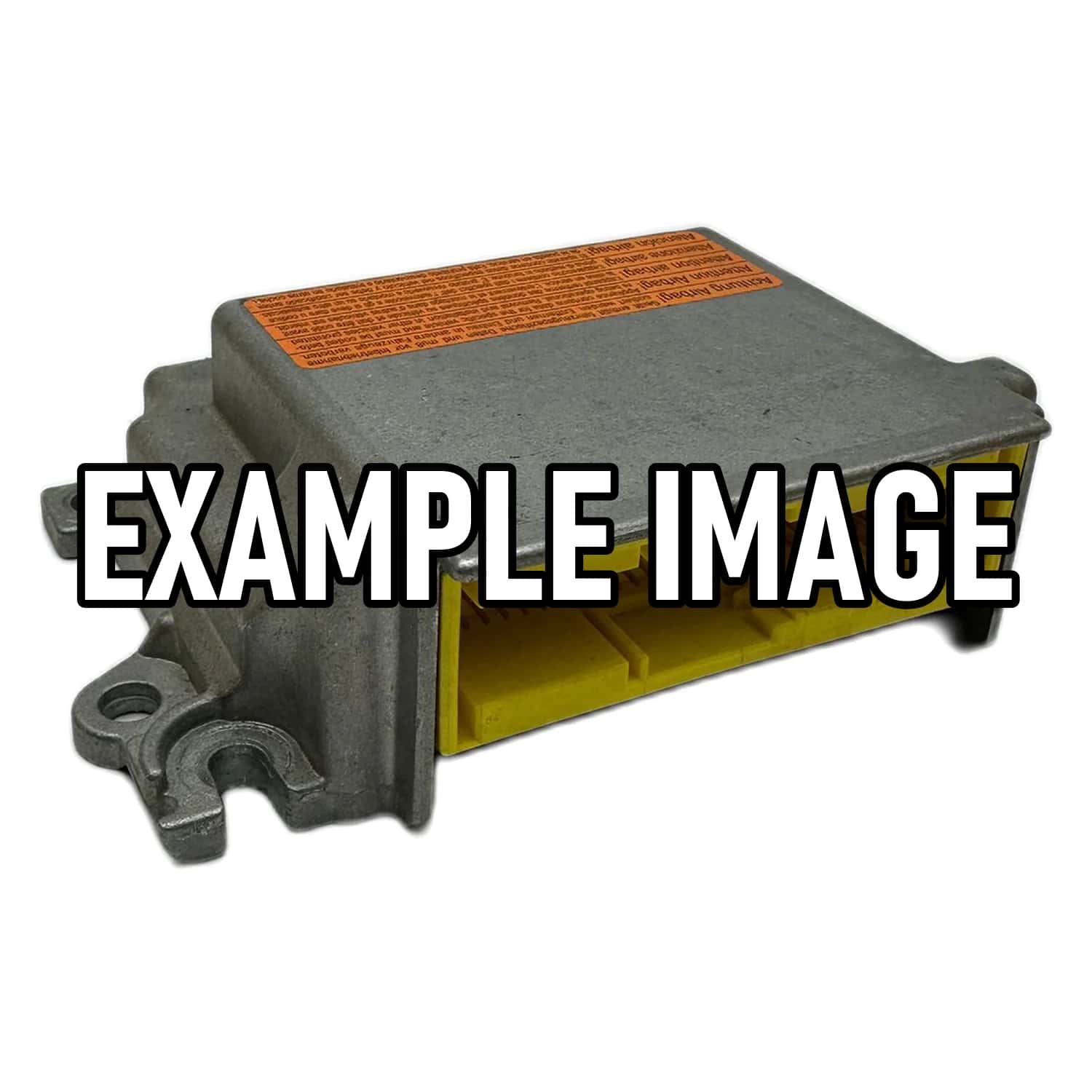
The airbag control module part number is the most important identifier and is located directly on the module housing. This number is crucial for finding the exact replacement or repair module for your Hyundai Accent model year and trim level.
Additionally, the vehicle's year of manufacture and the vehicle identification number (VIN) can be informative, as certain control units were only installed during specific production periods. When repairing or resetting a defective Hyundai Accent airbag control unit, this precise identification is essential to ensure the module is plug-and-play ready for use after service.
What airbag equipment does the Hyundai Accent have?
The airbag configuration of the Hyundai Accent varies depending on the model year and trim level. While early models use basic airbag systems, newer generations feature enhanced safety packages with additional airbag modules.
In the first models of the Hyundai Accent X3 (1994–1999), front airbags were usually standard; side airbags were extremely rare or unavailable in this generation. With the introduction of the Accent LC (2000–2005), front airbags remained standard, while side airbags remained mostly optional or unavailable.
The Accent MC (2006–2011) introduced side and even curtain airbags alongside standard front airbags, depending on the market and trim level. This trend continued with the Accent RB (2011–2017), where front and side airbags increasingly became standard, and curtain airbags were available as an option.
The most modern generation, the Accent HCR (2018–2023), is typically equipped with a comprehensive safety package that includes front, side, and curtain airbags as standard. The airbag control unit (SRS module) plays a central role in all generations, as it stores crash data after an accident and is responsible for deploying the airbags and seatbelt pretensioners. Therefore, a professional repair or reset of the defective airbag control unit after an accident is essential to restore the safety system's full functionality.
Shipping & repair from Germany
Airbag24 repairs your component in Berlin — usually within 3–4 working days.
Standard shipping within Germany is free; we normally return your part by UPS.
You pay for and insure the inbound shipment to us. On explicit request we ship by express — the extra cost is borne by the customer.
If you withdraw from the contract, you bear the cost of returning the item.