
Hyundai Bayon airbag control unit repair(1)
1 product
What should I pay attention to with Hyundai Bayon airbag control units?
The airbag technology used in the Hyundai Bayon is modern and varies slightly depending on the model year. Airbag24 professionally repairs control units for all Hyundai Bayon models with original functionality and a 2-year warranty.
Since its market launch in 2021, the Hyundai Bayon has been a prime example of a contemporary B-segment SUV that prioritizes comprehensive safety. The airbag control unit plays a central role, as the brain of the passive safety system, coordinating and deploying all airbags and seatbelt pretensioners.
The airbag system development in the Hyundai Bayon reflects the latest technology, with a focus on occupant protection through precise sensors and rapid deployment mechanisms. Although the Bayon is a relatively new model series, it already underwent a facelift in 2024, which could lead to potential software or hardware adjustments to the airbag control unit.
Which Hyundai Bayon generations are there?
The Hyundai Bayon has been produced in one generation so far, which received a significant facelift in 2024. The development of the safety system reflects the technological progress from its 2021 launch to the current model.
The Hyundai Bayon began production in 2021 as a completely new model in the South Korean manufacturer's portfolio. As a compact B-segment SUV, it was designed specifically for the European market and positioned as the entry-level model in Hyundai's SUV range.
Although formally a single generation of the Hyundai Bayon, the 2024 facelift should be considered a significant evolution. This update brought not only visual changes but also technical improvements that could affect all vehicle electronics, including the airbag control unit.
Continuous development is reflected in the constant optimization of safety features and the associated control units, which are always kept at the cutting edge of technology to ensure the highest standards of protection.
How do I identify my Hyundai Bayon airbag control unit?
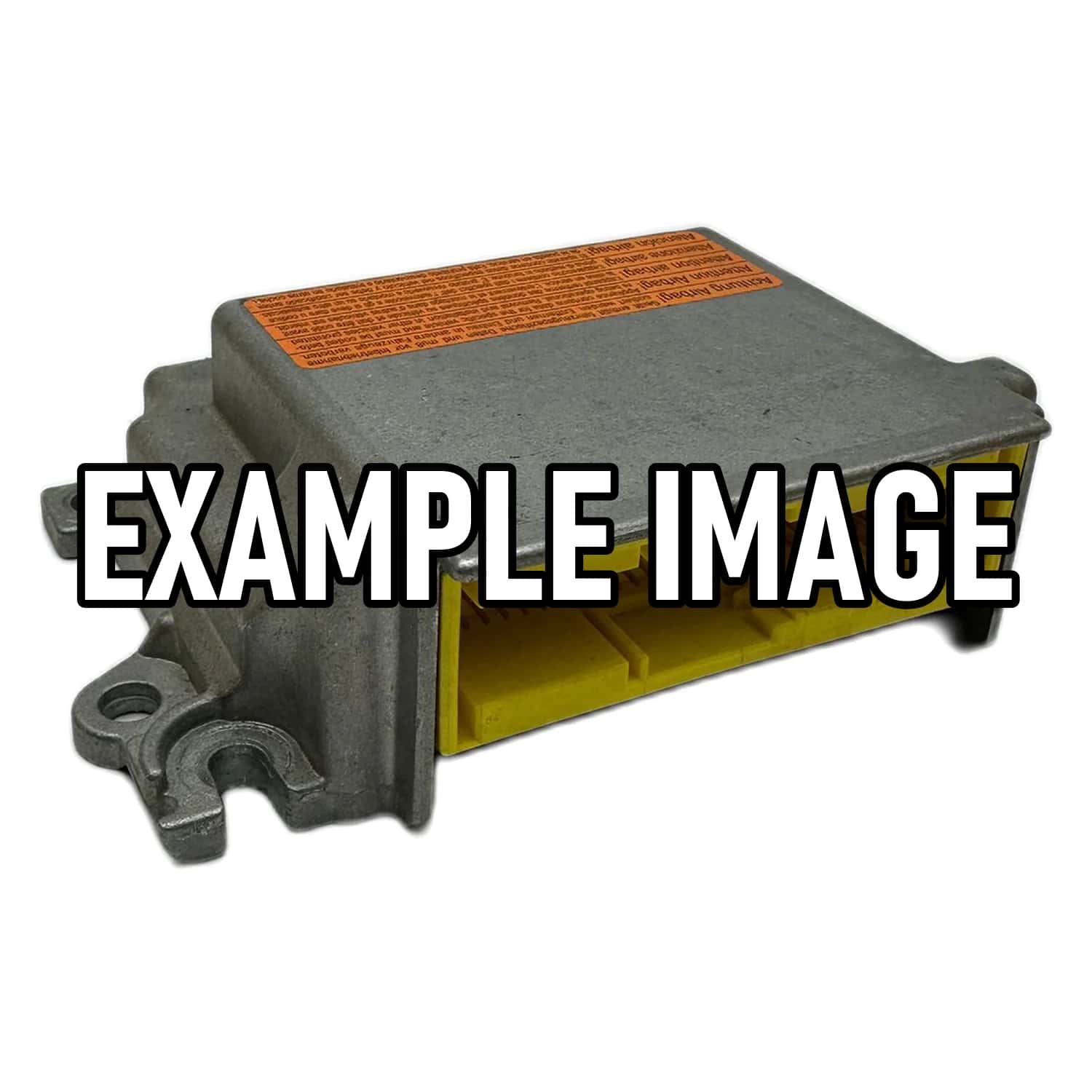
Hyundai Bayon airbag control units can be uniquely identified by part number, year of manufacture, and vehicle identification number (VIN). Each control unit is specifically configured for the safety systems installed in the vehicle and must fit perfectly.
Precise identification of your Hyundai Bayon airbag control unit is crucial for a successful repair or replacement. The most important identifier is the part number, usually located on a white sticker directly on the control unit. This alphanumeric combination provides information about the model, version, and software version of the unit.
In addition to the part number, the exact year of manufacture of your Hyundai Bayon and the complete vehicle identification number (VIN) are essential. This data helps account for subtle differences between control units from different production periods and after the 2024 facelift. Airbag control units can be defective due to crash data after an accident or internal malfunctions that lead to error messages on the instrument panel.
Correct identification ensures that the repaired or replaced airbag control unit is fully compatible and can optimally control all safety functions of your Hyundai Bayon.
What airbag equipment does the Hyundai Bayon have?
The Hyundai Bayon's airbag equipment is comprehensive and designed to protect its occupants, with standard airbags and advanced safety packages. Newer generations and trim levels may feature additional airbag modules and driver assistance systems.
The Hyundai Bayon was designed from the ground up with solid passive safety features that received high ratings in the 2021 Euro NCAP test. Standard equipment includes front airbags for the driver and front passenger, providing vital protection in the event of a frontal impact.
In addition, the Hyundai Bayon features side airbags for upper body and pelvic protection of front passengers, as well as full-length curtain airbags that deploy along the side windows and protect occupants in all seats from head injuries. An integrated CRS airbag cut-off switch for the front passenger seat allows for the secure installation of child seats in the front passenger seat.
In addition to the airbags, the Hyundai Bayon's safety is complemented by a range of active driver assistance systems (ADAS) that are networked via the airbag control unit and other sensors. These include systems such as City Emergency Braking (FCA) and Lane Keeping Assist (LKA), which act preventively to avoid or mitigate accidents.
The Hyundai Bayon's comprehensive safety features, controlled by the central airbag control unit, contribute significantly to appealing to the target group of young families and older couples with a high level of protection and reliability.
Common fault codes in this category
Shipping & repair from Germany
Airbag24 repairs your component in Berlin — usually within 3–4 working days.
Standard shipping within Germany is free; we normally return your part by UPS.
You pay for and insure the inbound shipment to us. On explicit request we ship by express — the extra cost is borne by the customer.
If you withdraw from the contract, you bear the cost of returning the item.