
Hyundai H-1 airbag control unit repair(2)
2 products

What should be considered with Hyundai H-1 airbag control units?
The airbag technology used in the Hyundai H-1 varies depending on the year and model. A professional Hyundai H-1 airbag control unit repair ensures that your vehicle's original functionality and safety are restored, backed by a comprehensive warranty.
The Hyundai H-1 was first introduced in 1997 and has since established itself as a versatile MPV and minibus. Over the years, it has undergone continuous development, which is also reflected in the safety systems installed. Its production history demonstrates continuous adaptation to modern safety standards and vehicle requirements.
With each generation of the Hyundai H-1, the airbag systems have been revised and improved. From basic driver and passenger airbags in the early models to more complex systems with additional modules in the newer versions, occupant safety technology has undergone significant evolution. A defective airbag control unit therefore requires a specific repair that takes the specific model year and system architecture into account.
Which Hyundai H-1 generations are there?
The Hyundai H-1 has been produced in three main generations, each using different airbag control units. The development of the safety system reflects technological advances from 1997 to the present.
The first generation of the Hyundai H-1 (1997-2004), originally known as the Hyundai Starex, laid the foundation for the model's popularity. These early vehicles featured airbag control units that focused on basic impact detection and front airbag activation. Repairing these units requires specific expertise in the older electronics.
The second generation (2004-2015) brought a comprehensive overhaul that significantly enhanced not only the comfort but also the safety features of the Hyundai H-1. The airbag control units of this era became more complex to support advanced sensors and, where appropriate, optional side airbags. Repairing a defective control unit of this generation requires precise diagnosis and expert knowledge.
The third generation of the Hyundai H-1 (since 2015), which received an update in 2019 with new equipment and comfort features, relies on even more modern safety technologies. The airbag control units installed here are often integrated into a comprehensive system of sensors and control units that also control seat belt pretensioners and, if applicable, other airbag modules. This advanced technology requires specialized knowledge for successful repair.
In our shop, you'll also find specific series, such as the Hyundai H-1-A1 and Hyundai H-1-TQ, which cover various model variants or model year ranges of the Hyundai H-1. We also offer professional airbag control unit repairs for these models.
How do I identify my Hyundai H-1 airbag control unit?
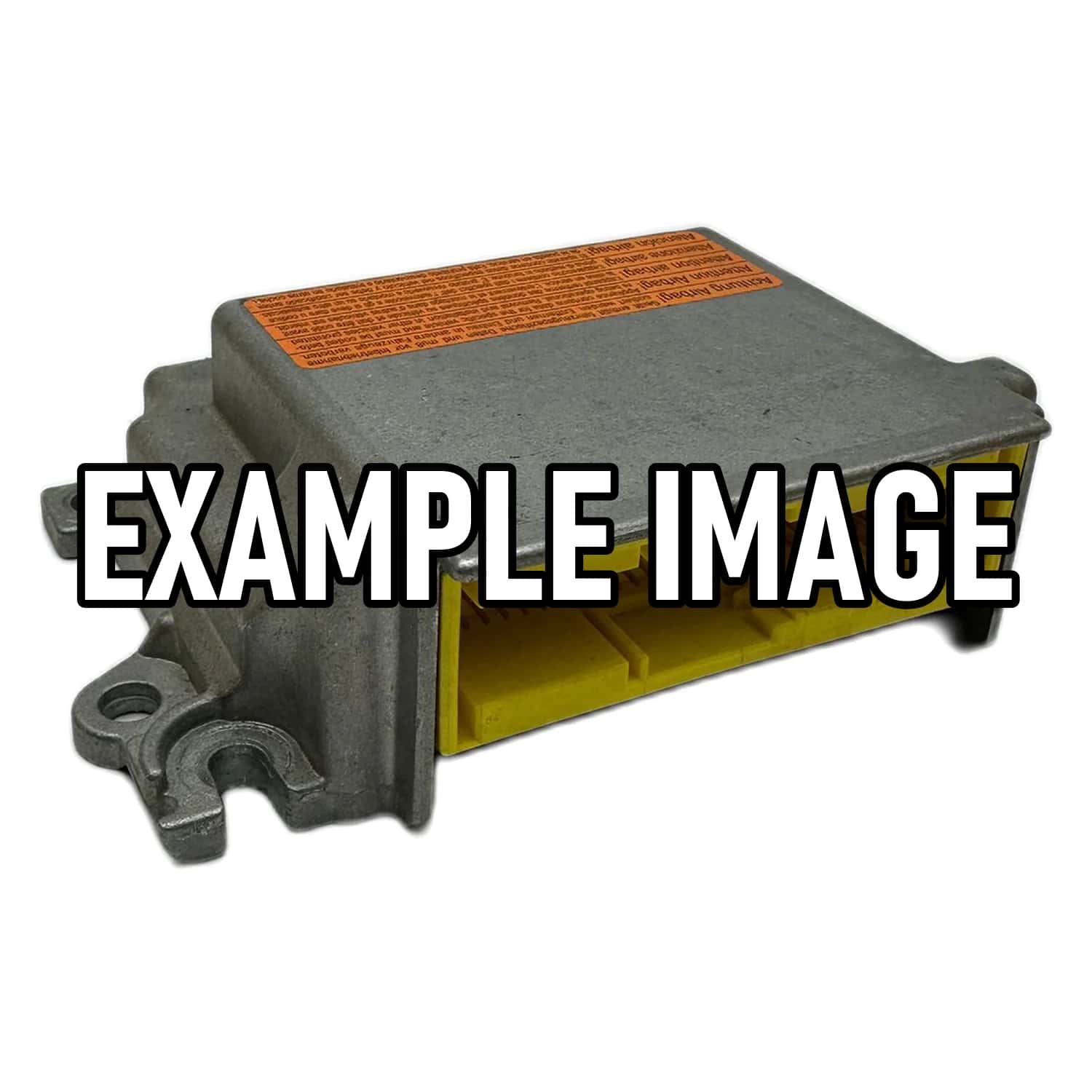
Hyundai H-1 airbag control units can be uniquely identified by their unique part number, model year, and vehicle identification number (VIN). Each generation of the H-1 uses specific control unit variants for optimal compatibility and functionality of the safety system.
To ensure a correct repair of your Hyundai H-1 airbag control unit, precise identification of the component is essential. The control unit's part number is the most important clue; it is usually located on a sticker directly on the unit. Additionally, the exact year of your Hyundai H-1 and the vehicle identification number (VIN) play a key role in determining the correct control unit version and its compatibility.
A faulty airbag control unit can cause various error codes that indicate a problem with the safety system, such as an illuminated airbag warning light. Professional repair relies on precise identification of the unit to ensure the correct components and software updates are applied for your specific Hyundai H-1 model. This ensures the restoration of original functionality.
What airbag equipment does the Hyundai H-1 have?
The airbag configuration of the Hyundai H-1 varies depending on the model year, trim level, and the specific market for which the vehicle was produced. While early models typically use basic airbag systems, newer generations feature enhanced safety packages with additional airbag modules for more comprehensive protection.
In the first generations of the Hyundai H-1, standard equipment was usually limited to driver and passenger airbags. These basic systems were designed to provide basic protection in a frontal impact and were coordinated by the central airbag control unit.
With the introduction of the second and third generations, as well as during various facelifts, the Hyundai H-1's airbag equipment was increasingly expanded. In some models, such as the H-1 2.5 Diesel Bus, side airbags were available as an option or even as standard. These additional airbags significantly increase protection in side collisions and require more complex control units capable of managing multiple sensors and actuators.
As a large-capacity van or minibus designed for both passenger transport (H-1 Travel) and goods transport (H-1 Cargo), the Hyundai H-1 places great importance on the safety of its occupants and cargo. A functioning airbag system is a key component that contributes significantly to the vehicle's reliability and comfort. Prompt repair of a defective airbag control unit is therefore essential to ensure the vehicle's full safety performance.
Shipping & repair from Germany
Airbag24 repairs your component in Berlin — usually within 3–4 working days.
Standard shipping within Germany is free; we normally return your part by UPS.
You pay for and insure the inbound shipment to us. On explicit request we ship by express — the extra cost is borne by the customer.
If you withdraw from the contract, you bear the cost of returning the item.