
Hyundai i10 airbag control unit repair(3)

What should I pay attention to with Hyundai i10 airbag control units?
The airbag technology used in the Hyundai i10 varies depending on the year and model generation. Hyundai i10 airbag control units can be professionally repaired with original functionality to restore the vehicle's full safety.
The Hyundai i10 is a popular small car that has been in production since 2007 and has spanned several generations. Each model series has brought specific adjustments to safety technology, including the airbag control unit.
The airbag system, in particular, has evolved with each new model to meet increasing safety requirements. This applies not only to the number of airbags, but also to the complexity of the associated control units and their software.
Problems with the airbag control unit in the Hyundai i10 are often the result of accidents, which lead to crash data being stored. Defective seatbelt pretensioners or switches can also trigger error messages affecting the control unit and activating the airbag warning light.
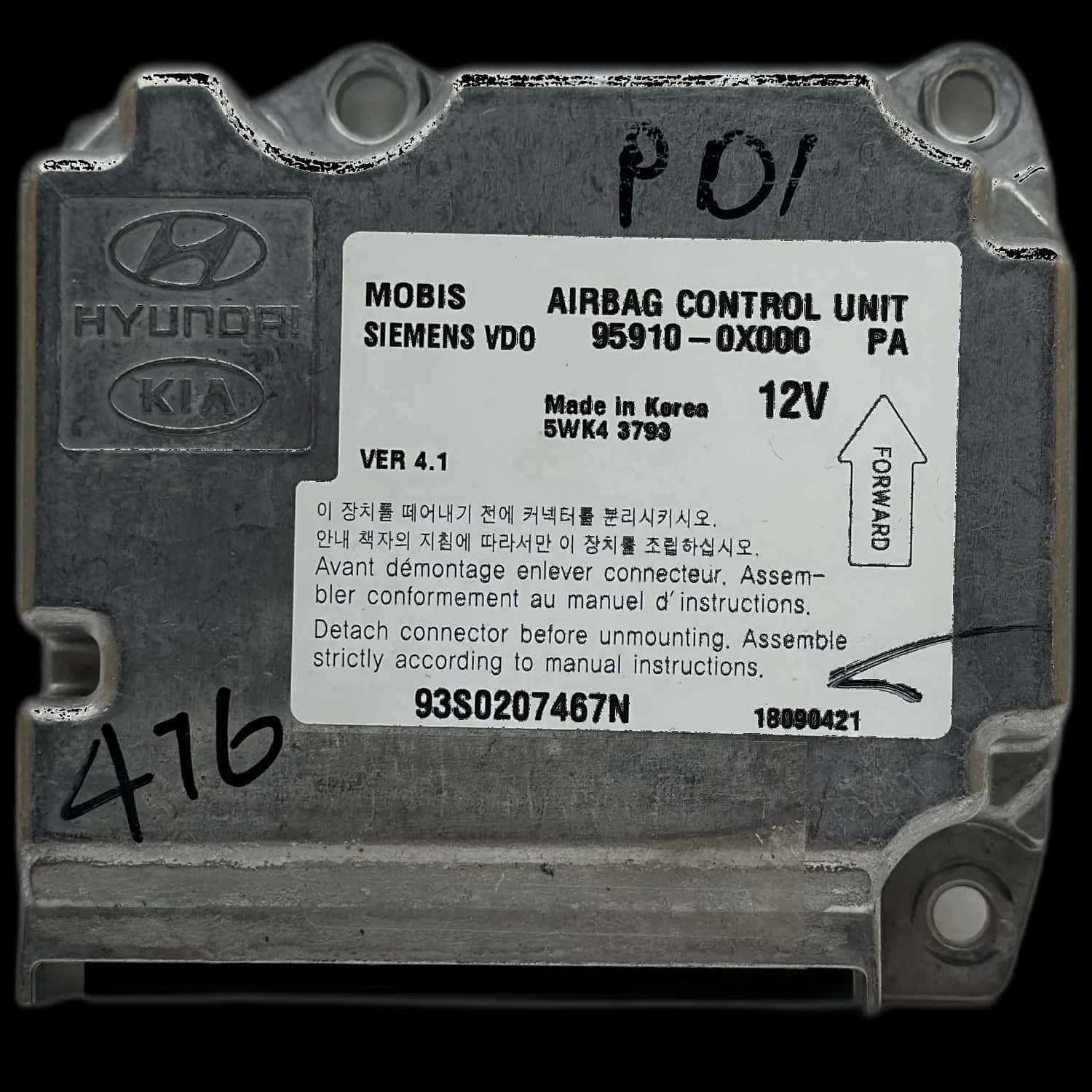
Repairing such control units, such as part number 95910-0X100 from older i10 models of the PA generation, typically involves reading error codes and precisely erasing crash data. This process ensures that the system is fully functional again after an event.
Repairing a Hyundai i10 airbag control unit typically takes 3 to 5 business days. Data transfer, also known as cloning, is also available to facilitate vehicle integration and avoid the need for complex recoding.
Which Hyundai i10 generations are there?
The Hyundai i10 was launched in three main production periods, corresponding to different generations and each using specific airbag control units. The development of the safety system reflects technological advances from 2007 to the present.
The first generation of the Hyundai i10, known internally as the PA, was produced from approximately 2007 to 2013. These models laid the foundation for the i10's success as a compact city car in the A-segment.
The second generation comprised the IA and BA series, which rolled off the production line from approximately 2013 to 2019. These models featured innovations in design and technology, which are also reflected in the corresponding control unit variants.
The third generation of the Hyundai i10 was introduced in 2019, received a facelift in 2023, and is currently in production. This ongoing development ensures that the i10 always meets the latest safety standards.
Although there are six generations of the i10 in total, these are the primary development phases that brought crucial changes to the vehicle and its safety systems, including the airbag control unit.
For the professional repair of airbag control units, we cover the relevant series hyundai-i10-pa, hyundai-i10-ia and hyundai-i10-ba in our shop to ensure comprehensive compatibility.
How do I identify my Hyundai i10 airbag control unit?
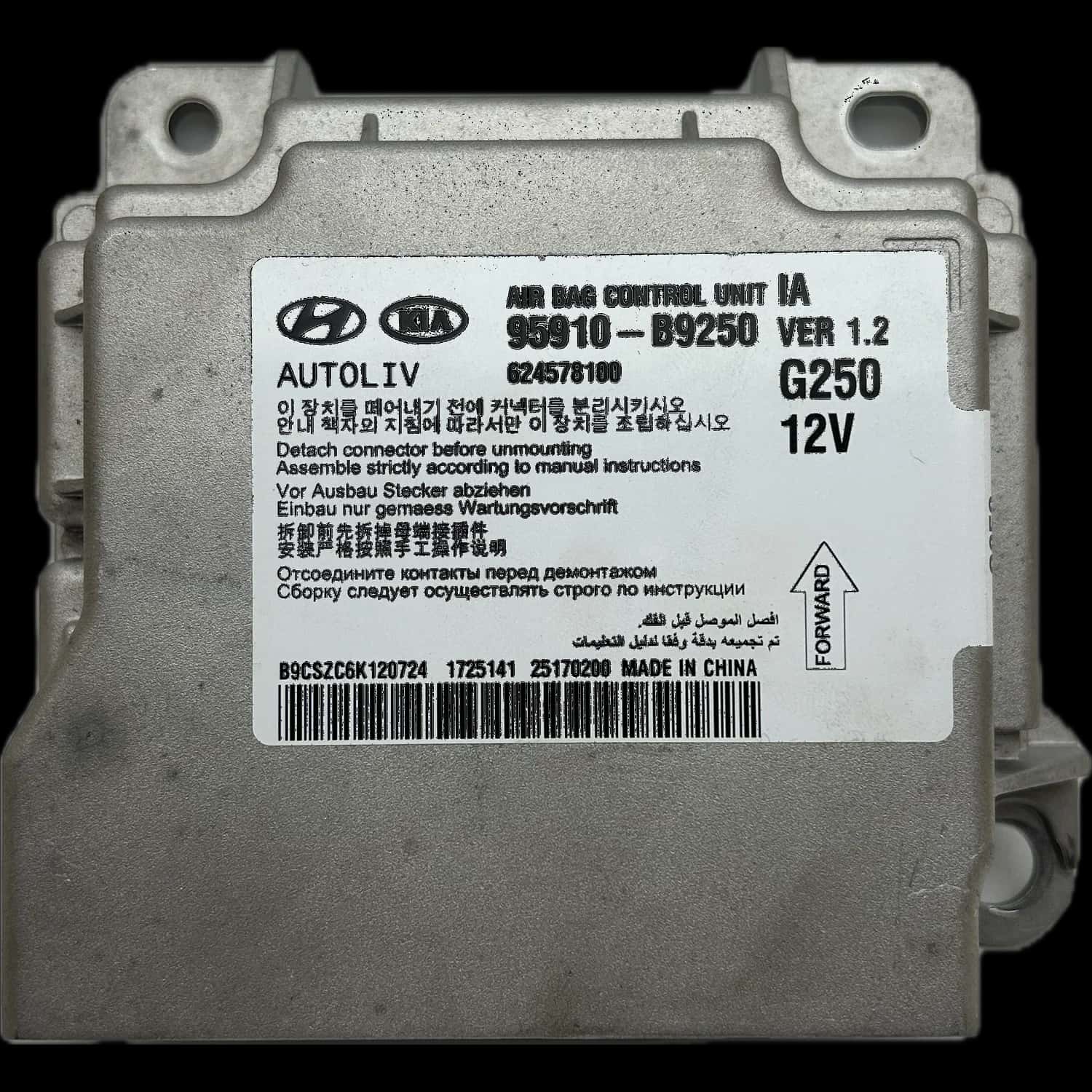
Hyundai i10 airbag control units can be uniquely identified by the part number, the exact year of manufacture, and often also by the vehicle identification number (VIN). Each generation of the Hyundai i10 uses specific control unit variants for optimal compatibility with the respective safety system.
The part number is the most important clue for identifying the correct airbag control unit. This number is printed directly on the control unit's housing and should always be provided when requesting repairs.
A well-known example for older i10 models of the PA generation is part number 95910-0X100, which often requires repair in the event of defects or after an accident.
Since airbag systems have evolved over the years, it is crucial to match the control unit precisely to the model year and equipment of the Hyundai i10. This ensures that the safety system's full functionality is guaranteed after a repair.
The vehicle identification number (VIN) can also be used to determine the exact configuration of the vehicle and thus the installed airbag control unit. This is especially helpful if the part number cannot be read directly.
What airbag equipment does the Hyundai i10 have?
The airbag configuration of the Hyundai i10 varies greatly depending on the model year, generation, and specific trim level. While early models used basic airbag systems, newer generations feature enhanced safety packages with additional airbag modules for comprehensive occupant protection.
In the early generations of the Hyundai i10, especially the PA series, front airbags for the driver and front passenger were generally standard. This basic equipment already provided important protection in frontal collisions.
With the introduction of the second generation (IA/BA), the airbag range was expanded. In addition to front airbags, side and curtain airbags were also available, often as options depending on the chosen trim level.
A significant step in safety equipment took place from around 2023: Hyundai has since offered six airbags as standard in all its models, including the i10 derivatives for various markets.
This configuration includes two front airbags, two side airbags, and two curtain airbags, designed to provide comprehensive protection in collisions. The wide coverage contributes significantly to occupant safety.
In addition to airbags, other safety-related features are usually standard or optional in the Hyundai i10. These include systems such as ABS (anti-lock braking system), electronic stability control (ESC), hill-start assist, tire pressure monitoring (TPMS), and ISOFIX child seat anchor points.
These integrated systems work closely with the airbag control unit to ensure optimal occupant safety in the Hyundai i10 and minimize the risk of injury in the event of an accident.
Common fault codes in this category
Shipping & repair from Germany
Airbag24 repairs your component in Berlin — usually within 3–4 working days.
Standard shipping within Germany is free; we normally return your part by UPS.
You pay for and insure the inbound shipment to us. On explicit request we ship by express — the extra cost is borne by the customer.
If you withdraw from the contract, you bear the cost of returning the item.